Visiting the Dead Sea in Jordan is a truly one-of-a-kind experience, where you can effortlessly float in the world's saltiest lake, enjoy a rejuvenating mineral-rich mud treatment, and take in breathtaking desert landscapes at the lowest point on Earth. Located just an hour from Amman, it's an ideal day trip or overnight escape that can be combined with iconic attractions like Mount Nebo, Madaba, Bethany Beyond the Jordan, Wadi Mujib, and Petra. To make the most of your visit, travel during spring or autumn, limit your time in the water to 15–20 minutes, wear water shoes, avoid getting the salty water in your eyes, and rinse off immediately after floating. Whether you're seeking wellness, adventure, history, or unforgettable scenery, the Dead Sea offers one of Jordan's most iconic and memorable travel experiences.
Some places you visit because they're beautiful.Others you visit because they simply cannot exist anywhere else on earth.Dead Sea Jordan is firmly the second kind.
Sitting more than 430 metres below sea level - the lowest exposed point on earth, which sounds like a fact someone made up but is completely real - it's one of those natural wonders that actually delivers on the hype. You float effortlessly on mineral-rich water. You cover yourself in strange black mud that makes your skin feel genuinely different afterwards. You look out at a landscape where desert mountains drop straight into a shimmering salt lake and think "right, okay, this is why people come here."
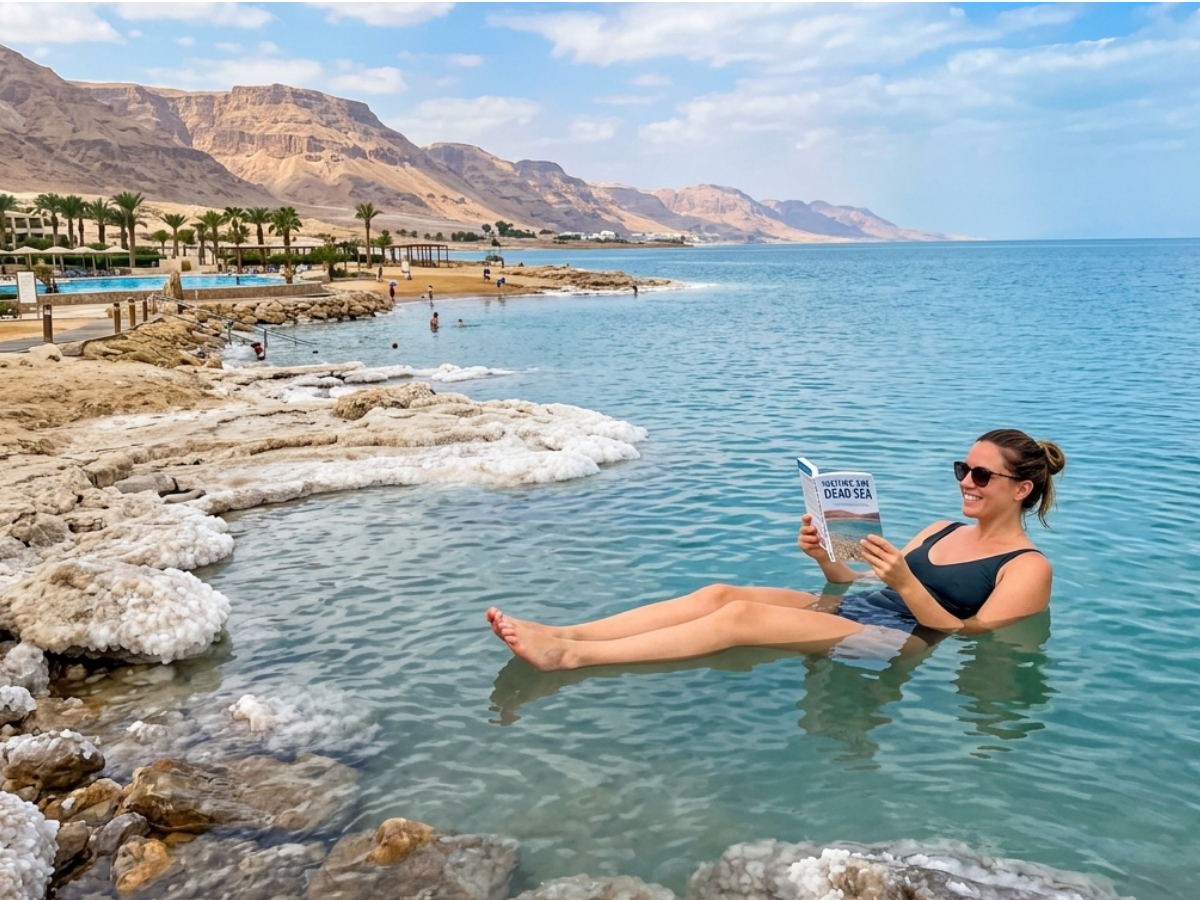
But here's the thing. Visiting the Dead Sea is about considerably more than taking that famous photo of yourself floating with a newspaper. Knowing where to actually swim, how long you can stay in the water before it becomes unpleasant, what to bring, and what to see nearby - that's what turns a couple of hours into something you actually remember.
This Dead Sea travel guide covers everything worth knowing before you go. The science, the practical stuff, the nearby sites, all of it.
Why Is the Dead Sea Famous?
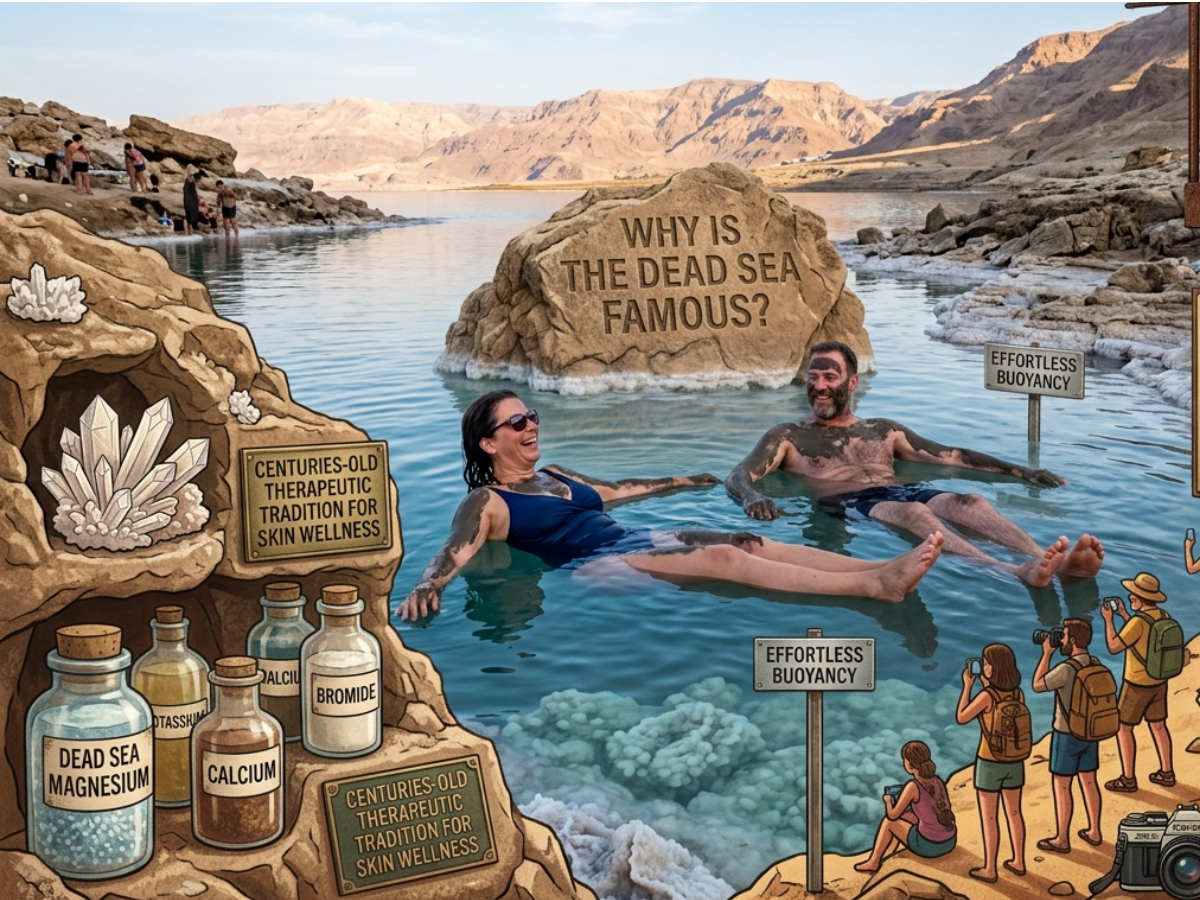
Despite the name, it's actually a hypersaline lake. Shared between Jordan and Israel. Not a sea.
The salinity runs nearly ten times higher than most oceans. That extreme mineral concentration makes sinking essentially impossible - which creates the famous Dead Sea floating experience that millions of people have now attempted and approximately all of them have photographed.
The water is also rich in magnesium, potassium, calcium, and bromide. These minerals have been associated with skin wellness and therapeutic treatments for a very long time - this isn't a recent wellness trend, people have been coming here for their skin for centuries.
Add Jordan's sunny climate, dramatic desert scenery, and the general otherworldliness of the place, and you have one of the most genuinely distinctive destinations in Jordan tourism. Not just "nice to visit." Actually unlike anything else.
Getting There
The Jordanian side of the Dead Sea sits around 60 kilometres southwest of Amman.
Drive takes 45 minutes to an hour depending on traffic. One of the easiest day trips from the capital, which is part of why it works so well as a standalone visit or part of a longer circuit.
Many travellers combine visiting the Dead Sea with nearby destinations:
- Madaba (Byzantine mosaics worth stopping for)
- Mount Nebo (views across the Jordan Valley)
- Bethany Beyond the Jordan (baptism site, UNESCO listed)
- Wadi Mujib (dramatic canyon hikes for the adventurous)
- Petra (further south but frequently part of the same trip)
Since Petra is one of the New Seven Wonders of the World, many travellers combine both destinations to experience two of Jordan's most iconic attractions in a single itinerary.
The central location makes it easy to slot into almost any Jordan itinerary without significant detours.If you're extending your trip beyond the Dead Sea, explore our detailed guide on things to do in Jordan to discover Petra, Wadi Rum, Jerash, Aqaba, and other unforgettable experiences.Planning your journey is easy—book flights to Jordan in advance to secure better fares, especially during the popular spring and autumn travel seasons.
What Actually Happens When You Get There
The first surprise isn't the water.
It's the landscape.
Golden cliffs dropping dramatically toward brilliant blue water edged with white salt formations. Mountains creating a backdrop that looks more like a film set than a real place. There's something about the combination of desert and water that makes it genuinely strange to look at - in a way that photographs don't fully capture.
The second surprise comes when you actually step in.
Instead of swimming normally, your body rises to the surface. Trying to actually swim properly becomes almost impossible because the dense water just keeps pushing you back up. It's genuinely disorienting for about thirty seconds and then completely wonderful.
That effortless Dead Sea floating sensation is - and this sounds like a cliché but it isn't - something you have to experience to understand. Describing it doesn't do it.
Things to Do at the Dead Sea
Most people know about the floating. Fewer realise there are actually plenty of things to do Dead Sea that go well beyond that.
Float. Obviously.
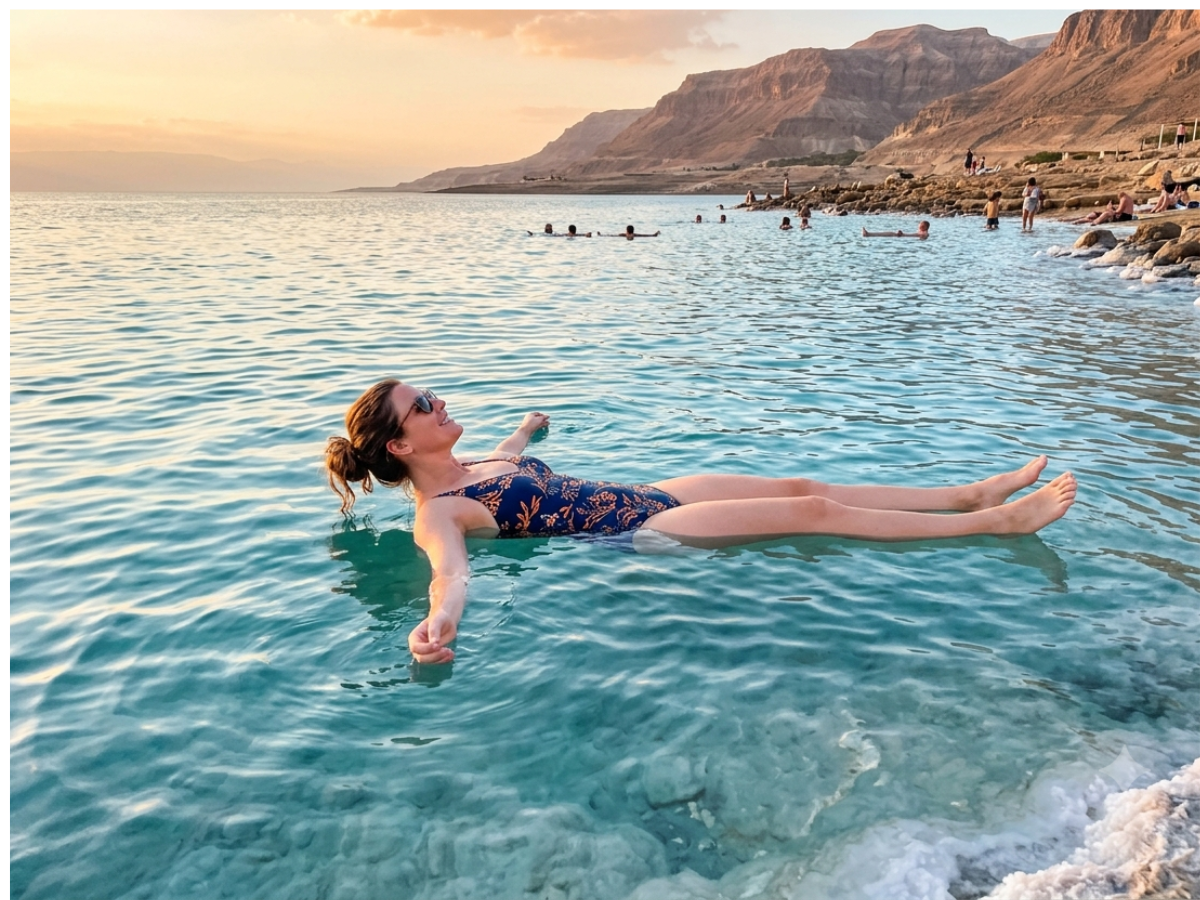
Lean back. Relax. Let the water hold you up without any effort whatsoever.
Unlike normal swimming where you're constantly making small adjustments to stay afloat, here you just... don't have to. It's strange and peaceful and genuinely fun for about 15 to 20 minutes, which is roughly how long you should stay in before rinsing off.
The Mud Situation
This is either the most appealing or least appealing part depending on how you feel about covering yourself in black minerals in a semi-public setting.
Dead Sea mud is dark, mineral-rich, and has been used in wellness treatments for a very long time. People apply it to arms, legs, face, cover themselves completely - wait for it to dry for 10 to 15 minutes - then wash it off.
The result is noticeably softer skin. Not dramatically different, but noticeably. Worth doing even if you feel slightly ridiculous during the application process, which you will.
Dead Sea mud products are also available to take home from almost every resort and shop in the area, if you'd rather do it in private.
The Beach Resorts
Several of Jordan's better hotels sit directly on the Dead Sea shoreline. Even if you're not staying overnight, many offer day passes giving access to:
- Private beaches
- Infinity pools
- Spa treatments
- Mineral pools and wellness therapies
- Sunset terraces with genuinely good views
Day passes make sense for anyone wanting comfortable facilities without committing to an overnight stay.
Sunset
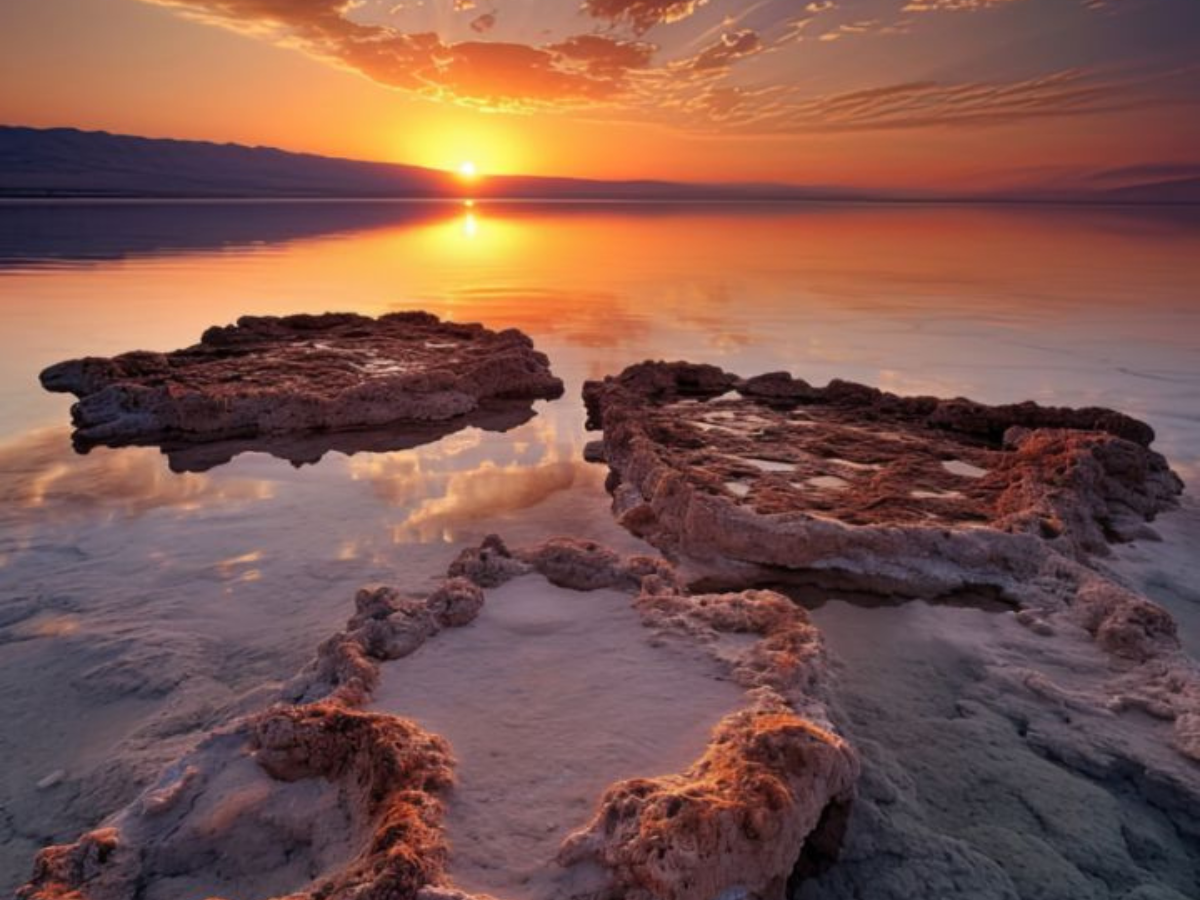
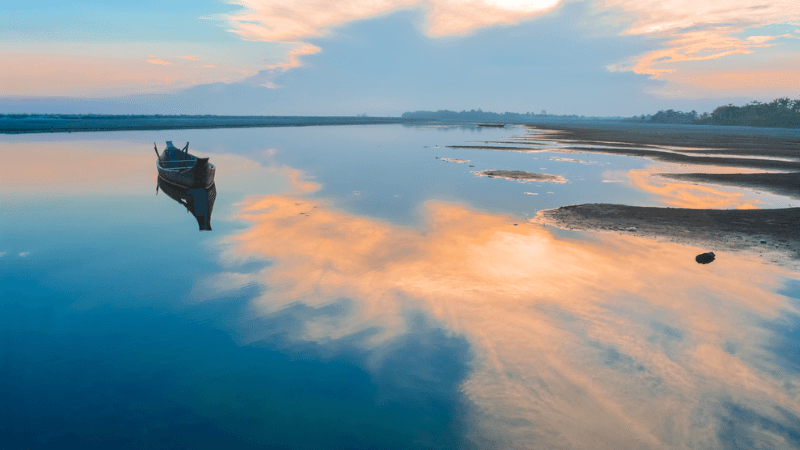
As temperatures drop in the late afternoon, the surrounding mountains catch the light in ways that change the whole color of the place. Gold, orange, pink reflecting across the water.
Because of the low elevation and wide horizon, sunsets here have a particular quality. Photography people tend to rate this as one of the best times for visiting the Dead Sea. They're not wrong.
The Salt Formations
The shoreline keeps changing as mineral deposits reshape the coast. Salt crystals, white mineral shelves, small formations that look completely alien. Strange to look at, good to photograph, genuinely interesting to wander along.
Best Time to Go
Dead Sea Jordan can be visited year-round. When you go affects how comfortable the whole thing is.
Spring (March to May) Honestly the best window. Temperatures sit around 24°C to 32°C - warm enough to enjoy the water without the intensity of summer heat. Pleasant for floating, comfortable for sightseeing afterwards.
Autumn (September to November) Warm water, mild evenings. Second best season. Still comfortable for everything without the summer extremes.
Winter (December to February) Cooler, quieter, fewer people. Sightseeing is fine. Swimming becomes less appealing for some people when air temperatures drop, though the water retains warmth longer than you'd expect.
Summer (June to August) Temperatures regularly exceed 40°C. Not impossible but demanding. If you're going in summer, arrive very early in the morning or go around sunset. Stay hydrated properly, not just occasionally.If you're planning a longer international holiday, you can also explore some of the world's most vibrant festivals around the world and combine your Jordan trip with unforgettable cultural celebrations.
Practical Stuff That Actually Matters
The Dead Sea behaves differently from ordinary beaches. A few things to know before you just walk in.
Don't shave before you go. Freshly shaved skin and extremely saline water is an unpleasant combination. Give it at least 24 hours.
Eyes and mouth, be careful. If water gets in your eyes it burns properly. Have fresh water within reach immediately. This isn't dramatic - just real. Keep your head back and dry when floating.
15 to 20 minutes maximum in the water. Longer exposure causes skin irritation for most people. The floating experience doesn't require extended time - short visits are better.
Water shoes. Salt crystals on the shoreline are surprisingly sharp. Walking in without footwear is uncomfortable and occasionally painful. This seems minor and isn't.
Drink water. The area is hot and dry most of the year. The Dead Sea environment is deceptively draining. Bring more water than you think you need.
Shower immediately after. Freshwater showers are available at all beaches and resorts. Use them straight after floating. Walking around with concentrated salt water drying on your skin is unpleasant.
Protect your phone or camera. Mineral-rich saline water gets into everything. Waterproof pouches for phones make sense. Don't set cameras down where they'll get splashed.
What to See Nearby
This is where Jordan tourism genuinely rewards planning. Several significant sites sit within easy reach of the Dead Sea.
Mount Nebo Traditionally where Moses saw the Promised Land before dying. Views across the Jordan Valley are sweeping on clear days. The mosaic work inside the memorial church is worth examining properly.
Madaba Known for Byzantine mosaics - particularly the famous sixth-century Mosaic Map of the Holy Land that covers the floor of St George's Church. Surprisingly detailed, surprisingly well-preserved.
Bethany Beyond the Jordan UNESCO World Heritage Site. Recognised as the traditional baptism site of Jesus. Attracts pilgrims from everywhere. Quiet and genuinely atmospheric regardless of religious interest.
Wadi Mujib Dramatic sandstone canyons accessible through guided water hikes during warmer months. For people who want something more active alongside the floating and mud. Properly spectacular.
A Half-Day Itinerary That Works
8:00 AM - Leave Amman
9:00 AM - Arrive at a beach resort, get settled
9:30 AM - Into the water for Dead Sea floating
10:00 AM - Dead Sea mud treatment, allow to dry, rinse off
10:30 AM - Pools, private beach, relax
12:00 PM - Lunch with the Dead Sea view (the views make lunch better)
1:30 PM - Drive toward Mount Nebo or Madaba depending on interest
This pacing works well and doesn't feel rushed. The morning timing also avoids the worst of the afternoon heat.
Honest Truth About The Dead Sea In Jordan
Very few places offer an experience that genuinely cannot be replicated anywhere else. Dead Sea Jordan is one of them. The floating alone - that particular weightless sensation on the lowest point of earth - is distinctive in a way that stays with people.
Add the landscape, the mud, the wellness angle, the nearby historical sites, and the general strangeness of the whole place, and visiting the Dead Sea becomes one of those travel experiences that earns its reputation rather than just carrying it.
Whether someone spends a few hours on a day trip from Amman or an entire weekend at a resort, it delivers in ways that most attractions don't.
For anyone building a Jordan tourism itinerary, this isn't just another stop. It's the kind of place that makes the trip.
Frequently Asked Questions
Why can people float so easily in the Dead Sea?
The salinity is almost ten times higher than most oceans, making the water dramatically denser than normal seawater. That density supports the human body naturally. Dead Sea floating requires zero effort - the water does all the work. People who try to swim normally find it almost impossible because the water keeps pushing them back to the surface.
Is it safe to swim in the Dead Sea?
Yes, with common sense applied. Don't dive in. Keep water away from eyes and mouth. Don't stay in longer than 20 minutes. Avoid going in with freshly shaved skin or open cuts. Follow the guidance at whichever beach or resort you're using and visiting the Dead Sea is perfectly safe for most people.
Does the mud actually work for skin?
Dead Sea mud contains naturally occurring minerals - magnesium, calcium, potassium. Many people report noticeably softer skin after applying it. Individual results vary and it shouldn't be treated as medical treatment. But it's genuinely one of the more memorable parts of the visit and the skin results are real enough that people buy the products to take home.
How long should you spend at the Dead Sea?
Half a day covers floating, mud, showering, relaxing, and eating. That's enough to do everything properly without rushing. Overnight stays make sense for anyone wanting spa treatments, resort facilities, sunrise AND sunset, or simply a slower pace.
What else can you do beyond floating?
Plenty of things to do Dead Sea beyond the water itself. Spa and wellness treatments at resorts. Photographing the salt formations along the shoreline. Watching sunset from the terraces. Combining the visit with Mount Nebo, Madaba, Bethany Beyond the Jordan, or Wadi Mujib - all within an hour's drive.
When should you go?
Spring and autumn are the most comfortable - warm enough for water, not brutally hot for everything else. Summer works if you go early morning or at sunset and stay hydrated properly. Winter is fine for sightseeing, less appealing for floating.
Can children visit?
Yes, but supervision is essential. The extreme buoyancy means children can't swim normally, which is disorienting. The salinity causes real discomfort if it enters eyes. Keep visits short, supervise closely, rinse off immediately. Many resorts have pools that are easier for families with young children.
Should you stay overnight?
If time allows, yes. Overnight gives access to sunrise and sunset, resort facilities at a relaxed pace, and the ability to combine visiting the Dead Sea with nearby sites without feeling rushed. Day trips work perfectly well though - an hour from Amman makes it completely manageable.
Can you visit as a day trip from Amman?
Absolutely. One of the most popular day trips in Jordan tourism for exactly this reason. Most people combine it with Madaba and Mount Nebo on the same day since they're all close together. Easy to organise independently or through a tour.
What should you pack?
Swimwear, water shoes, high-SPF sunscreen, sunglasses, reusable water bottle - bring more water than you think - towel, change of clothes. A waterproof phone pouch if you want photos in the water. This Dead Sea travel guide can't emphasise the water shoes enough. The salt crystals on the shoreline are unforgiving on bare feet.






 July 1, 2026
 Share
Share
 Download as PDF
  From
From 
 Departure Date
 Travellers & class
 Rent For
 Departure Date




 Share
Share 


{{cmnt.comment}}