The biggest football tournament in history is coming to North America. Here's everything you need to plan a trip you'll never forget.
The 2026 FIFA World Cup is a whole different world. And for the first time ever, three countries, the United States, Canada and Mexico, are co-hosting the tournament together. This is the biggest FIFA World Cup ever, with 48 nations playing 104 matches for the first time. Whether you’re travelling to support your national side from the opening match to the final, or only planning to see a few games, this guide has all you need to know – from host cities and stadiums to travel arrangements, budgeting, lodging and practical recommendations.
Tournament Summary (Fifa Worldcup 2026)
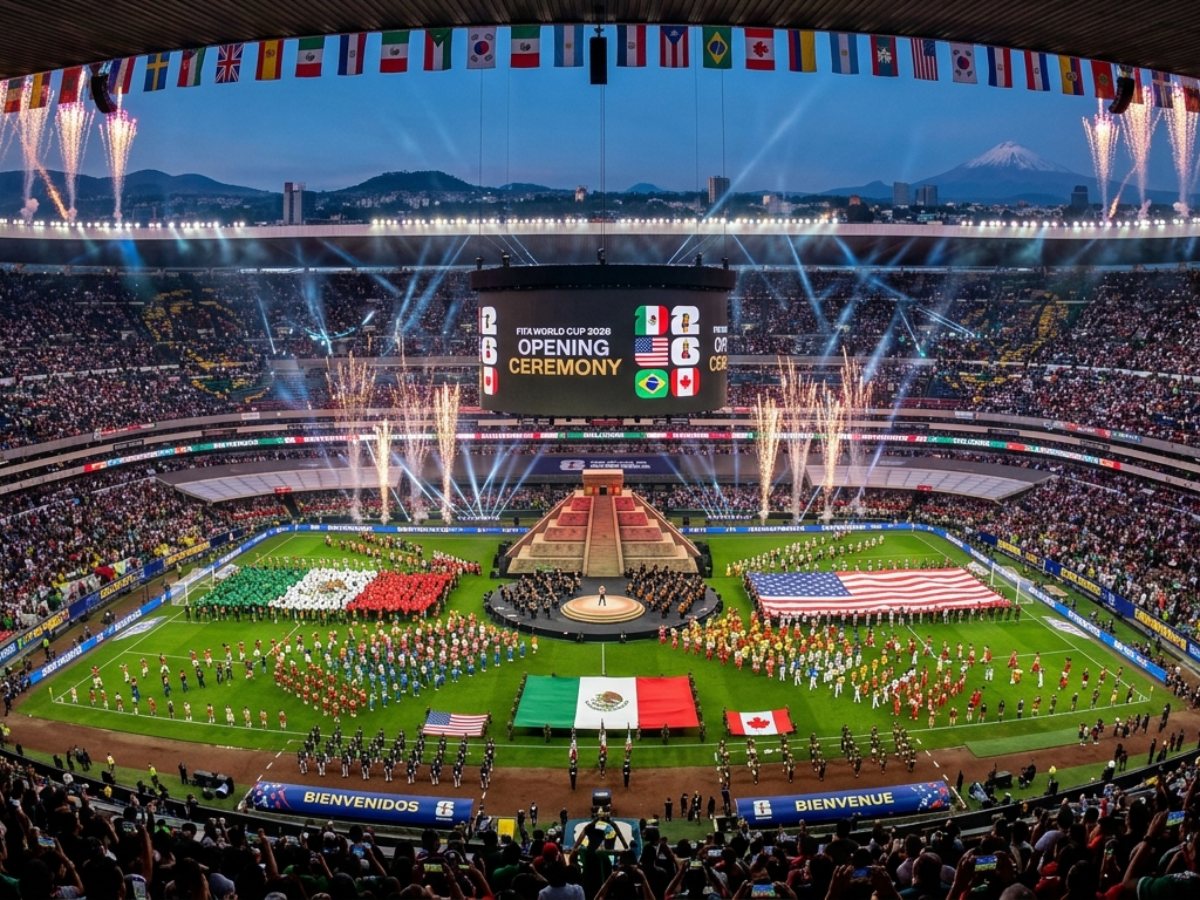
- Dates: June 11 – July 19, 2026
- Countries of Host: United States (10 cities), Canada (2 cities), Mexico (3 cities)
- Teams: 48 (32 previously)
- Matches: 104 in all
- Final Location: MetLife Stadium, East Rutherford, New Jersey (New York metropolitan region)
- Format:12 groups of 4 teams, and then a round of 32 knockout stage. MetLife Stadium hosts the Final and several knockout-round matches, making the tri-state area the focal point of the entire event. The stadium sits in East Rutherford, New Jersey, and is easily reached from Manhattan via NJ Transit or a direct shuttle. Capacity: 82,500.
Stay: Midtown Manhattan puts you near Penn Station and Port Authority for easy transit access. Book as early as possible — hotel rates in the New York metro during the Final week will be steep. Planning to stay near your match venue? Book your accommodation early with EaseMyTrip Hotels to secure better rates before prices surge during the tournament.
Must-do: Walk the High Line, eat a real New York slice, and take the Staten Island Ferry for skyline views at no cost.
Los Angeles — SoFi Stadium
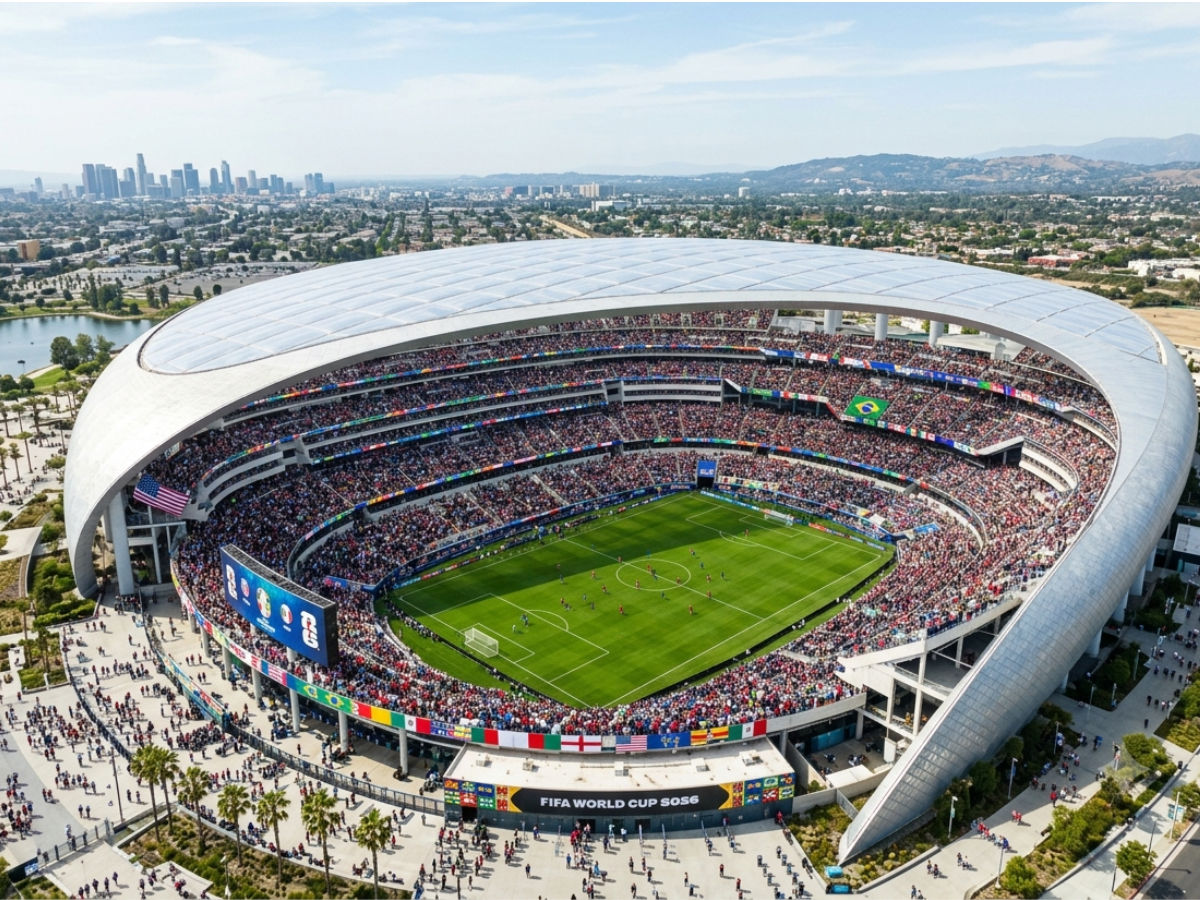
One of the most modern stadiums in the world, SoFi Stadium in Inglewood is the centerpiece of Los Angeles's World Cup experience. The venue hosted Super Bowl LVI and is designed for mega-events. Capacity: 70,000+.
Stay: Santa Monica and West Hollywood give you walkable neighborhoods and good public transport links. Avoid driving during match days — the area around Inglewood gets heavily congested.
Must-do: Venice Beach, the Getty Center, and the Grand Central Market downtown for world-class food.
Dallas — AT&T Stadium
Located in Arlington, AT&T Stadium is one of the largest domed stadiums in the world. The retractable roof means matches happen in climate-controlled comfort — critical in Texas summer heat. Capacity: 80,000+.
Stay: Fort Worth offers a more relaxed and affordable alternative to downtown Dallas, and is just 30 minutes away. The historic Stockyards district is worth a visit.
Must-do: The Dallas Museum of Art, Deep Ellum for live music, and the Texas-sized barbecue scene.
San Francisco Bay Area — Levi's Stadium
Levi's Stadium in Santa Clara serves the Bay Area and is home to the San Francisco 49ers. The venue is efficient, well-organized, and surrounded by Silicon Valley infrastructure. Capacity: 68,500.
Stay: San Jose is the closest city for walkability to the stadium. San Francisco itself is 45 minutes away by Caltrain and is worth the trip for evenings.
Must-do: Walk the Golden Gate Bridge, explore Fisherman's Wharf, and eat your way through the Ferry Building Marketplace.
Miami — Hard Rock Stadium
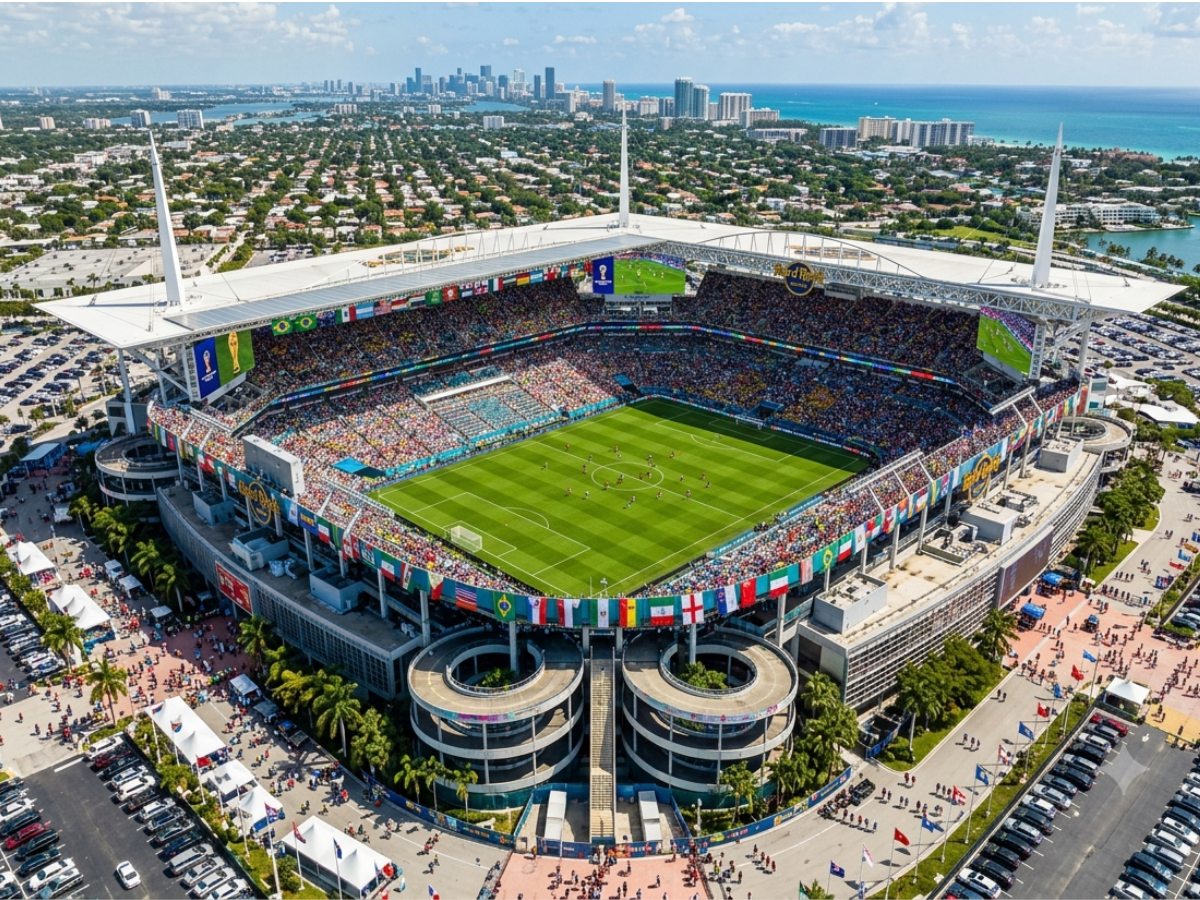
Miami combines beaches, nightlife, and one of the strongest football cultures in North America. Hard Rock Stadium is the established home of major events in South Florida. Capacity: 65,000.
Stay: South Beach is the party epicenter. If you want quieter nights and easier stadium access, Doral or Coral Gables are practical alternatives.
Must-do: Little Havana for a Cuban coffee and live salsa, the Wynwood Walls art district, and an evening boat tour of Biscayne Bay.
Seattle — Lumen Field
The most unique weather wildcard of the U.S. venues. Seattle in June and July is mild and often overcast — a relief for fans traveling from hot climates. Lumen Field is famously loud and compact. Capacity: 69,000.
Stay: Capitol Hill and the South Lake Union neighborhoods are both well-connected to the stadium. The city is very walkable in the downtown core.
Must-do: Pike Place Market (the original Starbucks is here), the Museum of Pop Culture, and a ferry ride to Bainbridge Island.
Boston — Gillette Stadium
Gillette Stadium is in Foxborough, about 30 miles south of Boston. A dedicated game-day shuttle service runs from South Station. The surrounding Patriots Place complex has restaurants and entertainment to fill pre-match hours. Capacity: 65,878.
Stay: Downtown Boston. The city is compact and very walkable, with world-class history and food within easy reach.
Must-do: The Freedom Trail historical walk, the North End for Italian food, and a walk along the Charles River Esplanade.
Kansas City — Arrowhead Stadium
One of the loudest stadiums in American sports, Arrowhead is the home of the Kansas City Chiefs and an iconic venue. The city itself is deeply underrated as a travel destination. Capacity: 76,416.
Stay: The Power and Light District in downtown Kansas City puts you near restaurants, bars, and the city's famous jazz scene.
Must-do: Arthur Bryant's or Joe's Kansas City for genuine barbecue (it is widely considered among the best in the world), the National WWI Museum, and 18th & Vine Jazz District.
Philadelphia — Lincoln Financial Field
Philly fans are known as passionate, and the city will bring serious energy to every match. Lincoln Financial Field sits near Citizens Bank Park and Wells Fargo Center, forming an iconic sports complex. Capacity: 69,796.
Stay: Center City Philadelphia. It's walkable, affordable compared to New York, and rich in character.
Must-do: The Liberty Bell and Independence Hall, Reading Terminal Market for a cheesesteak (from a proper counter, not a tourist trap), and the Philadelphia Museum of Art steps.
Atlanta — Mercedes-Benz Stadium
Arguably the best stadium on the U.S. roster. Mercedes-Benz Stadium has a striking design, retractable roof, and a reputation for fan-friendly concession prices. The city around it has been growing rapidly. Capacity: 71,000.
Stay: Midtown Atlanta is a great base — walkable, with good transit links to the stadium.
Must-do: The Martin Luther King Jr. National Historic Site, Ponce City Market, and the Atlanta BeltLine for a walk through the city's greenway.
A Note on the Rose Bowl
Although Los Angeles hosted the famous 1994 World Cup Final at the Rose Bowl in Pasadena — in front of 94,000 fans, with Maradona watching from the stands — the official 2026 tournament venue for the city is SoFi Stadium. If you have time between matches, Pasadena is a charming day trip and the Rose Bowl grounds are worth seeing in their own right.
Canada
Toronto — BMO Field
Toronto is Canada's largest city and a true global metropolis. BMO Field is a purpose-built football stadium, the only venue in the tournament that is exclusively a soccer ground. Capacity: around 30,000 (with expansion planned for the tournament).
Stay: The Harbourfront and King West neighborhoods are ideal — close to the waterfront and filled with restaurants and bars.
Must-do: Kensington Market, St. Lawrence Market (open since 1803), and the CN Tower for the view.
Vancouver — BC Place
Vancouver sits between the Pacific Ocean and the Rocky Mountains and may be the most scenically beautiful city in the tournament. BC Place is a multi-purpose stadium with a retractable roof. Capacity: 54,500.
Stay: Downtown Vancouver or Gastown for easy access to transit and nightlife.
Must-do: Stanley Park (a 1,000-acre urban park), Granville Island Public Market, and a day trip to Whistler if time allows.
Mexico
Mexico City — Estadio Azteca
The Estadio Azteca is the most storied venue in World Cup history. It has hosted two FIFA World Cup Finals (1970 and 1986) and witnessed some of the most legendary moments in football. Maradona's "Hand of God" and "Goal of the Century" happened on this pitch. Capacity: 87,523.
Stay: Polanco is upscale and central. Roma Norte and Condesa are the bohemian, food-forward neighborhoods beloved by locals and travellers alike.
Must-do: The Zócalo (main square), Museo Nacional de Antropología, Teotihuacán pyramids outside the city, and the street food. Mexico City's food scene is genuinely world-class.
Guadalajara — Estadio Akron
Guadalajara is Mexico's second city and the heartland of mariachi music and tequila culture. Estadio Akron (also known as Estadio Chivas) is a modern, striking ground. Capacity: 49,850.
Stay: Zapopan, adjacent to the stadium, or the historic city centre near the Cathedral.
Must-do: The Hospicio Cabañas (a UNESCO site with José Clemente Orozco murals), the Tequila Express train to the town of Tequila, and the Mercado San Juan de Dios.
Monterrey — Estadio BBVA
Monterrey is Mexico's industrial and commercial powerhouse, a city of mountains and modern energy. Estadio BBVA is one of the most visually impressive stadiums in Latin America, set against the backdrop of the Cerro de la Silla mountain. Capacity: 53,500.
Stay: San Pedro Garza García (often called San Pedro) is the upscale, walkable district near the stadium with excellent restaurants.
Must-do: The Parque Fundidora, the Barrio Antiguo for nightlife, and the view from the Cerro de la Silla hiking trail.
Practical Travel Tips
Visas and Entry
- United States: Most visitors from Europe, Australia, Japan, South Korea, and many other countries can use the Electronic System for Travel Authorization (ESTA) — apply online well in advance for $21. Citizens from countries without a visa waiver will need a B-2 tourist visa, which requires a consulate appointment. Start this process at least six months ahead.
- Canada: Many nationalities can enter visa-free or with an Electronic Travel Authorization (eTA), which costs CAD $7. Check requirements specific to your passport.
- Mexico: Citizens of the EU, US, UK, Canada, and most of Latin America can enter without a visa. A tourist card (FMM) is issued on arrival.
Since you will be crossing international borders between host countries, keep your passport and any required visas accessible at all times.
Getting Around Between Cities
The three host countries span roughly 5,000 kilometres from Mexico City to Vancouver. Here's how to move efficiently:
Domestic Flights
The most practical option for cross-country travel. Book international flights early — prices rise sharply around match dates. Budget airlines like Spirit, Frontier, Volaris (Mexico), and Flair (Canada) offer cheaper fares, though fees for luggage and seats add up.
Train Travel
Amtrak covers many U.S. routes but is slow compared to flying. The Northeast Corridor (New York–Philadelphia–Boston) is an exception — trains are fast, frequent, and comfortable. For travel within Canada, VIA Rail connects major cities but is not built for speed.
Road Trips
Renting a car makes sense between cities that are close together — Dallas to Kansas City, for instance, is a manageable road trip. For Mexico, note that some travel advisories apply to certain states; stick to urban areas and well-travelled tourist corridors.
Bus Travel
FlixBus, Greyhound, and their equivalents cover many bus routes at low cost. Not ideal for long distances but fine for short hops.
Getting to Stadiums on Match Days
Every host city will run dedicated World Cup shuttle services from major transit hubs to stadiums. Plan to use these rather than driving — parking is expensive, limited, and congested on match days.
Arrive at least two to three hours before kickoff. Security screening at major international events takes longer than a regular club match, and stadium concourses fill quickly.
Accommodation
Book as early as humanly possible. The 2026 World Cup is the largest sporting event in the history of North America, and hotel inventory in host cities — particularly for the Final and semifinal weeks in New York — will be scarce and expensive. Match schedules often cause hotel prices to double or triple overnight, especially once knockout fixtures are confirmed.
Options to consider:
- Hotels: Convenient but the priciest. Look one or two neighborhoods away from the stadium for better rates.
- Short-term rentals: Airbnb and VRBO give you more space and a kitchen, which helps with food costs.
- Hostels: Great for solo travelers and those on a budget. Many have private rooms available.
- Fan accommodations: FIFA typically partners with universities and event accommodation providers to create official fan villages and packages. Watch FIFA's official channels for announcements.
Tickets
Official tickets are sold exclusively through FIFA's ticketing platform. Tickets are released in phases, including lottery draws, first-come-first-served sales, and last-minute availability. Key advice:
- Register on the FIFA ticketing platform now if you haven't already.
- Do not buy from resellers or third-party platforms unless they are FIFA-authorized. Counterfeit tickets are a serious risk at every major tournament.
- Hospitality packages (which bundle tickets with catering and premium access) are sold through FIFA's official hospitality partner — these are expensive but guarantee access.
- If you miss official sales, check for returned tickets released closer to match dates.
Budgeting
Costs vary enormously depending on country, city, and your travel style. Here is a rough daily budget guide (excluding match tickets and international flights):
|
Budget Level
|
Daily Cost (USD)
|
|
Budget traveller (hostel, street food, transit)
|
$80–120
|
|
Mid-range (hotel, restaurants, some rides)
|
$150–250
|
|
Comfortable (good hotel, dining out, taxis)
|
$300–500+
|
Mexico is significantly cheaper than U.S. and Canadian cities. Vancouver and New York are the most expensive host cities on the roster.
Match tickets are additional and can vary significantly depending on the stage of the tournament and seating category — group-stage tickets are more accessible, while semifinal and final tickets command a significant premium.
Health and Safety
- Travel insurance: Get it. Medical care in the U.S. is extremely expensive without coverage. An emergency room visit can cost thousands of dollars without insurance.
- Heat: Dallas, Miami, Atlanta, and Mexican cities will be very hot in June and July. Wear sunscreen, stay hydrated, and pace yourself — especially in the hours before and after outdoor matches.
- Altitude in Mexico City: The Azteca sits at 2,240 metres (7,349 feet) above sea level. If you're not acclimatised, take it easy on the first day. Light meals, plenty of water, and avoiding alcohol early helps.
- Petty theft: Be vigilant with your belongings in crowded public spaces, as you would in any major international city.
Currency and Payments
- United States: USD. Credit and debit cards are accepted almost everywhere. Carry a small amount of cash for tips and food trucks.
- Canada: CAD. Cards are widely accepted. ATMs are easy to find.
- Mexico: Mexican Peso (MXN). Cash is more important here, particularly at markets, street food stalls, and smaller restaurants. Use ATMs at banks rather than street machines, and always check for skimming devices.
Language
- English is dominant in the U.S. and Canada, though you will hear every language imaginable at a World Cup.
- Spanish is the primary language in Mexico. In major tourist areas, hotel and restaurant staff will often speak English, but learning a few phrases in Spanish goes a very long way and is always appreciated.
- Download Google Translate with offline Spanish and French (useful in Montreal-adjacent areas) before you travel.
A Note on Fan Culture
The World Cup crowd is unlike any other sporting event. You will share stands with fans from 48 nations, many of whom have travelled tens of thousands of kilometres to be there. The atmosphere in stadiums — and in the fan zones outside them — is joyful, theatrical, and infectious.
Wear your colours, be respectful of others', and embrace the chaos. The best memories from a World Cup rarely come from the matches themselves. They come from the conversations at a bar before kickoff, the strangers who share a moment of disbelief after a last-minute goal, the fan park at midnight when everything feels possible.
Quick City-by-City Summary
|
City
|
Venue
|
Capacity
|
Country
|
Climate in June/July
|
|
New York / NJ
|
MetLife Stadium
|
82,500
|
USA
|
Warm, humid
|
|
Los Angeles
|
SoFi Stadium
|
70,000+
|
USA
|
Warm, dry
|
|
Dallas
|
AT&T Stadium
|
80,000+
|
USA
|
Hot (indoor)
|
|
San Francisco
|
Levi's Stadium
|
68,500
|
USA
|
Mild, cool
|
|
Miami
|
Hard Rock Stadium
|
65,000
|
USA
|
Hot, humid
|
|
Seattle
|
Lumen Field
|
69,000
|
USA
|
Mild, overcast
|
|
Boston
|
Gillette Stadium
|
65,878
|
USA
|
Warm, pleasant
|
|
Kansas City
|
Arrowhead Stadium
|
76,416
|
USA
|
Hot
|
|
Philadelphia
|
Lincoln Financial Field
|
69,796
|
USA
|
Warm, humid
|
|
Atlanta
|
Mercedes-Benz Stadium
|
71,000
|
USA
|
Hot (indoor)
|
|
Toronto
|
BMO Field
|
~30,000
|
Canada
|
Warm
|
|
Vancouver
|
BC Place
|
54,500
|
Canada
|
Mild
|
|
Mexico City
|
Estadio Azteca
|
87,523
|
Mexico
|
Mild (high altitude)
|
|
Guadalajara
|
Estadio Akron
|
49,850
|
Mexico
|
Warm, some rain
|
|
Monterrey
|
Estadio BBVA
|
53,500
|
Mexico
|
Hot
|
Final Thoughts
The FIFA World Cup 2026 is going to be extraordinary — more nations, more cities, and more stories than any tournament in history. Planning early is the key to making the most of it. Secure tickets first, book accommodation as soon as possible, then build the rest of your itinerary around the matches you want to experience.
Good luck, safe travels, and enjoy every second of it.
Information accurate as of mid-2026. Always verify visa requirements, ticketing procedures, and travel advisories with official government and FIFA sources before your trip.






 June 26, 2026
 Share
Share
 Download as PDF
  From
From 
 Departure Date
 Travellers & class
 Rent For
 Departure Date


 Share
Share
{{cmnt.comment}}