India is home to some of the world's most surreal landscapes, where nature, geography, and centuries of human interaction create destinations that feel almost unreal. From the endless white salt desert of the Rann of Kutch and the crystal-clear high-altitude waters of Gurudongmar Lake to the floating islands of Loktak Lake, the living root bridges of Meghalaya, and the mysterious Skeleton Lake of Roopkund, these extraordinary places offer experiences far beyond conventional tourism. While many require permits, trekking, or careful planning, the reward is access to dream-like destinations that showcase India's remarkable diversity and natural wonders. With the right preparation and travel support, these lesser-known gems provide unforgettable journeys for travellers seeking landscapes that challenge expectations and feel straight out of another world.
Every country has landscapes that stop you mid-sentence. India has an unusual number of them. Part of that is scale; the country spans enough geography to contain cold deserts, tropical forests, salt flats, and high-altitude meadows all within the same borders. Part of it is the way certain places carry a quality that photographs struggle to capture and descriptions tend to understate. The surreal places in India on this list are not simply beautiful. If you're fascinated by lesser-known destinations, explore these Hidden Places in India Most Tourists Don't Know that remain far from the usual tourist trail. They are the kind of places that produce a specific disorientation: the feeling that what you are looking at cannot quite be real, that the landscape has been arranged by something other than geology or accident.
Why India Produces So Many Dream-Like Destinations
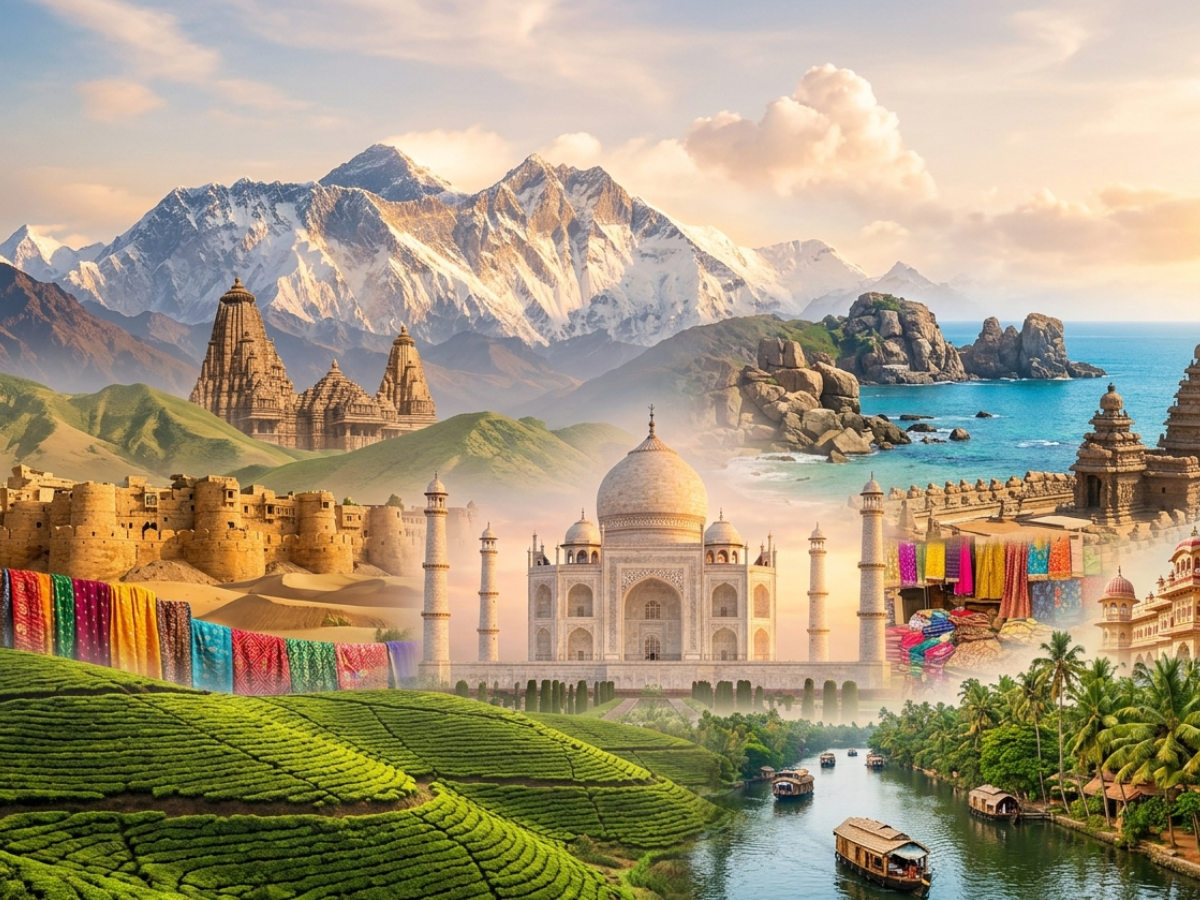
India's geographic range is genuinely extraordinary. The Himalayas in the north, the Thar Desert in the west, the Deccan Plateau cutting through the centre, the Western Ghats running parallel to the southwest coast, and the deltaic plains of the east each produce their own visual logic. The dream-like destinations in India tend to appear at the edges of these systems, where one landscape type gives way to another, or where human settlement has existed long enough to become part of the scenery rather than an interruption of it.
What follows is not a list of the most visited places. Several of these destinations require real planning to reach. That effort is, in most cases, part of what makes arriving feel the way it does. Many of these extraordinary landscapes overlap with some of the most rewarding Offbeat Places in India for travellers seeking experiences beyond mainstream destinations.
7 Places in India That Don't Feel Real
1. Rann of Kutch, Gujarat
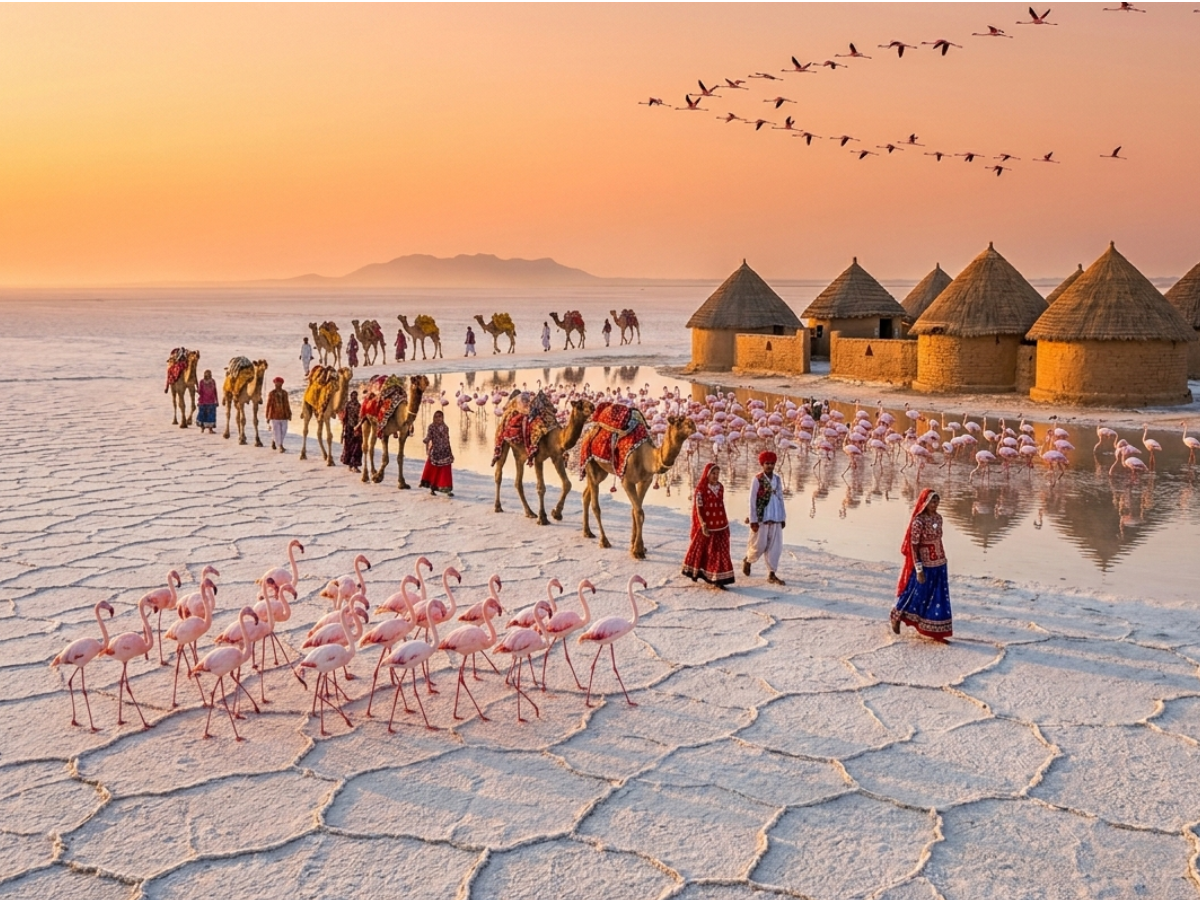
The Great Rann of Kutch is a salt marsh of roughly 30,000 square kilometres that transforms entirely depending on the season. In the monsoon, it floods to become a shallow inland sea. In winter, it dries to a flat, white expanse of salt crust that extends to the horizon in every direction without interruption.
Standing on the Rann on a clear full-moon night is one of the more disorienting experiences available in India. The light reflects off the salt in a way that removes the visible boundary between ground and sky. It is among the most unbelievable places in India in the literal sense; visitors frequently describe it as feeling staged rather than natural.
The Rann Utsav festival, held between November and February, brings cultural performances and accommodation to the edge of the white desert. Visiting outside the festival period is quieter and often more affecting. The Rann is one of several remarkable Hidden Gems Every Traveller Should Visit in India, offering experiences that feel entirely removed from everyday life.
2. Gurudongmar Lake, Sikkim
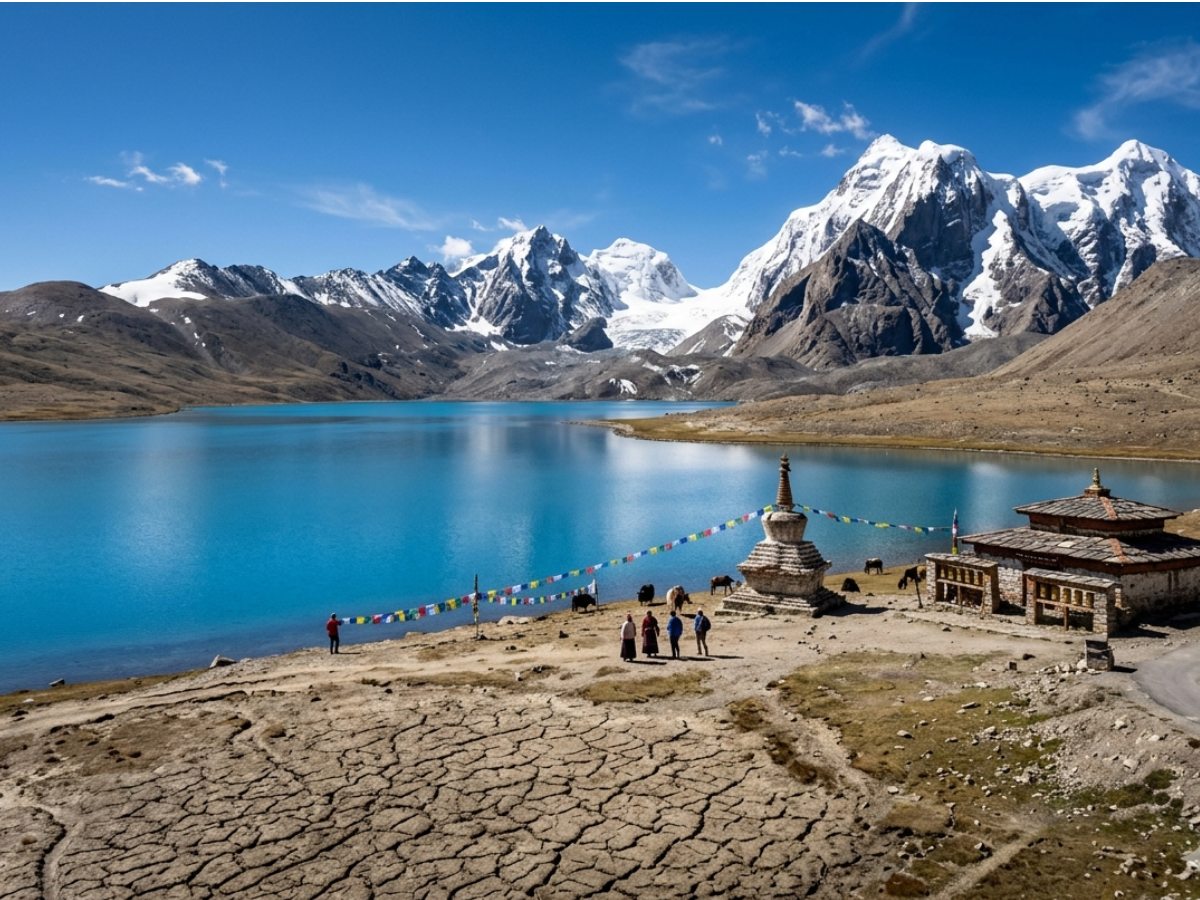
At 5,430 metres above sea level, Gurudongmar is one of the highest lakes in the world. The approach road from Lachen passes through increasingly barren high-altitude terrain, scrub giving way to rock, rock giving way to snow before the lake appears without much warning, deep blue against brown mountains and an open sky.
The water is extraordinarily clear, and the scale of the surrounding landscape makes it difficult to judge distance accurately. There are no trees, no infrastructure beyond a small boundary fence, and almost no sound except wind. It is one of the genuinely fairy tale places in India that earns the description through silence and scale rather than colour and spectacle.
Inner Line Permits are required for the approach route. The road is typically open between May and November, weather permitting, and conditions can change quickly at this altitude. Travellers who enjoy remote mountain landscapes should also discover these Unexplored Hill Stations in India That Remain Untouched by Mass Tourism.
3. Dzukou Valley, Nagaland
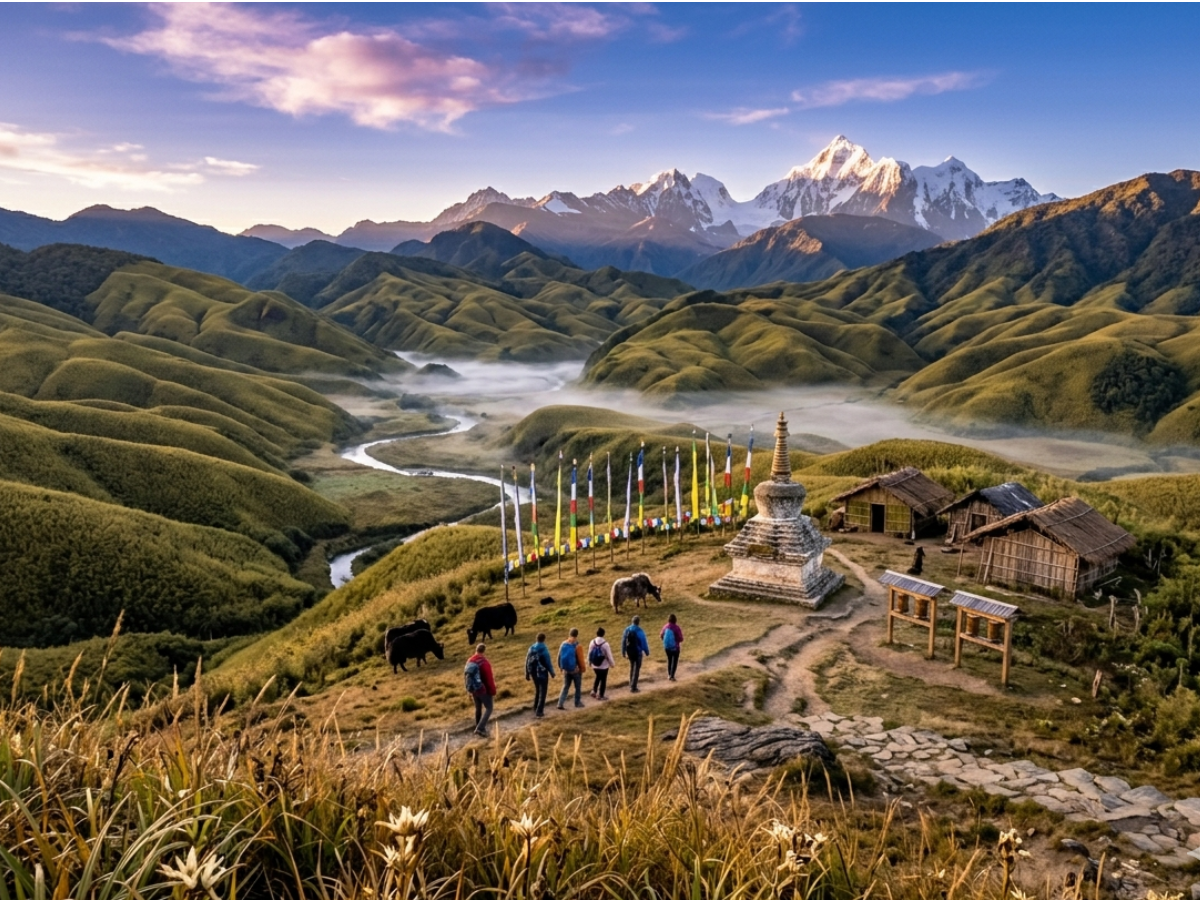
Dzukou Valley sits on the border of Nagaland and Manipur at an altitude of around 2,450 metres. In June and July, the valley floor fills with Dzukou lilies, a species found nowhere else on earth, turning the landscape into something that belongs more to a botanical illustration than a hillside in northeast India.
The trek in from Viswema village takes around three to four hours. There is basic accommodation available at the valley floor for those who want to stay overnight and catch the early morning light before other trekkers arrive. It is one of the scenic locations in India that rewards the effort of reaching it in a way that a day trip cannot fully access.
The valley is substantially less crowded than comparable high-altitude destinations in Himachal Pradesh or Uttarakhand, partly because of the permit requirements for Nagaland and partly because it remains genuinely off the mainstream circuit. Destinations like Dzukou represent the kind of Unexplored Places in India that reward travellers willing to venture beyond popular routes.
4. Floating Lake of Loktak, Manipur
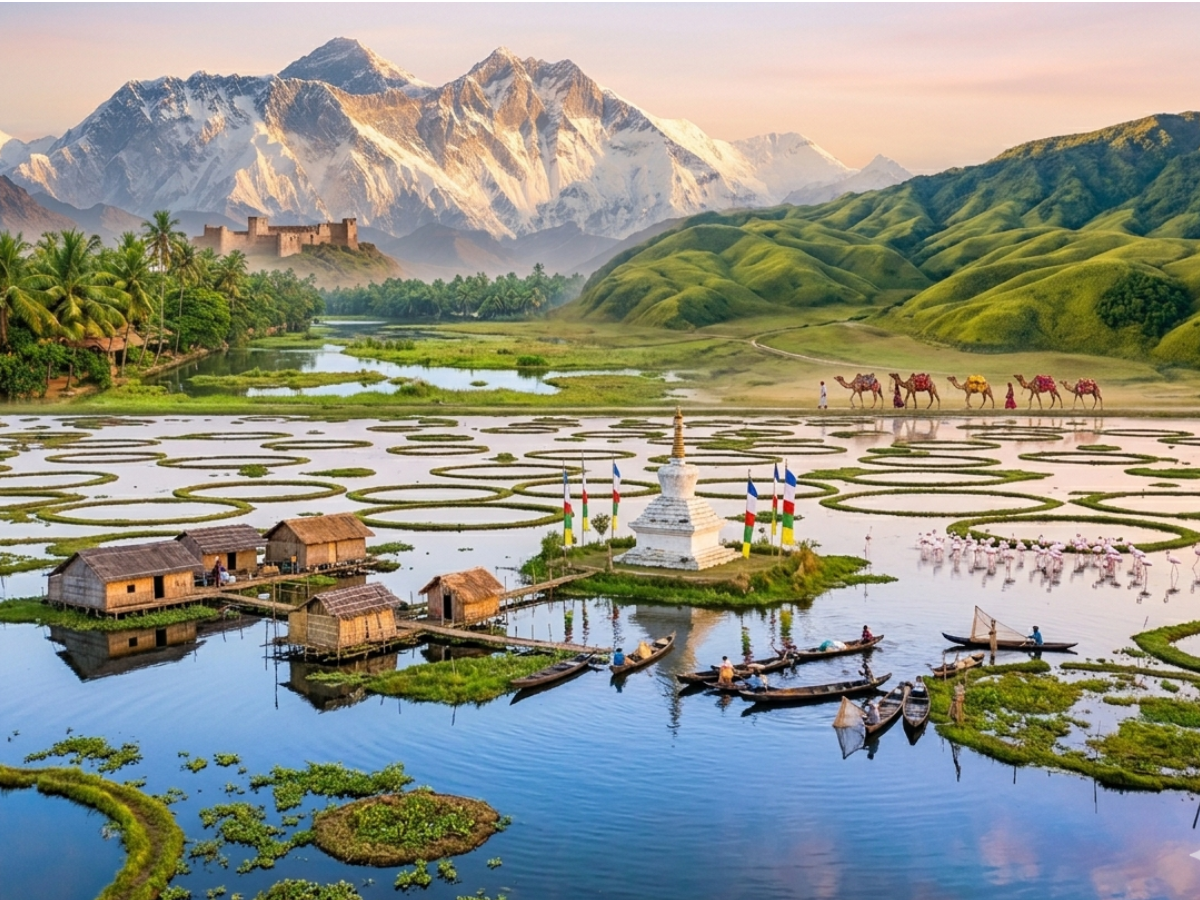
Loktak Lake in Manipur is the largest freshwater lake in Northeast India, and what makes it visually unlike anything elsewhere are the phumdis, floating masses of vegetation, soil, and organic matter that drift across the surface. Some are large enough to support entire fishing communities, with huts, livestock, and small gardens existing entirely on water.
The Keibul Lamjao National Park, the only floating national park in the world, sits within the lake and is home to the endangered brow-antlered deer. Arriving by boat at dawn, when mist sits low over the water and the phumdis are only partially visible, is a magical destination experience in India that has very few equivalents anywhere on the subcontinent. For travellers seeking equally unique outdoor experiences, explore these Hidden Adventure Spots in India.
5. Skeleton Lake, Roopkund, Uttarakhand
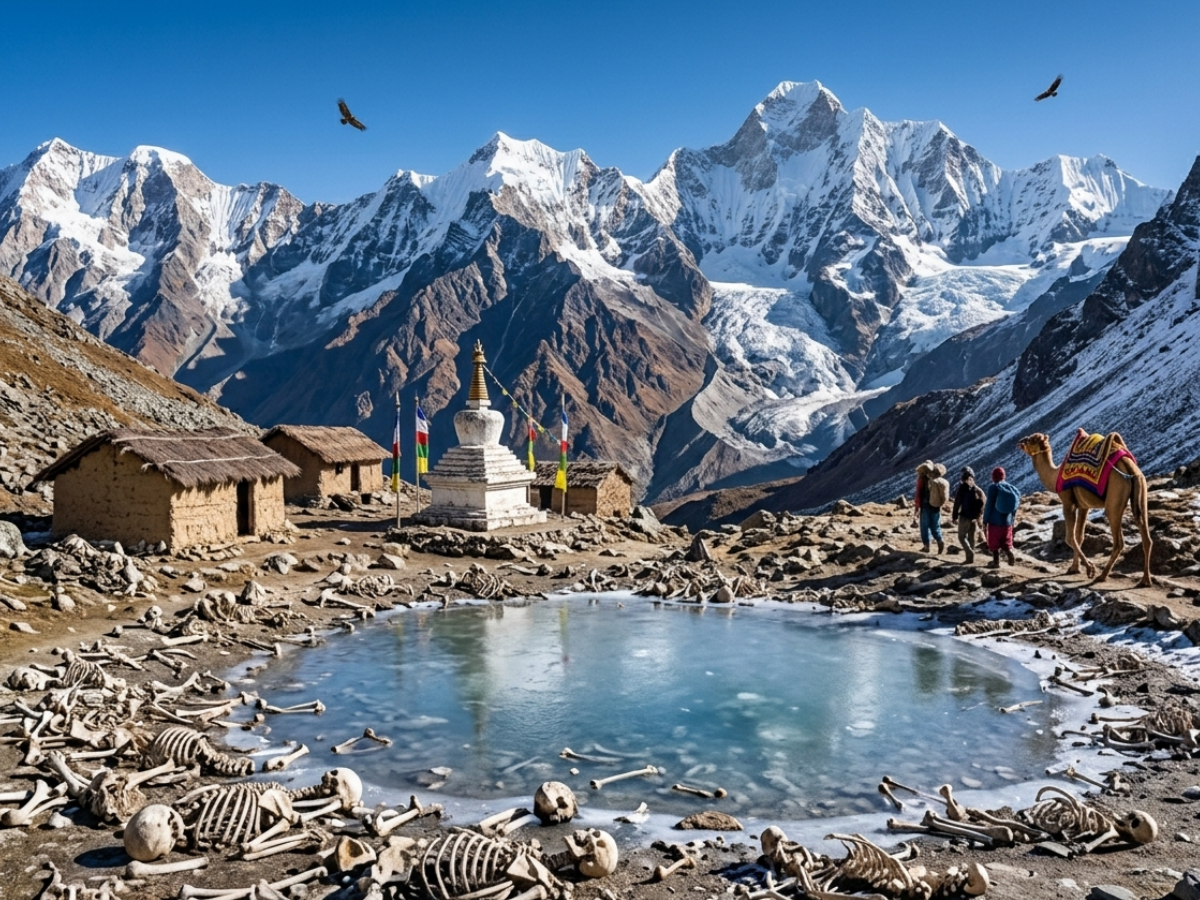
Roopkund is a glacial lake at 5,029 metres in the Chamoli district of Uttarakhand. In most seasons, it is frozen or covered by snow. In late summer, when the snow melts, it reveals hundreds of ancient human skeletons around its edges, the remains of travellers who died here around the 9th century, likely caught in a hailstorm.
The combination of a remote high-altitude location, the lake's deep green colour against the surrounding glacier, and the presence of skeletal remains makes Roopkund one of the more genuinely strange, unbelievable places in India. The trek in takes around eight days from Loharjung and requires reasonable fitness and acclimatisation. It is not a comfortable destination. It is, however, a memorable one.
6. Living Root Bridges, Meghalaya
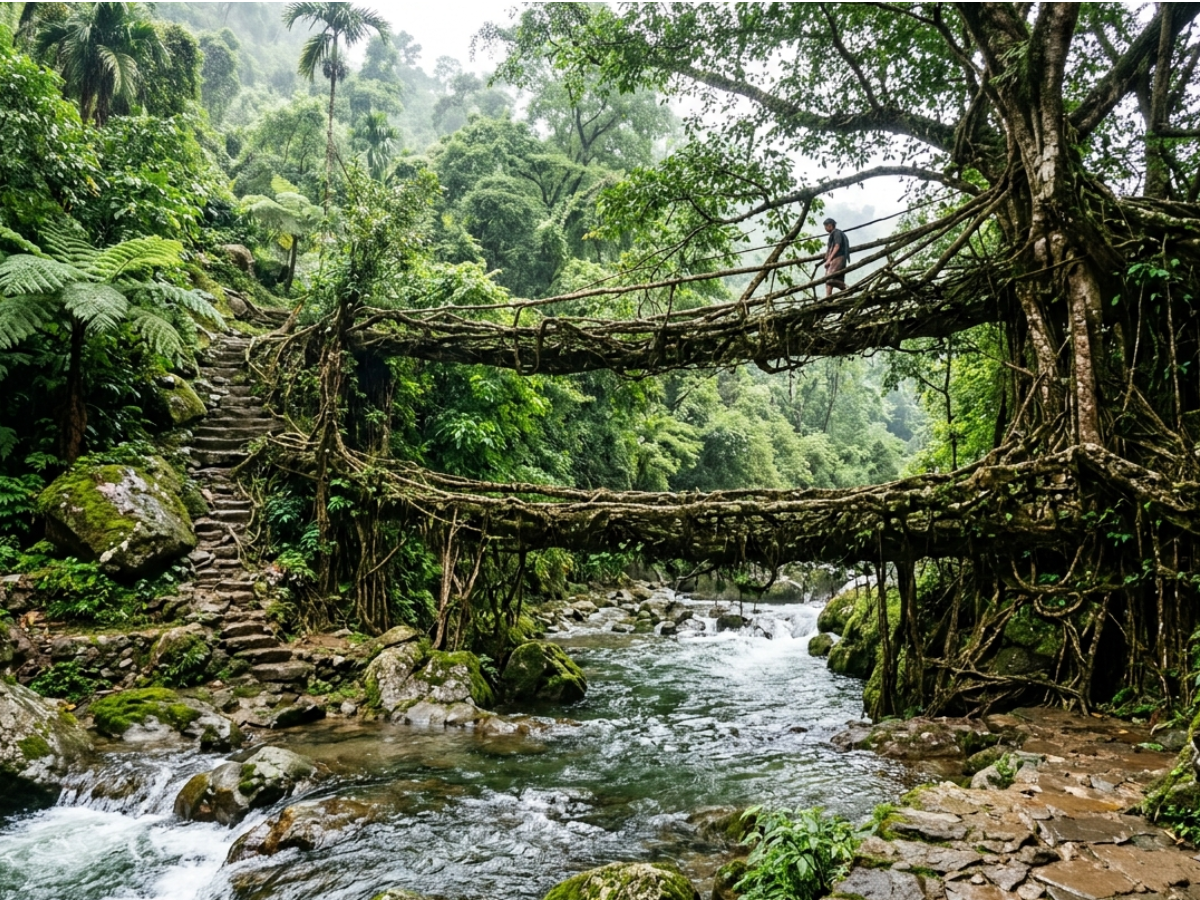
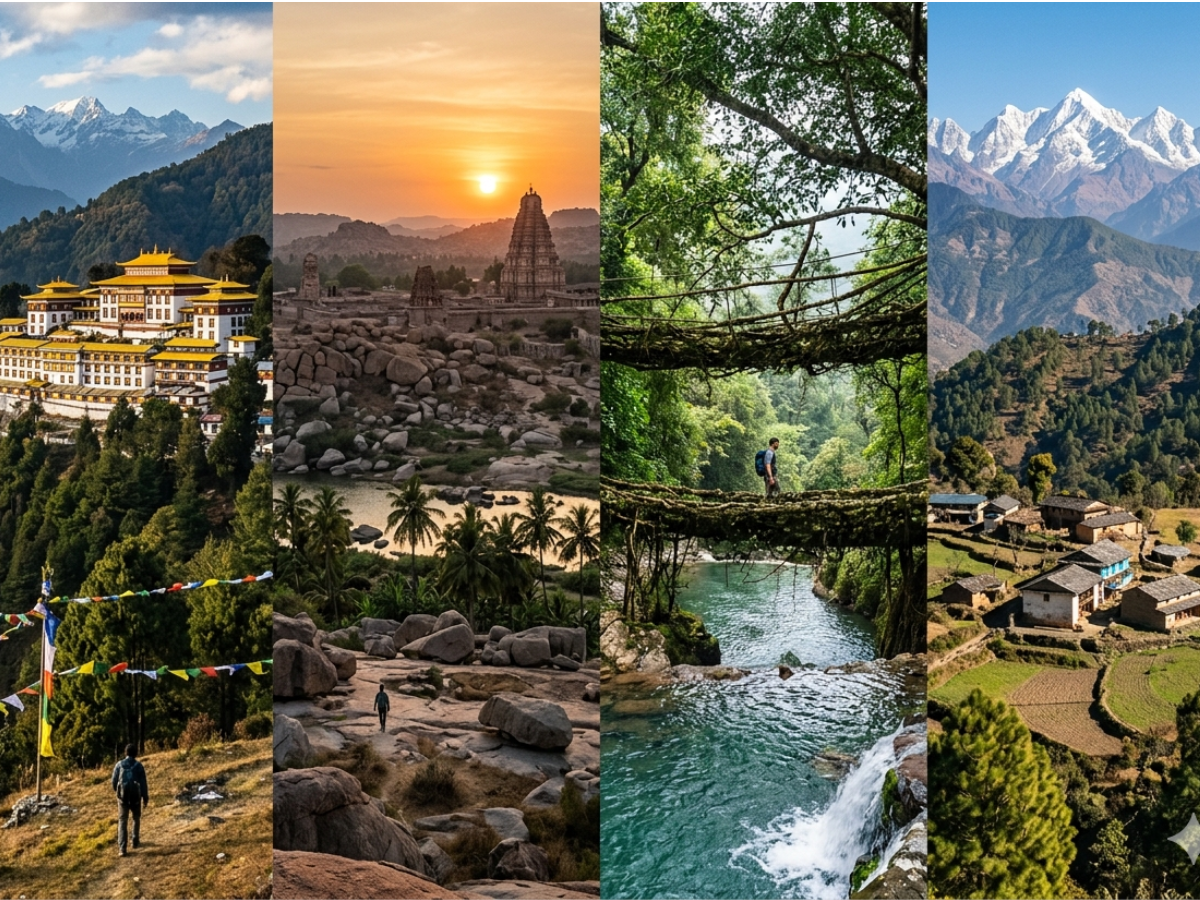
In the East Khasi Hills of Meghalaya, the Khasi people have been training the roots of rubber fig trees across streams and gorges for several hundred years, creating bridges that strengthen over time rather than deteriorating. The Umshiang double-decker root bridge near Nongriat village is the most photographed, but dozens of others exist across the region.
Walking across a living root bridge, one that has been growing for over a century and will continue to grow, produces a particular feeling that belongs more to fairy-tale places in India than to practical infrastructure. The trek to Nongriat takes around 45 minutes downhill from Tyrna, with a longer and harder return climb.
The monsoon season, between June and September, is when Meghalaya has its most dramatic waterfalls at full force, vegetation is intensely green, and the bridges are still fully usable. It is also when the region receives some of the highest rainfall on earth, so planning around weather windows within the season is advisable.
7. Magnetic Hill, Ladakh
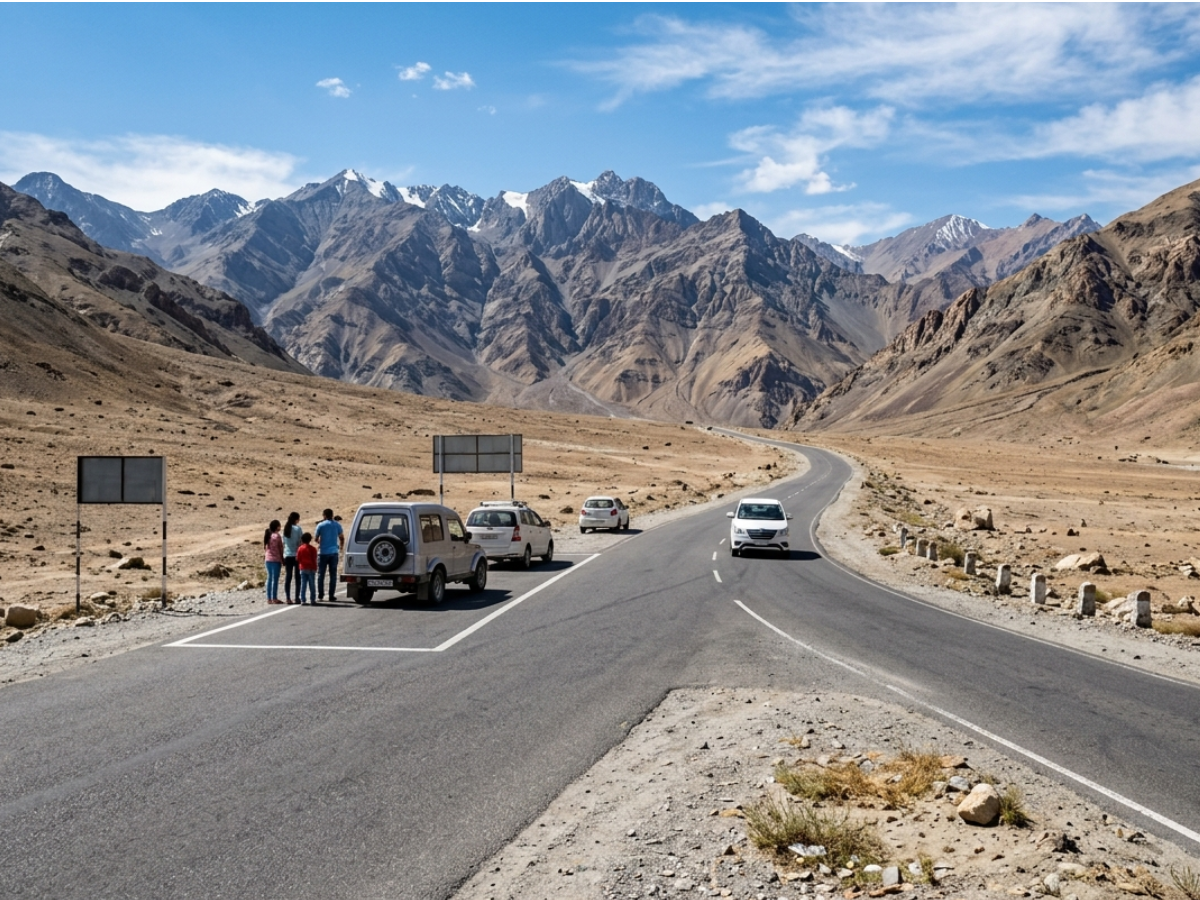
On the Leh–Kargil highway, approximately 30 kilometres from Leh, there is a short stretch of road where vehicles appear to roll uphill without engine power. The effect is an optical illusion created by the surrounding landscape; the horizon line is tilted in a way that makes a downward slope appear to ascend.
Knowing it is an illusion does not entirely remove the strangeness of experiencing it. Magnetic Hill sits within a broader Ladakhi landscape that qualifies as one of the most beautiful places in India on its own terms, but this specific stretch earns its place as one of the surreal places in India that visitors consistently describe as unsettling in the best possible way. Many remote destinations become even more memorable when reached by scenic rail journeys—discover the Top Unexplored Places to Visit in India by Train.
Practical Notes for Visiting These Destinations
Several of the destinations above require permits. Sikkim and Nagaland both require Inner Line Permits for Indian nationals. Manipur has similar requirements. Processing times vary by state and can take between 24 hours and several days depending on the season and application method.
High-altitude destinations Gurudongmar, Roopkund, and Dzukou require physical preparation and should not be treated as casual day trips. Acclimatisation days before ascending are not optional at serious altitude. Transport to most of these locations involves a combination of a flight to a regional hub and an onwards road or trail. Journey times are longer than distances suggest, and building buffer days into the itinerary is more reliable than tight connections. Travellers planning summer escapes may also appreciate these recommendations on Finding Quiet Corners: Where to Go When India Heats Up.
How EaseMyTrip Helps Travellers Reach India's Most Extraordinary Places
The paradise-like destinations in India on this list are not difficult because India makes them difficult. They are remote by geography, and reaching them requires coordinating across multiple modes of transport that do not always appear cleanly in a single search.
EaseMyTrip's multi-modal booking tools connect flights to regional airports Dimapur for Nagaland, Imphal for Manipur, and Leh for Ladakh with onwards transport options in a single interface, reducing the number of separate bookings required to reach places that most platforms treat as too complex to surface clearly. The platform's AI-powered tools also surface permit requirements and regional travel advisories alongside booking information, which matters significantly for destinations like Sikkim and Nagaland where arriving without the right documentation means not arriving at all.
As AI becomes more capable of understanding individual itinerary complexity rather than just popular routes, EaseMyTrip is building towards a platform that handles the unusual trip as competently as the obvious one. For travellers drawn to the dream-like destinations in India that exists well outside the standard circuit, that kind of intelligent, flexible planning support is not incidental; it is what makes the trip possible.
FAQs
Q: What are the most surreal places in India worth visiting?
The surreal places in India that most consistently produce a sense of disbelief are the Rann of Kutch in Gujarat, Gurudongmar Lake in Sikkim, and the living root bridges of Meghalaya. Each works through a different mechanism: the Rann through scale and light; Gurudongmar through altitude and silence; and the root bridges through the strangeness of organic infrastructure that has been growing for centuries. All three require advance planning and some logistical effort, but none requires extreme fitness or specialist equipment beyond the Gurudongmar approach.
Q: Which dream-like destinations in India require permits?
Several of the most compelling dreamlike destinations in India are in states that require Inner Line Permits. Sikkim, including the route to Gurudongmar Lake, requires an ILP for Indian nationals. Nagaland, for Dzukou Valley, and Manipur, for Loktak Lake, have the same requirement. The permits are not difficult to obtain but require applications in advance, and processing times vary by season. Foreign nationals face additional requirements in some of these states. EaseMyTrip's platform surfaces permit information alongside destination booking data.
Q: When is the best time to visit the Rann of Kutch?
The Rann of Kutch is accessible between November and February, after the monsoon flooding has receded and the salt crust has dried. This window coincides with the Rann Utsav festival, which brings cultural programming to the site but also increases visitor numbers significantly. Visiting in January or early February outside the peak festival weeks offers the best combination of dry conditions, cooler temperatures, and manageable crowds. The full-moon nights within this period are when the white salt flat and reflected light produce the most striking visual effect.
Q: Are the living root bridges in Meghalaya difficult to reach?
The most visited root bridge near Nongriat village requires a descent of roughly 3,500 steps from the village of Tyrna, taking around 45 minutes downhill. The return journey, uphill on the same route, takes significantly longer and is physically demanding. Accommodation is available at Nongriat for those who prefer to avoid the return climb on the same day. The trek is manageable for most reasonably fit travellers but should not be attempted in poor footwear or without water. The fairy-tale places in India: the quality of the destination makes the effort worthwhile, but being realistic about the return climb is advisable.
Q: How can EaseMyTrip help plan a trip to these unbelievable places in India?
EaseMyTrip's multi-modal search connects flights to the regional airports that anchor journeys to the unbelievable places in India. On this list are Leh, Dimapur, Imphal, and Bhuj, with onwards transport options, reducing the number of separate platforms needed to build a complete route. The platform's AI-powered tools surface permit requirements, regional travel advisories, and real-time availability for smaller accommodation options near off-beat destinations. For travellers planning trips to locations that most booking platforms do not handle cleanly, EaseMyTrip's expanding AI capabilities make the planning process significantly more manageable.






 June 17, 2026
 Share
Share
 Download as PDF
  From
From 
 Departure Date
 Travellers & class
 Rent For
 Departure Date



 Share
Share
{{cmnt.comment}}