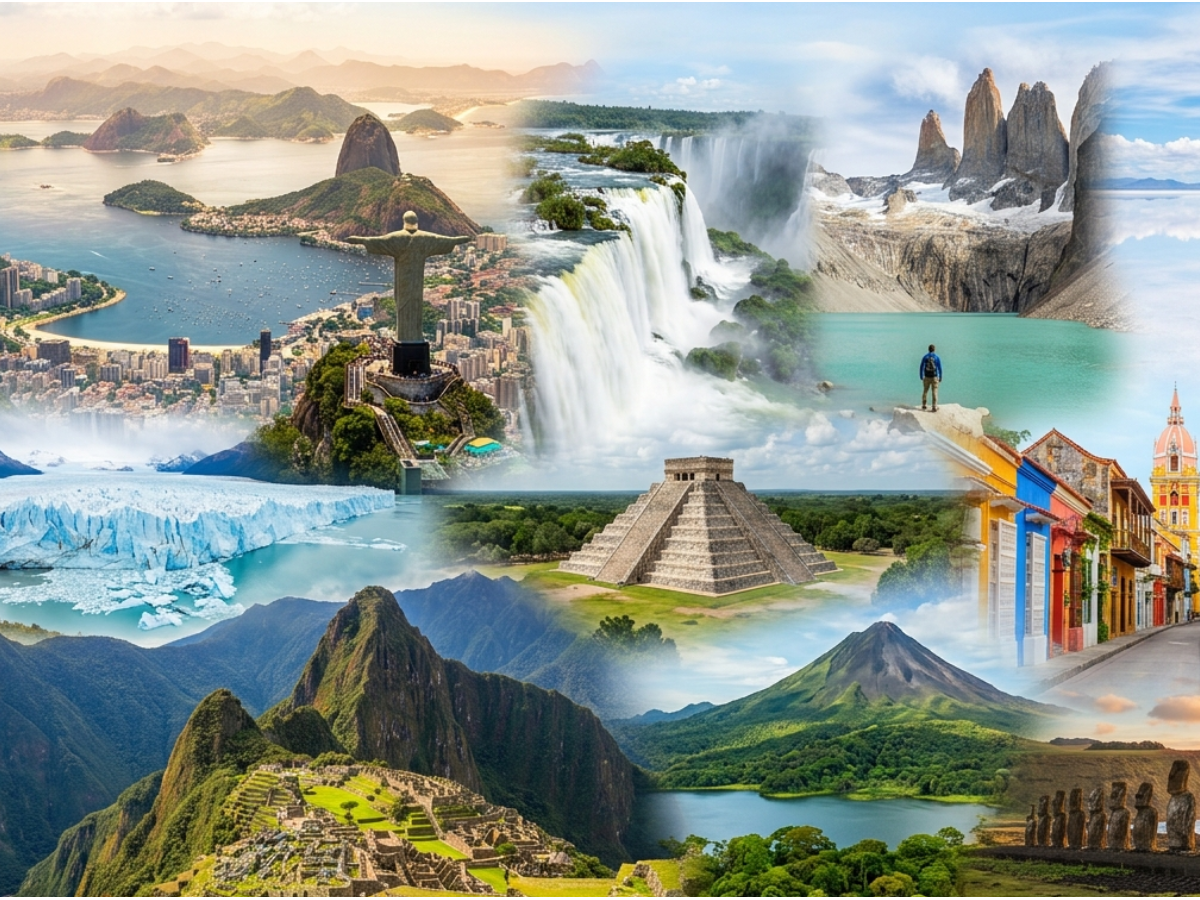
Latin America is a vast and diverse region that rewards travellers with unforgettable experiences, from ancient civilizations and colonial cities to dramatic mountains, rainforests, deserts, and tropical coastlines. This guide highlights ten of the continent's most iconic destinations, including Machu Picchu, Patagonia, Cartagena, the Galápagos Islands, Buenos Aires, Mexico City, the Amazon Basin, Havana, the Atacama Desert, and Rio de Janeiro, while offering practical travel tips on the best time to visit, itinerary planning, and what makes each destination unique. Whether you're seeking adventure, history, wildlife, culture, or world-class cuisine, these destinations showcase the incredible diversity of Latin America and help first-time visitors plan a memorable, well-balanced journey across one of the world's most rewarding travel regions.
Latin America is not a single destination. It is a continent and a half's worth of geography, language, history, and landscape: the Andean altiplano, Amazonian basin, Patagonian steppe, Caribbean coast, and colonial cities that preserved their centres while everything around them changed. The challenge for a first-time visitor is not finding places to visit in Latin America worth going to. It is narrowing a genuinely overwhelming list to what is achievable within a finite trip. This is not an exhaustive guide. It is ten destinations that consistently deliver on their reputation and that represent the breadth of what Latin America travel actually contains.
Why Latin America Rewards Longer Trips
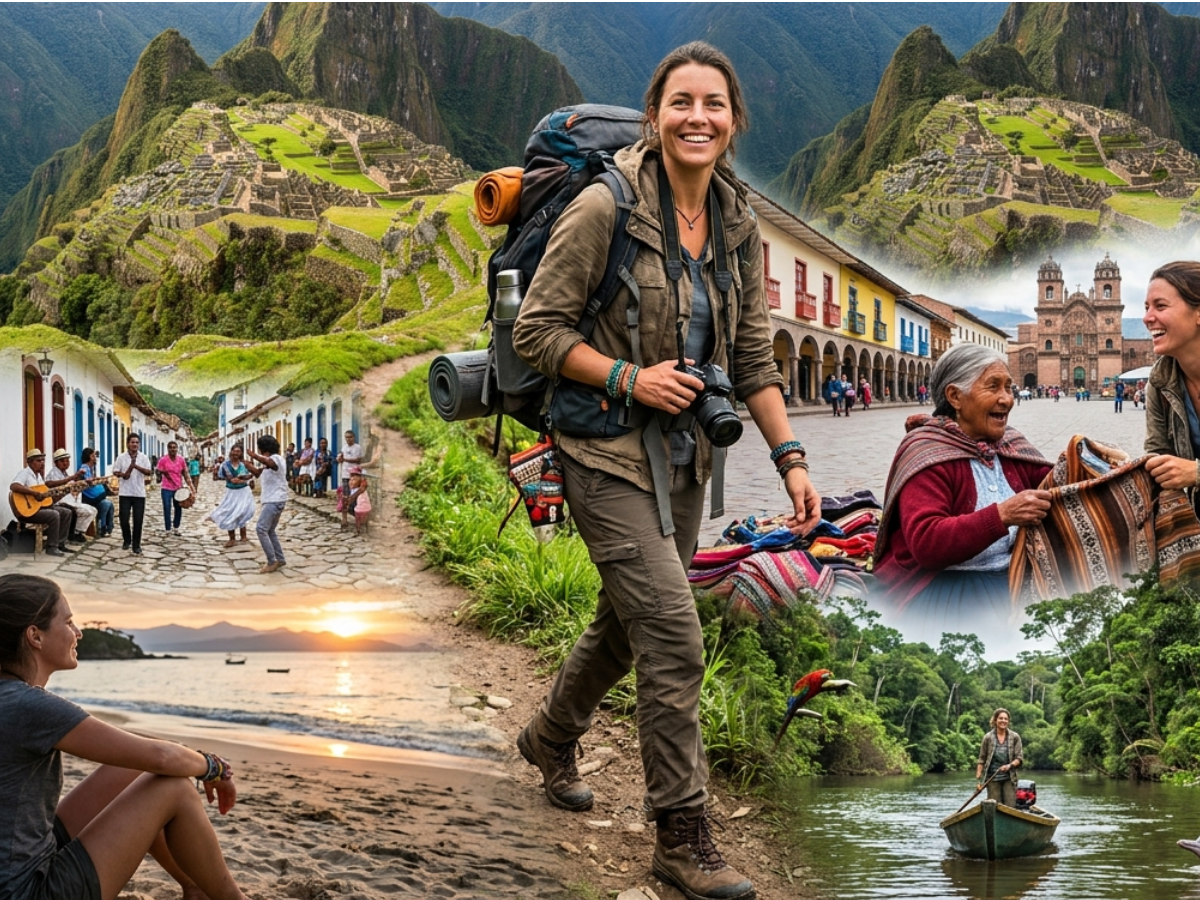
Most travellers who visit once come back. The distances involved mean that a two-week trip to Latin America covers perhaps two or three countries, and almost every trip creates a list of what did not fit. That is not a flaw in the destination; it is a feature of a region this large and varied.
South America destinations alone would fill a year of serious travel. Adding Central America, Mexico, and the Caribbean expands the picture considerably. The ten places below span that full geography, and none of them are filler entries added to reach a number. If you're inspired to discover destinations beyond the usual tourist trail, explore Places You Should Visit Right Now – Not Well Known for more hidden gems around the world.
Ten Places to Visit in Latin America
1. Machu Picchu, Peru
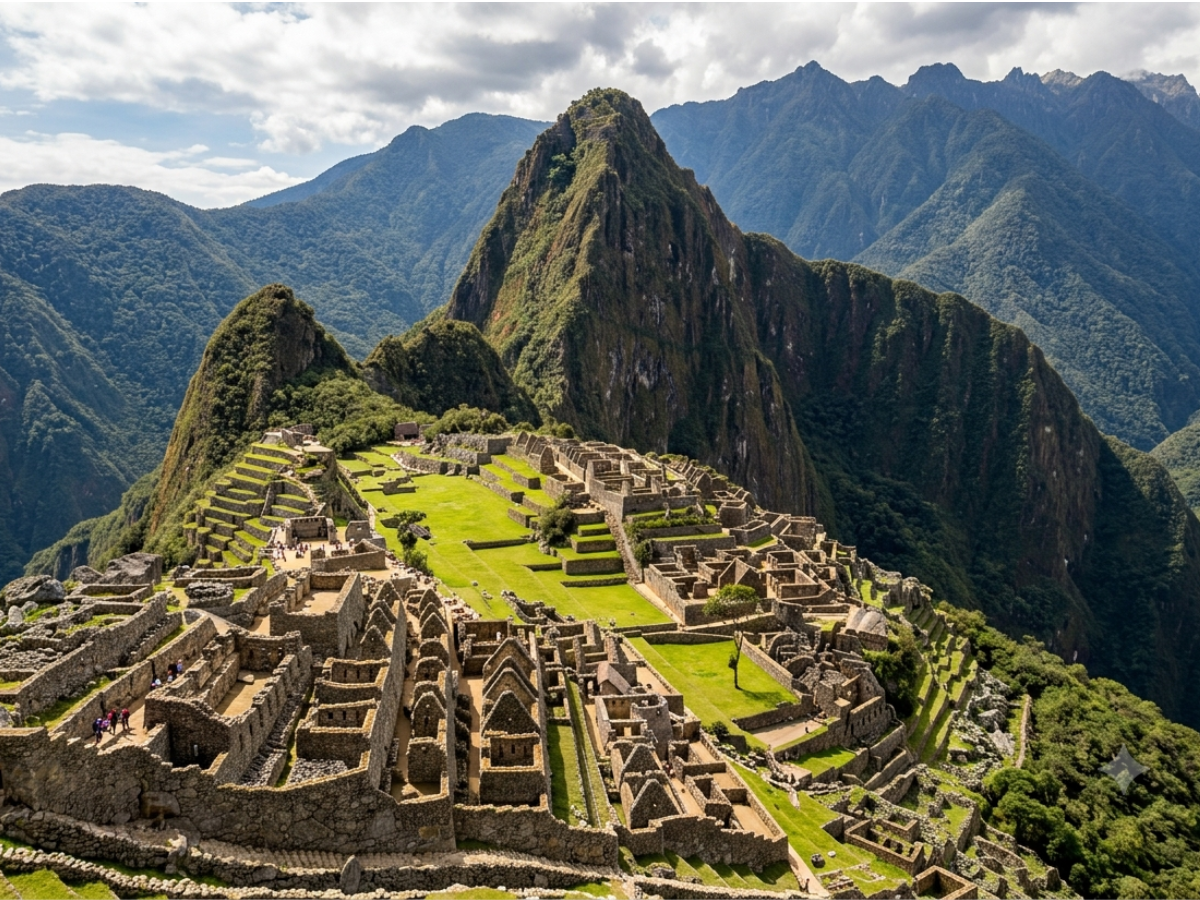
The Incan citadel above the Urubamba River valley is, for most visitors, the single most anticipated destination in all of Latin American travel, and it is one of the rare cases where the reality competes with the expectation. The stone construction, the setting against cloud-forested peaks, and the sheer implausibility of the location combine into something that photographs have not adequately prepared most visitors for.
Getting there requires planning. The train from Cusco to Aguas Calientes, followed by a bus to the site, is the standard approach. Before beginning your international journey, you can also book domestic train travel conveniently through Railways if your itinerary includes travel within India. The trek alternatives, the Inca Trail and the Salkantay route, require advance booking of several months for the most popular seasons. Arriving at the site before 7am significantly reduces the crowd pressure, and most visitors who do this describe an experience that visiting later in the day no longer provides. Altitude acclimatisation in Cusco before heading to Machu Picchu is not optional. Two days at 3,400 metres before the visit prevents the specific misery of altitude sickness undermining the most anticipated moment of the trip. As one of the world's most iconic landmarks, Machu Picchu deserves its reputation. You can also explore Top 10 Most Searched Travel Attractions to discover other globally renowned destinations travellers love to visit.
2. Patagonia, Argentina and Chile
Patagonia is not a single place but a region, the southernmost stretch of South America shared between Argentina and Chile, and it contains some of the most dramatic non-Himalayan mountain scenery on the planet. Torres del Paine in Chile and Los Glaciares National Park in Argentina anchor the two sides of the experience.
The Torres del Paine W Trek is the most accessible multi-day route in the region, covering the main viewpoints over four to five days with refugio accommodation rather than camping. The Perito Moreno Glacier in Argentina, one of the few advancing glaciers in the world, is accessible as a day trip from El Calafate and provides an audio experience as much as a visual one; the cracking and calving of the ice face is audible at a considerable distance. November to February is the primary season. Outside these months, the weather becomes genuinely difficult for trekking, and some facilities close entirely. If you're planning your next seasonal adventure, don't miss Best Summer Destinations for a Fun Getaway for more incredible travel ideas across the globe.
3. Cartagena, Colombia
Cartagena's old city, the walled colonial centre, is one of the best places Latin America has for sustained architectural beauty in an urban setting. The coloured facades, wrought-iron balconies hung with bougainvillaea, and the scale of the fortifications that surround the historic district combine into something that looks better in person than in any photograph of it.
The city has a warmth of atmosphere that colonial cities in more touristed countries sometimes lack. Street food vendors, local residents, and tourists occupy the same plazas without the segregation that over-touristed old towns can produce. An evening walk from the clock tower through Getsemaní to the city walls is one of the more reliably enjoyable urban walks in the region. Colombia's Caribbean coast beyond Cartagena, particularly the Tayrona National Park, is worth adding for anyone with a few extra days.
4. The Galápagos Islands, Ecuador
The Galápagos is one of those places to visit in Latin America that requires specific advance planning rather than casual inclusion in an itinerary. Visitor numbers are managed by the national park authority, most wildlife viewing is done via licensed boats, and the islands are expensive relative to the South American mainland.
What the Galápagos provides in return is wildlife interaction at a proximity that conservation restrictions prevent almost everywhere else on earth. Iguanas sunning on the footpath. Sea lions sleeping on benches. Blue-footed boobies performing mating dances three metres away. The animals have not learned to fear humans, and the result is an experience that has no real equivalent on the continent. Liveaboard cruises cover more islands than land-based options but require committing to a fixed itinerary. Land-based tours from Santa Cruz offer more flexibility and are considerably cheaper.
5. Buenos Aires, Argentina
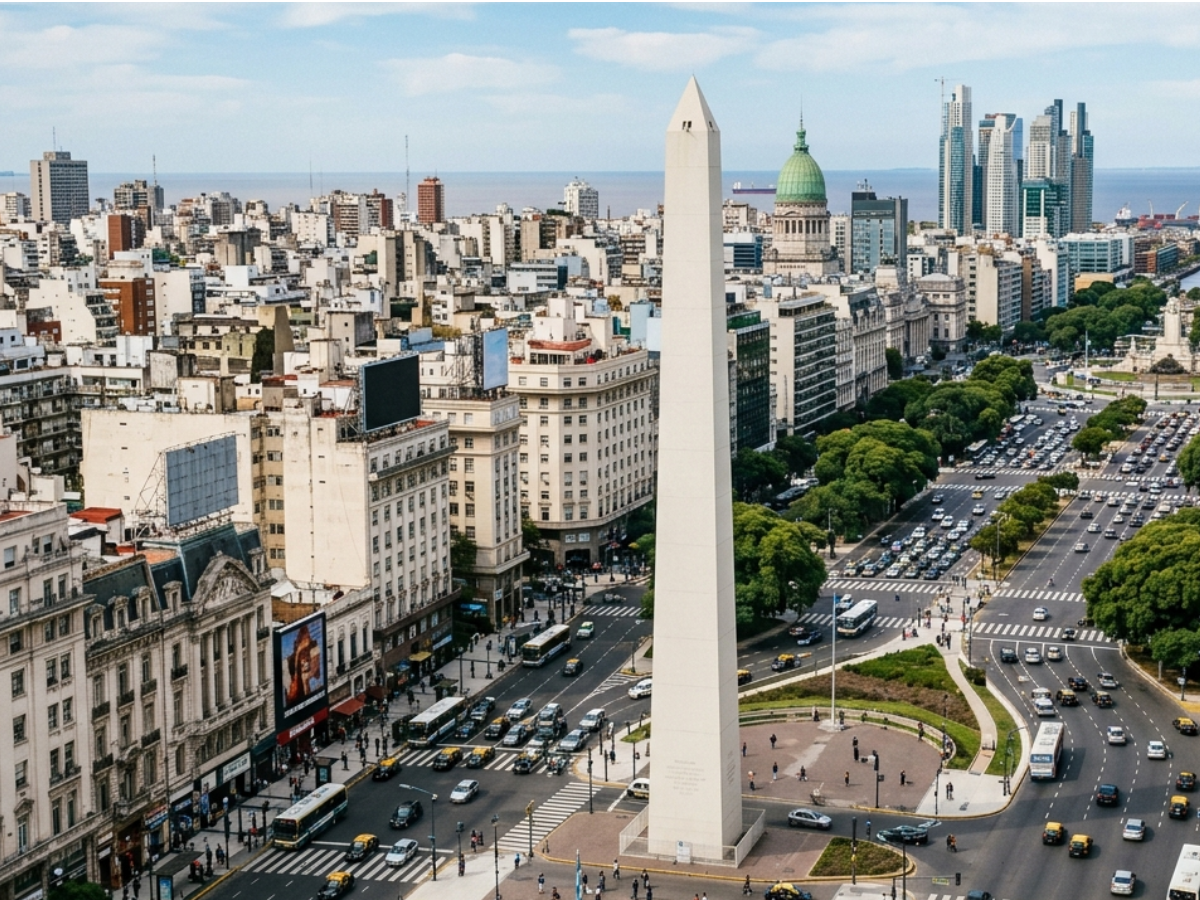
Buenos Aires functions as a gateway to Patagonia for most visitors but deserves considerably more time than most itineraries allocate it. The neighbourhoods of Palermo, San Telmo, and La Boca each have distinct characters: Palermo for restaurants and design, San Telmo for Sunday markets and tango venues, and La Boca for the coloured Caminito street that is every bit as photogenic as advertised.
Steak and wine are not clichés in Buenos Aires; they are genuinely central to the food culture and consistently delivered at a quality that makes the reputation accurate. Parrilla restaurants in Palermo and Recoleta serve cuts that most other countries do not reliably produce. The city runs late. Dinner before 9pm is unusual, and the tango milongas do not reach full attendance until well after midnight.
6. Mexico City, Mexico
Mexico City belongs on any serious travel guide to Latin America for the density of what it contains. The historic centre, the Zócalo, the Metropolitan Cathedral, and the Templo Mayor ruins excavated beneath it occupy the same ground as the Aztec capital of Tenochtitlan, and that layering of civilisations is visible in the architecture rather than requiring imagination.
Chapultepec Park holds the Museo Nacional de Antropología, which contains the most comprehensive pre-Columbian collection in the world and requires most of a full day to see properly. The food in Mexico City, both at market stalls and in the restaurant scene that has made the city internationally recognised, is consistently excellent across every price range. Day trips to Teotihuacán, the pyramid complex an hour north of the city, are standard and genuinely worthwhile.
7. The Amazon Basin, Brazil or Peru
The Amazon is less a destination than a commitment. Getting into the genuine rainforest, away from the accessible edges where the experience is thin, requires at least four days and ideally more. Iquitos in Peru and Manaus in Brazil are the two primary entry points, both accessible only by air or river.
Things to do in Latin America lists frequently mention the Amazon without adequately communicating what is involved. It is hot, humid, and requires genuine tolerance for insects and physical discomfort. What it offers in return, an ecosystem of a scale and density that has no equivalent on the planet, is proportional to the effort required to reach it. A reputable lodge-based operator with guided excursions is the most practical approach for first-time visitors.
8. Havana, Cuba
Havana's appeal is specific and not universally shared. The city is visually extraordinary: the Malecón seafront, the colonial architecture of Habana Vieja, the American cars from the 1950s that function as taxis, and the pace of life, created partly by circumstance and partly by culture, are genuinely unlike anything else in Latin American vacation experiences.
The infrastructure is inconsistent, the heat is considerable, and the gap between expectation and reality is sharper here than at most other destinations on this list. Travellers who want historical resonance, visual character, and a city that has not been smoothed by international tourism chains tend to leave deeply impressed. Those who want reliable wifi and air-conditioned comfort find the experience harder.
9. The Atacama Desert, Chile
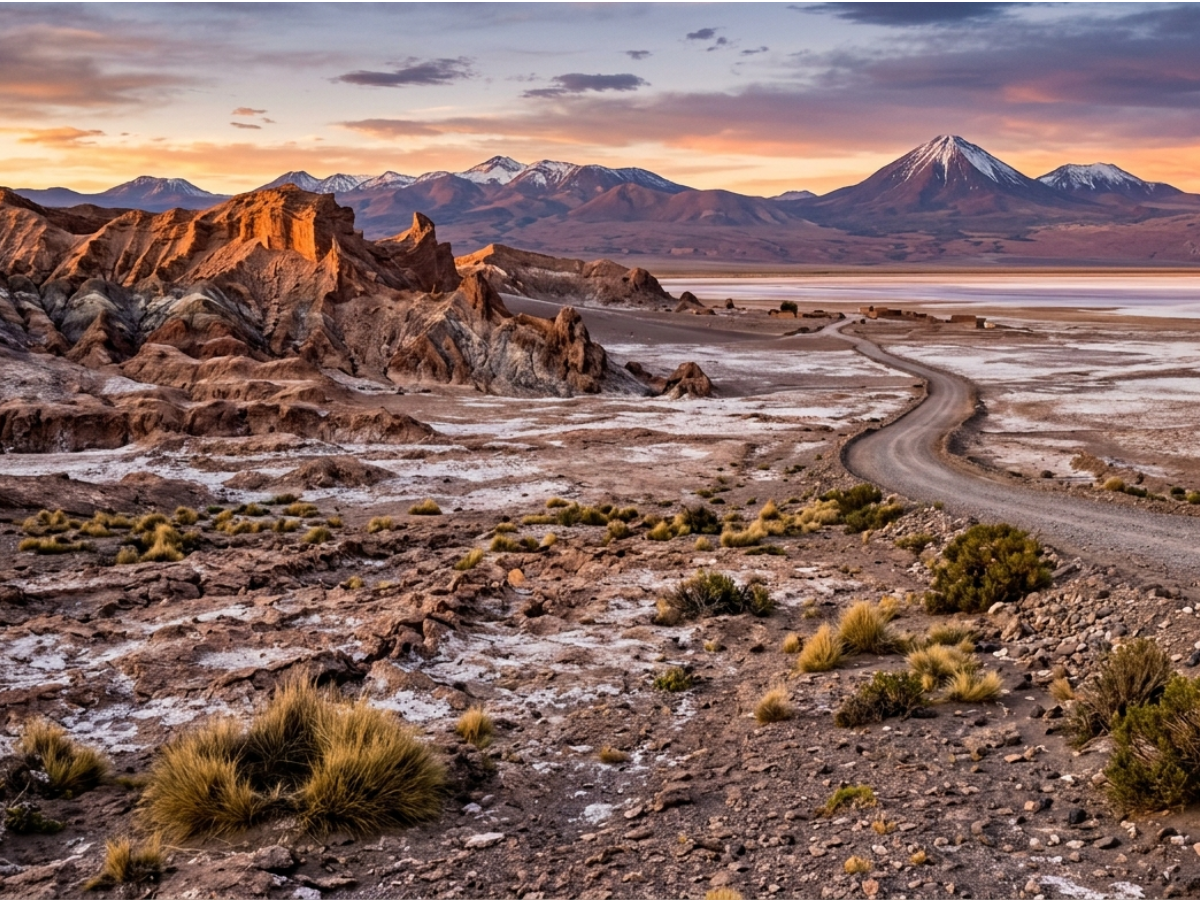
The Atacama is the driest nonpolar desert on earth, and its landscape, salt flats, geysers, coloured rock formations, and a sky so dark and clear that major observatories are built here are as close to a lunar landscape as most travellers will experience on this planet.
San Pedro de Atacama is the base town, with tour operators running excursions to the Valle de la Luna, the El Tatio geysers (best at sunrise, when the cold air makes the steam columns dramatic), and the Salar de Atacama salt flat. The altitude San Pedro sits at, 2,400 metres, affects some visitors, and the temperature difference between midday and midnight can exceed 30°C.
10. Rio de Janeiro, Brazil
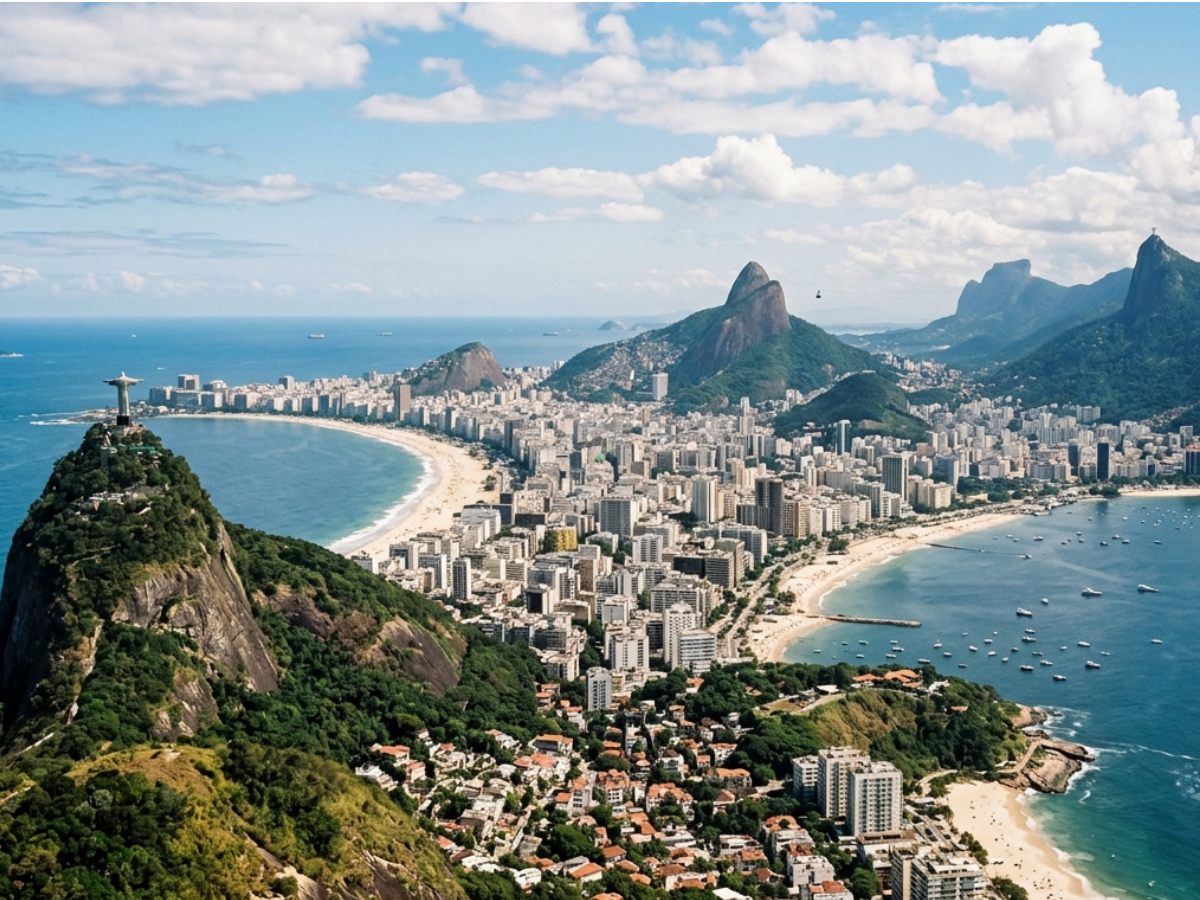
Rio is difficult to make original observations about because the city so thoroughly lives up to the images of it. Sugarloaf Mountain and the Christ the Redeemer statue are the headline visuals, and both justify the visitor numbers despite the familiarity. The Tijuca Forest, the largest urban rainforest in the world, provides a hiking alternative to the beach culture that occupies most of Ipanema and Copacabana.
Carnival, if the timing aligns, transforms the city into something that photographs cannot fully contain. The Sambadrome parades and the neighbourhood blocos street parties operate simultaneously at a scale that requires being present to understand.
How EaseMyTrip Supports Latin America Trip Planning
Latin America vacation planning from India involves long-haul international routing, typically through Europe, the Gulf, or North America, alongside internal flights within the continent that are often cheaper to book locally than through international platforms. EaseMyTrip's international flight search surfaces connecting options across these routing hubs, comparing timings and fares across multiple carrier combinations rather than defaulting to the most obvious connection. Along with booking flights, travellers can also reserve comfortable stays through Hotels to make multi-country journeys more convenient.
For travellers building a multi-country Latin America itinerary, such as Peru and Argentina or Colombia and Ecuador, the platform's AI-powered tools help identify the most practical internal flight combinations and flag fare calendar windows where international fares drop significantly on the India-to-South America routes. As AI becomes more capable of building genuinely complex, multi-destination international itineraries based on individual preferences and budget parameters, EaseMyTrip is developing towards a platform that handles places to visit in Latin America with the same ease as a domestic booking. For a region this geographically complex and this rewarding, that kind of intelligent, connected planning support changes what is actually achievable within the trip budget.
FAQs
Q: What are the best places to visit in Latin America for first-time travellers?
For first-time visitors, the most accessible combination of the best places Latin America has to offer is Peru and Colombia: Machu Picchu and Cusco alongside Cartagena and the Colombian coffee region. Both countries have good tourist infrastructure, English is spoken in most traveller-facing contexts, and the two destinations together cover archaeological heritage, colonial architecture, and natural landscapes within a two-week itinerary. Buenos Aires and Chile's Patagonia make a strong alternative for travellers prioritising natural scenery over historical sites.
Q: How much time is needed for a Latin American travel trip?
A meaningful Latin American travel trip requires a minimum of two weeks to cover one or two countries properly and three weeks for a multi-country circuit. The continent's scale means that any itinerary involves genuine choices about what to leave out. A two-week Peru trip covering Lima, Cusco, Machu Picchu, and the Sacred Valley is full without feeling rushed, while trying to add Bolivia or Colombia in the same window typically compromises all three. First-time visitors to the region generally benefits from going deep on fewer destinations rather than wide across them.
Q: What are the best things to do in Latin America beyond the famous sites?
Things to do in Latin America beyond the headline attractions include food markets in Mexico City and Lima, both cities have market-based food cultures that are genuinely worth building time around; wine regions in Mendoza and the Maipo Valley near Santiago; the colonial architecture of smaller cities like Oaxaca in Mexico and Sucre in Bolivia; and river travel in the Amazon that provides a different register of experience from any land-based itinerary. These experiences tend to be cheaper and less crowded than the flagship sites and consistently rank among the trip highlights reported by travellers who include them.
Q: When is the best time to visit South America destinations?
The South America destinations on this list span different climate zones, so timing depends on the specific itinerary. Patagonia is best between November and February; the Amazon is most accessible between June and October when water levels are lower; the Galápagos and Atacama are broadly year-round with minor seasonal variations; Peru's main sites are best between May and September, outside the rainy season. Travellers combining multiple South American countries in one trip typically route north-to-south between June and September, which aligns with the best conditions across most of the continent.
Q: How can EaseMyTrip help plan a Latin America vacation from India?
EaseMyTrip's international flight search helps travellers planning a Latin America vacation from India compare routing options through Europe, the Gulf, and North America hubs alongside direct fare comparisons across carriers, which is particularly useful for a region where the best-value routing is rarely obvious. AI-powered fare calendar tools surface the lowest-fare windows on India-to-Latin America routes over a month-long period, allowing flexible travellers to time their booking around price drops rather than paying the first fare they see. For complex multi-destination itineraries across several Latin American countries, the platform's planning tools help build connected routes rather than requiring each leg to be researched and booked independently.






 June 29, 2026
 Share
Share
 Download as PDF
  From
From 
 Departure Date
 Travellers & class
 Rent For
 Departure Date



 Share
Share
{{cmnt.comment}}