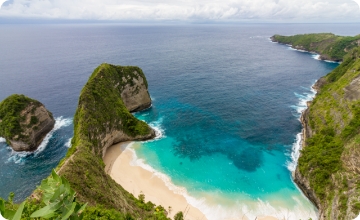
South America is a continent that refuses to fit into a summary. In a single week, a traveller could watch the Amazon River swallow the horizon in Brazil and feel the spray from 275 waterfalls at Iguazu.
They can eat the world's best steak in Buenos Aires, and float weightlessly across a turquoise salt flat in Bolivia, where the sky and the earth merge into one unbroken reflection. Each of these experiences sits within a few flight hours of the next.
For Indian travellers looking beyond the familiar routes of Europe and Southeast Asia, South America tour packages open the door to rare and unforgettable experiences. A well-planned itinerary makes it easy to explore this diverse continent in a single journey.
Why South America Deserves a Place on Your Travel Wishlist
South America covers 17.8 million sq. km., making it nearly twice the size of Australia. Yet a well-planned South America trip package brings its most spectacular highlights within the range of a 12 to 14-day trip.
Here are some reasons why Indian travellers keep choosing South America over more familiar routes:
A Continent of World Records
South America holds more superlatives than almost any comparable landmass: the Amazon, the world's largest tropical rainforest at 5.5 million sq. km.; Lake Titicaca, the world's highest navigable lake at 3,812 metres above sea level; Salar de Uyuni, the world's largest salt flat at 10,582 sq. km.; and the Andes, the longest continental mountain range on Earth at 7,000 km.
Most of these landmarks sit within a single 14-day circuit, which gives South America trip packages an extraordinary concentration of once-in-a-lifetime experiences.
Culture Built Over Millennia
Long before European contact, civilisations including the Inca, the Tiwanaku, the Moche, and the Nazca constructed cities, road networks, and astronomical observatories that still challenge modern understanding.
The Inca road network, the Qhapaq Nan, stretched more than 30,000 km across the continent's most challenging terrain. Today, that deep cultural heritage sits alongside colonial-era plazas, world-class opera houses, and some of the most electrifying cities on the planet.
South America Is Easier to Visit Than You Think
Total travel time from Delhi or Mumbai to cities like São Paulo or Lima runs between 20 and 24 hours, including the layover. Once you land, daily costs across most of South America compare very favourably to Western Europe for equivalent quality stays and meals.
Visa requirements vary by country for Indian passport holders. Passport validity of at least six months beyond your intended travel dates is a standard requirement throughout the region. Always verify current consulate requirements well before your planned departure.
South America’s Most Unforgettable Destinations
South America presents the traveller with extraordinary competing claims: the ecological drama of the Amazon basin, the vineyard romance of Mendoza, the urban electricity of Rio and Buenos Aires, and the raw geological spectacle of Patagonia's glaciers and granite towers.
Travellers who book South America tour packages combining multiple landscapes and cultural stops find it consistently exceeds every expectation. The destinations below reward every hour you give them:
Machu Picchu, Peru
Machu Picchu occupies a ridge of the Andes at 2,430 metres above sea level, cradled inside a bend of the Urubamba River canyon roughly 80 km northwest of Cusco. The Inca emperor Pachacuti commissioned the site around 1450 AD as a royal estate and religious sanctuary.
Entry operates under a strict timed ticketing system administered by the Peruvian Ministry of Culture. Book your timed entry ticket through the official government portal well before departure.
Rio de Janeiro, Brazil
Rio de Janeiro compresses a landscape of implausible beauty into a single metropolitan area. Granite peaks thrust directly through the city's neighbourhoods and drop to the Atlantic coastline, and the city fills every available space with communities of wildly different energies.
Christ the Redeemer (Cristo Redentor) stands 38 metres tall on Corcovado Mountain at 710 metres elevation, arms extended over a panorama of the entire city. The Carnival celebration, held each year in February or early March, transforms Rio into the planet's largest street party.
14 samba schools compete in the purpose-built Sambadrome stadium before crowds exceeding 70,000 people per night, while millions more fill the city's street parties (blocos) around them. Carnival tour packages built around this period book out many months in advance.
Iguazu Falls, Argentina and Brazil
Iguazu Falls consists of approximately 275 individual cascades spread across nearly 3 km of the Iguazu River on the Argentina-Brazil border. The largest single drop, the Devil's Throat (Garganta del Diablo), plunges 82 metres into a horseshoe canyon of such concentrated force that a permanent rainbow floats in the mist above it.
The falls spread across a width roughly four times greater than Niagara, and the volume of water passing through the system during the wet season ranks among the highest of any waterfall system on Earth.
Most well-structured South America tour packages allocate two full days at Iguazu: one on each side of the border. Coatis, large raccoon-like mammals, roam freely through both national parks and provide regular wildlife encounters along the walking trails.
Buenos Aires, Argentina
Buenos Aires earns its description as the Paris of South America through wide tree-lined boulevards, grand 19th-century European-style architecture, and a cafe culture that treats sitting over coffee for two hours as a civic virtue rather than an indulgence.
The city covers 203 sq. km. across 48 distinct barrios, each with an immediately recognisable character and a loyal neighbourhood identity. The Teatro Colon opera house, completed in 1908, ranks consistently among the world's top five opera venues for acoustic quality and visual magnificence.
Couples who structure their South America trip packages around culture and urban romance find Buenos Aires the natural centrepiece of any itinerary.
Salar de Uyuni, Bolivia
Salar de Uyuni covers 10,582 sq. km. of the Bolivian Altiplano at 3,656 metres above sea level, a dimension so vast it appears from satellite images as a white void at the heart of the continent. During the dry season from May to October, the surface dries into geometric hexagonal salt tiles that stretch to every horizon in every direction.
During the rainy season from November to April, a thin film of water creates the famous mirror effect. Photographers from every continent time their visits specifically for the mirror season.
Day tours from the town of Uyuni include the Train Cemetery (a collection of rusting 19th-century steam locomotives abandoned on the Altiplano) and Incahuasi Island, a cactus-covered rock outcrop that rises from the centre of the flat like a ship.
Patagonia, Chile and Argentina
Patagonia covers the southern third of the continent and divides between Chile and Argentina across some of the most dramatically beautiful wilderness on Earth. Torres del Paine National Park in Chile rises as a UNESCO World Biosphere Reserve of granite spires, turquoise glacial lakes, and extensive lenga beech forest.
The Perito Moreno Glacier in Argentina advances into Lake Argentino at a rate of up to two metres per day, calving massive blocks of ice into the water in thunderous collapses that visitors watch from elevated observation decks above the shoreline.
The W Trek in Torres del Paine covers approximately 80 km over five days and passes through the park's most iconic landscapes. EaseMyTrip's adventure tour packages include Patagonia trekking options that pair well with a full South American circuit through Peru, Argentina, and Brazil.
Crossing Continents: From India to South America
No direct flights currently operate from India to South America. One-stop connections through Gulf and European hubs carry the majority of Indian passengers efficiently to the continent's major entry points.
India’s main airport hubs receiving the most passengers from India include the Guarulhos International Airport (GRU) in São Paulo in Brazil and Jorge Newbery Airfield in Buenos Aires (AEP). Other main airports serving as hubs for these flights are Jorge Chavez International Airport (LIM) in Peru and Santiago Arturo Merino Benitez (SCL) in Chile.
Emirates via Dubai, Qatar Airways via Doha, and Lufthansa via Frankfurt cover the most popular routing combinations. Total travel time from Delhi or Mumbai to Sao Paulo or Lima typically runs 20 to 24 hours, including layover.
Before you lock in your bookings, these travel hacks to save money in 2026 cover everything from fare alert strategies to smart multi-city routing that cuts costs across a continent-wide trip.
Choosing the Right Time to Explore South America
South America spans from 12 degrees north to 55 degrees south latitude, which produces climatic extremes that vary sharply between regions. The table below gives a practical guide for the major South American destinations that appear in most India-origin itineraries:
| Season | Months | Temperature | Best For | Crowds |
|---|
| Summer |
December to February |
28°C to 36°C |
Rio Carnival, beaches, Patagonia |
Peak |
| Autumn |
March to May |
18°C to 26°C |
Wine harvest, Buenos Aires, Machu Picchu |
Shoulder |
| Winter |
June to August |
5°C to 22°C |
Machu Picchu dry season, Andes, skiing |
Moderate |
| Spring |
September to November |
14°C to 24°C |
Wildlife, Galapagos, Patagonia, budget |
Low |
Couples who prioritise romance discover that Buenos Aires' tango shows and candlelit parrillas, and Rio's sunset cable car journey to Sugarloaf rank among the most powerful experiences the world offers. EaseMyTrip's honeymoonn tour packages include South American itineraries that combine these highlights most effectively for couples planning a post-wedding escape or a significant anniversary trip.
What Every Traveller Should Know About South America
A continent as varied and complex as South America rewards travellers who prepare carefully. The following practical details shape the experience from the day of arrival, and many first-time visitors discover these points only after landing:
- Currency: South America has no unified currency. Argentina uses the Peso, Brazil the Real, Peru the Sol, Chile the Peso, and Bolivia the Boliviano. USD remains widely accepted across tourist areas and major hotels throughout the continent.
- Altitude sickness: Cusco sits at 3,399 metres, Lake Titicaca at 3,812 metres, and Salar de Uyuni at 3,656 metres above sea level. Altitude sickness (soroche) affects many travellers arriving from sea level. Build a minimum of 24 to 48 hours of rest and gradual acclimatisation into Cusco before any strenuous hiking or high-altitude excursions.
- Safety: Petty theft in crowded tourist areas represents the primary concern in Rio, Buenos Aires, and Cusco. Keep valuables in hotel safes, use hotel-recommended taxis or app-based ridesharing, and avoid walking with phones and cameras visibly in hand in busy public spaces.
- b Spanish serves as the primary language across most of the continent. Portuguese is the language of Brazil. English proficiency in major tourist destinations has grown considerably, and guides at Machu Picchu, Iguazu, and Torres del Paine typically offer English-language services.
Before you depart, read up on the benefits of travel insurance to understand exactly what coverage protects you against flight cancellations, medical emergencies, and baggage loss across a multi-country itinerary.
South America's Must-Try Foods and Drinks
South American cuisine reflects the continent's biodiversity and its layered history of indigenous, African, European, and Asian culinary influence. Here is what to seek out specifically on any well-planned South America tour:
- Ceviche (Peru): Raw fish cured in fresh citrus juice, mixed with red onion, aji amarillo chilli, and coriander. Lima's cevicherias open for lunch only, using the morning's catch. Leche de tigre (tiger's milk), the citrus marinade remaining in the bowl, earns its own reputation as a flavour experience and a widely cited hangover cure.
- Asado (Argentina): Argentine beef grilled over wood embers produces cuts that operate in a different category from anything most travellers have encountered before. An asado is a social event as much as a meal: the parrillero (grill master) tends the fire for several hours while guests eat choripan (grilled chorizo on crusty bread) as a starter.
- Acai (Brazil): The acai berry grows throughout the Amazon basin and appears at juice bars across Brazil as a thick frozen bowl topped with granola, banana, and honey. Rio de Janeiro's Ipanema and Leblon beach kiosks serve outstanding versions.
- Pisco Sour (Peru): Pisco is a grape brandy distilled in Peru's coastal valleys. The Pisco Sour mixes it with fresh lime juice, simple syrup, egg white, and Angostura bitters. The result is bright, slightly frothy, and surprisingly strong.
- Churrasco (Brazil): Brazilian churrascarias operate on the rodizio system: waiters circulate the dining room with skewers of various grilled meats and carve portions directly onto your plate until you flip a small disc to the red (stop) side. The rotation typically includes picanha (rump cap), fraldinha (flank steak), linguica sausage, lamb ribs, and chicken.
Start Planning Your South America Trip Today with EaseMyTrip
South America is larger on a map than it feels on a well-planned itinerary, richer in variety than any single trip can fully exhaust, and considerably harder to leave than the return flight date suggests.
For families travelling with children, Iguazu's waterfall drama, the floating reed islands of Lake Titicaca, and the wide open expanse of Patagonia cover every age group without a dull moment in between. Solo travellers find the continent's open, welcoming culture and well-established backpacker infrastructure particularly accommodating.
Book your South America tour packages through EaseMyTrip Holidays today with zero booking fee on flights and start planning the journey that has been waiting long enough.


 AED
AED  THB
THB  USD
USD GBP
GBP








 Compare Packages(0{{CompPack.length}})





 Compare Packages