Delhi is gifted with countless religious places, and its temples are some of the most beautifully crafted in the country. Some owe their fame to elegant architecture, others to their reputation as wish fulfilling shrines that devotees return to year after year. Here's a list of the most enticing temples to explore while soaking in the charm of dil walon ki "Dilli." Before you plan your visit, it's worth looking for cheap flights to Delhi so you can save a little extra for the trip itself.
15 Famous Temples In Delhi You Should Visit in 2026
Delhi is full of temples that mix old stories from the Mahabharata times with beautiful modern buildings. Some are quiet little places hidden in narrow streets, while others are big complexes that attract huge crowds. These temples give you a chance to pray, find some peace, and experience the city’s deep cultural roots. If you want calm moments, lively festivals, or just to see amazing architecture, this list of the top 20 Popular temples in Delhi will help you plan your visits.
| Temple Name |
Location |
Deity |
Timings |
| Akshardham Temple |
East Delhi (near Noida Mor) |
Swaminarayan |
9:30 AM – 6:30 PM (closed Mondays) |
| Bhairon Temple (Kilkari Baba Bhairav Nath Mandir) |
Near Purana Qila, Pragati Maidan |
Bhairava (form of Lord Shiva) |
5:00 AM – 12:00 Noon & 3:00 PM – 9:00 PM |
| Hanuman Mandir, Connaught Place |
Baba Kharak Singh Marg, Connaught Place |
Lord Hanuman (Bala Hanuman) |
5:00 AM – 11:00 PM (till 2:00 AM Tue, all night Sat) |
| Gauri Shankar Temple |
Chandni Chowk, Old Delhi |
Lord Shiva & Parvati |
5:00 AM – 10:00 AM & 5:00 PM – 10:00 PM |
| Hanuman Mandir, Jhandewalan |
Jhandewalan, Karol Bagh |
Lord Hanuman |
6:00 AM – 10:00 PM |
| Sai Baba Mandir, Lodhi Road |
Lodhi Road |
Shirdi Sai Baba |
5:00 AM – 10:00 PM |
| Shri Jagannath Mandir, Hauz Khas |
Hauz Khas (Tyagraj Nagar) |
Lord Jagannath, Balabhadra & Subhadra |
Summer: 5:00 AM – 12:30 PM & 4:00 PM – 11:00 PM; Winter: 6:00 AM – 12:30 PM & 4:00 PM – 9:00 PM |
| Nili Chhatri Temple |
Yamuna Bazaar, near Salimgarh Fort, Kashmere Gate |
Lord Shiva |
5:00 AM – 12:00 Noon & 4:00 PM – 11:00 PM |
| ISKCON Temple (Sri Sri Radha Parthasarathi) |
East of Kailash |
Radha-Krishna |
4:30 AM – 9:00 PM (sanctum closed 1:00 PM – 4:00 PM) |
| Shri Digambar Jain Lal Mandir |
Chandni Chowk (opposite Red Fort) |
Lord Parshvanath / Mahavira |
Summer: 5:30 AM – 11:30 AM & 6:00 PM – 9:00 PM; Winter: 6:00 AM – 12:00 Noon & 5:30 PM – 8:30 PM |
| Chhatarpur Mandir (Adya Katyayani Shaktipeeth) |
Chhatarpur, South Delhi |
Goddess Katyayani |
4:00 AM – 11:00 PM |
| Lakshmi Narayan Temple (Birla Mandir) |
Mandir Marg, near Connaught Place |
Lakshmi-Narayan |
4:30 AM – 1:30 PM & 2:30 PM – 9:00 PM |
| Kalkaji Mandir |
Kalkaji, South Delhi |
Goddess Kali (Kalka) |
4:00 AM – 11:30 PM (brief closures: 11:30 AM – 12:00 PM & 3:00 PM – 4:00 PM) |
| Yogmaya Mandir |
Mehrauli (near Qutub Minar) |
Goddess Yogmaya |
5:00 AM – 8:30 PM |
| Uttara Swamimalai Temple (Malai Mandir) |
Sector 7, R.K. Puram |
Lord Murugan (Swaminatha/Kartikeya) |
6:00 AM – 12:00 PM & 5:00 PM – 9:00 PM |
Akshardham Temple
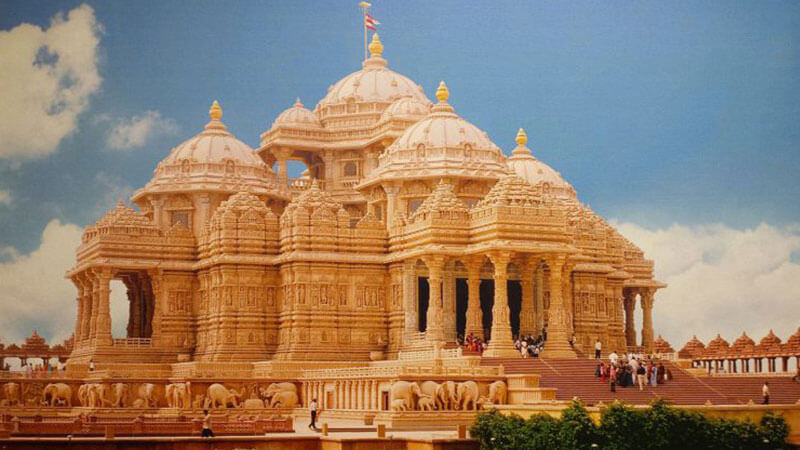
Akshardham is practically a small city built for devotion, art, and Indian culture, and it's usually the first stop on any "one day in Delhi" itinerary. Spread across acres near the Yamuna, the complex mixes intricately carved pink sandstone and marble with modern touches like an IMAX show, a boat ride through 10,000 years of history, and the Sahaj Anand musical fountain show in the evening. Even visitors who aren't particularly religious tend to walk away impressed, the scale of the carving alone, thousands of pillars, elephants, saints, and deities, takes hours to properly take in. Entry to the main temple is free, though the exhibitions, boat ride, and water show all need separate tickets.
The temple is dedicated to Bhagwan Swaminarayan, whose golden idol sits at the heart of the main shrine, surrounded by murtis of other gurus from the Swaminarayan tradition. Devotees believe he wasn't just a saint but a soul who walked barefoot across India as a young yogi, teaching people that real devotion lies in simplicity and service rather than ritual alone. Many visitors say that standing before the idol during the evening aarti, when the whole hall glows with lamps and chanting fills the air, brings a kind of clarity that's hard to put into words. That quiet, personal connection with the deity, even amid all the grandeur around it, is what keeps people coming back not as tourists but as devotees. With its grand architecture and spiritual significance, Akshardham is widely regarded as one of the famous temples in India that every devotee and traveller should experience at least once.
- Timings:
- Opening – Closing: 9:30 AM to 6:30 PM (last entry around 5:30 to 6:30 PM depending on season)
- Closed on Mondays
- Aarti Timing: Morning aarti around 10:00 AM, evening aarti around 6:00 to 6:30 PM
- Musical fountain show: after sunset, usually around 7:30 PM
- How to Reach:
- Nearest Metro: Akshardham Station (Blue Line), 350 metres from Gate 1
- Well connected by DTC buses from Noida Mor and Mayur Vihar
- About 21 km from Indira Gandhi International Airport (roughly 1 to 1.5 hours by road)
- Nearby Attractions:
- Kalindi Kunj and Yamuna Biodiversity Park
- Commonwealth Games Village
- ISKCON Temple, East of Kailash
Bhairon Temple (Kilkari Baba Bhairav Nath Mandir)
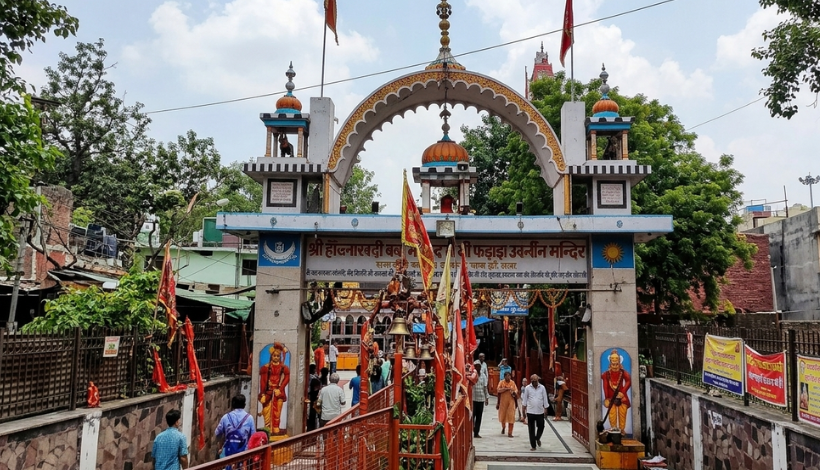
Tucked just behind Purana Qila, opposite Pragati Maidan, Bhairon Temple stands apart from every other shrine in Delhi. It's one of the very few temples in India where alcohol is offered to the deity instead of the usual sweets and flowers, and that single ritual is enough to draw curious travellers along with regular devotees. The interiors are done up almost entirely in marble, giving the small shrine a quiet elegance that feels at odds with the intensity of what goes on inside. It's also counted among the five temples believed to date back to the Mahabharata era, which makes it worth visiting for the history alone.
Local belief holds that the Pandavas built this temple, and it was here that Bheem worshipped Bhairava, a fierce form of Lord Shiva, and attained siddhis, or spiritual powers. There's an older story too. Bhairava is said to have once misused his powers and was punished by Goddess Chandi, who beheaded him. But even in that final moment his devotion moved her, and she granted him liberation instead of damnation. That's why he's worshipped here not out of fear but respect, and offering liquor is seen as a small echo of the mercy the goddess once showed him.
- Timings:
- Opening – Closing: 5:00 AM to 12:00 Noon, and 3:00 PM to 9:00 PM
- Aarti Timing: Morning and evening aarti within the above hours; Sundays see the heaviest crowds
- How to Reach:
- Nearest Metro: Pragati Maidan (Blue Line) and Indraprastha, both a short walk away
- Buses 274, 405, 405A, 419, 425 stop nearby
- Drive via Mathura Road or Bhairon Marg; parking near the Zoo or Purana Qila is easiest
- Nearby Attractions:
- Purana Qila (Old Fort)
- National Zoological Park (Delhi Zoo)
- Pragati Maidan exhibition complex
Hanuman Mandir, Connaught Place
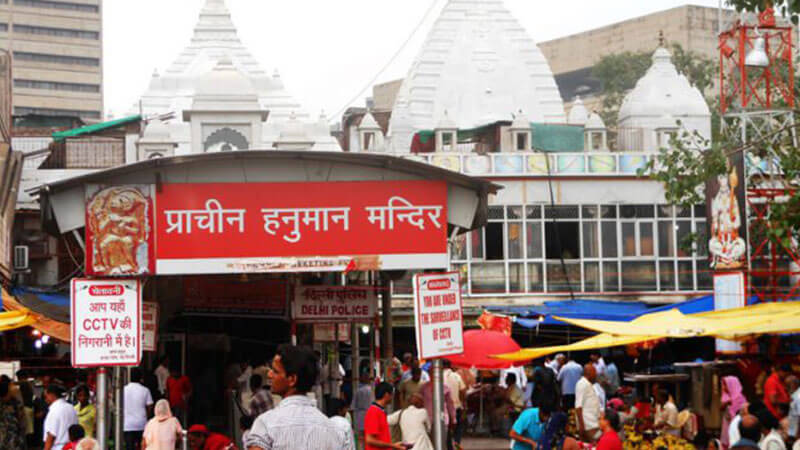
Right in the middle of Delhi's busiest commercial district sits a temple that's older than the district itself. This is one of the five believed to have been built during the time of the Mahabharata, tucked just off Baba Kharak Singh Marg, where office goers, shoppers, and pilgrims cross paths all day long. What makes it particularly special is that the idol is considered swayambhu, or self manifested, meaning nobody carved it, it simply appeared. On Tuesdays and Saturdays the temple barely sleeps, opening as early as 4 AM and staying open all night on Saturdays.
As the story goes, after the Pandavas won the war at Kurukshetra, they built five temples across Delhi in gratitude, and this was one of them. The idol shows Bala Hanuman facing south, holding his gada in one hand while the other rests over his heart in reverence to Rama and Sita, whose images he's believed to carry within him always. Regulars say a sincere prayer here, especially during the packed evening aarti when the bells seem to shake the walls, gives them the courage to face whatever they're struggling with. That mix of raw devotion and unbroken tradition, right in the heart of a city that never stops moving, is what keeps people coming back generation after generation.
- Timings:
- Opening – Closing: 5:00 AM to 11:00 PM (extended till 2:00 AM on Tuesdays, open all night on Saturdays)
- Aarti Timing: Morning aarti around 5:30 AM, evening aarti around 7:00 PM
- How to Reach:
- Nearest Metro: Rajiv Chowk (Blue and Yellow Lines), a few minutes' walk away
- New Delhi Railway Station is about 2 km away
- IGI Airport is roughly 14 km away
- Nearby Attractions:
- Gurudwara Bangla Sahib
- Jantar Mantar
- Connaught Place shopping and dining district
Gauri Shankar Temple
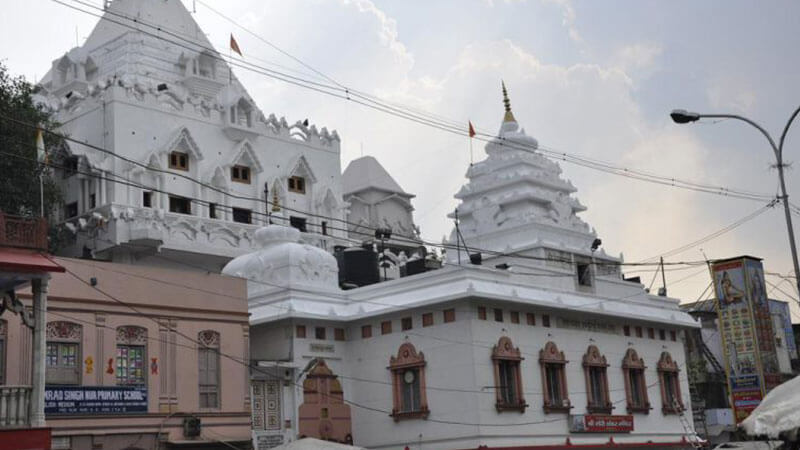
Right next to the Digambar Jain Lal Mandir on the main Chandni Chowk road, Gauri Shankar Temple has quietly watched over the chaos and colour of Old Delhi for more than 800 years, making it one of the oldest Shiva temples in the entire NCR. What draws people here isn't scale, it's intimacy. The ancient brown lingam at the centre, wrapped in silver serpents and topped by a water vessel that drips continuously, feels far more personal than the sprawling complexes elsewhere in the city. Inside, idols of Shiva and Parvati draped in real gold jewellery sit just behind the lingam, and the silver wall paintings of divine scenes add to the temple's timeless feel.
The story behind it is one of gratitude. A Maratha soldier named Appa Ganga Dhar was badly wounded in battle centuries ago, with little hope of surviving. In that moment he prayed to Lord Shiva and promised that if he lived, he'd build a temple in his honour. He recovered, and true to his word, he built this one to honour Shiva and Parvati, whose love story many devotees consider the very first love story of the universe. Every Monday the temple fills with worshippers continuing that same tradition, and during Maha Shivratri the whole lane outside comes alive with lights and chanting.
- Timings:
- Opening – Closing: 5:00 AM to 10:00 AM, and 5:00 PM to 10:00 PM
- Aarti Timing: Morning aarti around 6:00 AM, evening aarti around 7:00 PM
- How to Reach:
- Nearest Metro: Chandni Chowk Station (Yellow Line), about 1 km away
- Old Delhi Railway Station is around 1.2 km away
- Easily reached on foot from Red Fort through the Chandni Chowk market lanes
- Nearby Attractions:
- Red Fort
- Digambar Jain Lal Mandir and Jain Birds Hospital
- Khari Baoli Spice Market
Hanuman Mandir, Jhandewalan
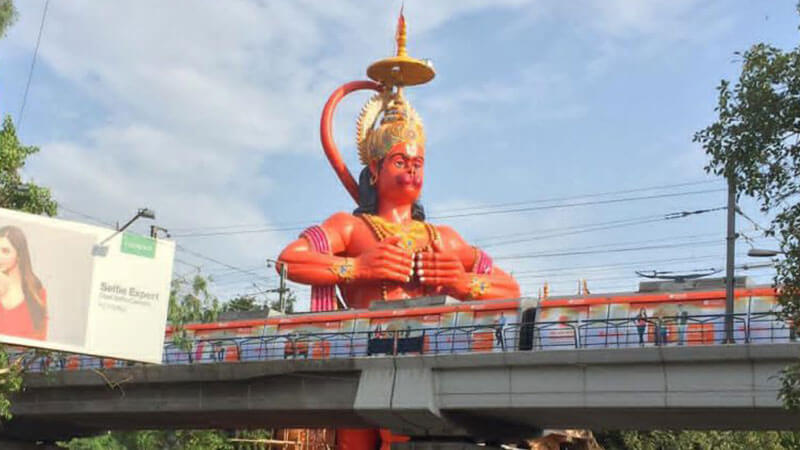
You can spot this one from a distance. The 108 feet tall statue of Lord Hanuman rises above the elevated metro line between Karol Bagh and Jhandewalan stations, making it one of the tallest Hanuman statues in the world and an unmistakable part of Delhi's skyline. What pulls people in isn't just the size though. It's the entrance, shaped like the open mouth of a slain demon, and the evening aarti, when the statue's crossed arms slowly part and its chest opens to reveal glowing idols of Rama and Sita nestled inside.
Devotees say this isn't just for show, it's a literal depiction of what the Hanuman Chalisa has described for centuries, that Rama and Sita live permanently within Hanuman's heart. Watching that chest slide open under the evening lights, drums beating and the crowd chanting "Jai Bajrangbali," is something that stays with people long after they leave. Tuesdays get especially crowded, with devotees waiting hours just to witness that moment, believing a wish made as the idol's heart opens is heard the loudest.
- Timings:
- Opening – Closing: 6:00 AM to 10:00 PM daily (some sources note a short afternoon break, best to check locally)
- Aarti Timing: Evening aarti with the chest opening ritual around 6:00 to 7:00 PM, especially on Tuesdays and Saturdays
- How to Reach:
- Nearest Metro: Jhandewalan Station (Blue Line), about 140 m away; Karol Bagh Station is also close
- Well connected via Desh Bandhu Gupta Road
- IGI Airport is roughly 14 to 16 km away
- Nearby Attractions:
- Jhandewalan Devi Mandir (Maa Aadi Shakti)
- Karol Bagh market
- Central Park, Connaught Place, a short drive away
Sai Baba Mandir, Lodhi Road
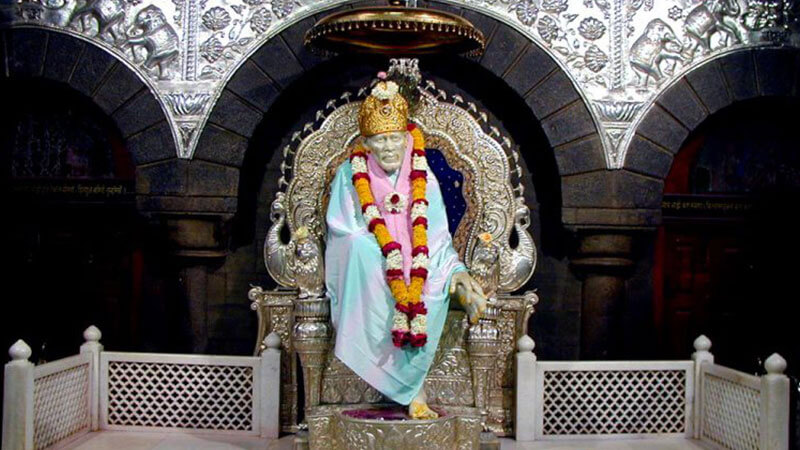
One of the oldest Sai Baba shrines in the capital, this temple on Lodhi Road has a quiet, unassuming charm that makes it a favourite for anyone looking to step away from Delhi's noise for a bit. The white marble idol, visible right from the road, sits slightly elevated and is reached by a short flight of stairs, and devotees offer chadar, flowers, and prasad much like they would at the original shrine in Shirdi. What sets this temple apart is its commitment to community service. The trust that runs it organises free medical camps, educational support, and daily meals, staying true to Sai Baba's own teachings of love and selfless giving.
Devotees believe his presence has been felt strongly here ever since the temple was set up by the Sai Bhakta Samaj in 1968, and stories of wishes fulfilled after visiting get passed around among regulars almost like folklore. Sai Baba, remembered for blending Hindu and Islamic traditions in his teachings and for living simply among the poor in Shirdi, is seen here as someone whose blessings reach anyone who comes with sincerity, regardless of background. Thursdays are considered his special day, and the temple fills from early morning with people waiting patiently just for a glimpse of the idol.
- Timings:
- Opening – Closing: 5:00 AM to 10:00 PM (some sources note till 11:00 PM)
- Aarti Timing: Kakad Aarti 5:30 AM, Morning Aarti 8:00 AM, Noon Aarti 12:00 PM, Dhoop Aarti (evening) 6:30 PM, Shej Aarti (night) 9:30 PM
- How to Reach:
- Nearest Metro: Jawaharlal Nehru Stadium Station (Violet Line), about 1.4 km away
- Nearest Railway Station: Hazrat Nizamuddin, around 7.4 km away
- Buses 173, 440A, 456, 623 stop nearby
- Nearby Attractions:
- Lodhi Garden
- Safdarjung Tomb
- Khan Market
Shri Jagannath Mandir, Hauz Khas
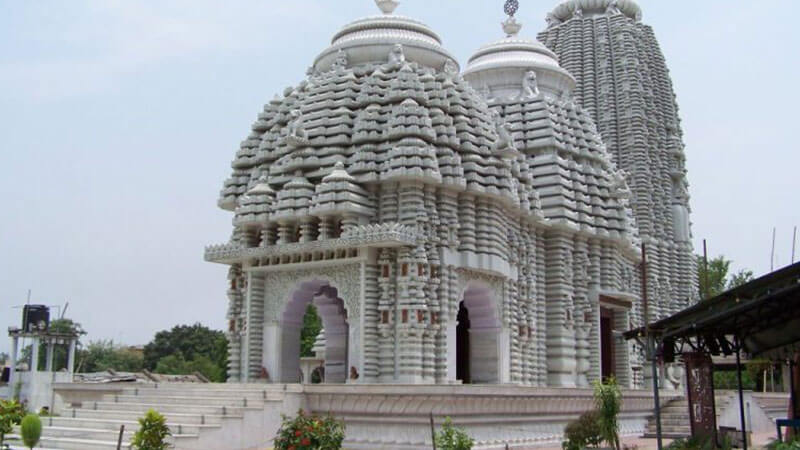
Built by Delhi's Oriya community and modelled on the original Jagannath Temple in Puri, this shrine in Tyagraj Nagar has grown into the cultural heart of the city's Odia population. What started as a small structure in 1968 now includes wooden idols of Lord Jagannath, Balabhadra, and Subhadra carved from neem wood, exactly as tradition demands. Beyond the daily darshan, the temple holds a genuinely massive celebration each year during Rath Yatra, when over a lakh devotees join a three kilometre procession pulling decorated chariots through the streets, a scene that rivals anything you'd see in Odisha itself.
The story of Lord Jagannath traces back to King Indradyumna of the Satya Yuga, a devoted follower of Vishnu who dreamt of the deity in his Nilamadhava form and set out to find where he was worshipped. That search eventually led to the discovery of the wooden idols we know today, deities without fully carved limbs, meant to show that the divine is beyond physical form. Devotees who visit this temple say eating the maha prasada offered here is considered a real step in one's spiritual journey, believed to bring the devotee closer to the Lord's grace.
- Timings:
- Opening – Closing: Summer 5:00 AM to 12:30 PM and 4:00 PM to 11:00 PM; Winter 6:00 AM to 12:30 PM and 4:00 PM to 9:00 PM
- Aarti Timing: Within the above darshan windows, best experienced in the evening slot
- How to Reach:
- Nearest Metro: INA Station (Pink and Yellow Lines), about 1.4 km away; Hauz Khas Station is also close
- Nearest Railway Station: New Delhi Railway Station, around 9 km away
- Auto-rickshaws readily available from both metro stations
- Nearby Attractions:
- Hauz Khas Village and Deer Park
- Safdarjung Airport area
- Green Park market
Nili Chhatri Temple
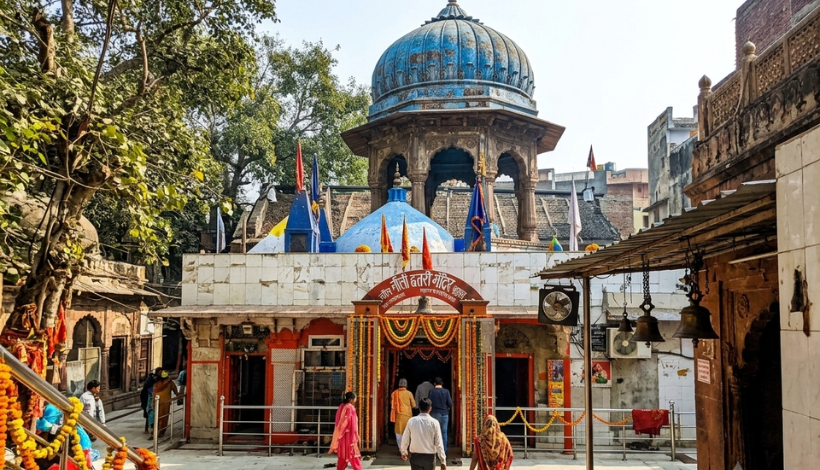
Sitting quietly on the banks of the Yamuna near Salimgarh Fort and Nigambodh Ghat, Nili Chhatri Temple is easily one of the most overlooked ancient sites in Delhi, and that's exactly its appeal. Named for the blue enamelled tiles that once covered its dome and gave off a soft blue glow at night, the temple has none of the crowds or scale of Akshardham or Chhatarpur, but it more than makes up for it in atmosphere. Traffic hums past on Ring Road on either side, yet step through the entrance and the noise fades into something calmer, the sound of temple bells, the Yamuna nearby, and the quiet murmur of devotees performing jalabhishek on the ancient Shiva lingam inside. It's a genuinely peaceful stop for anyone tracing Delhi's oldest religious sites away from the more touristy circuits.
Nili Chhatri is counted among the five temples the Pandavas are believed to have restored in Delhi, and its story goes back to Yudhishthira, the eldest of the five brothers, who is said to have performed the Ashwamedha Yagya here after the Mahabharata war, right beside what is now Nigambodh Ghat. Some accounts say Lord Krishna and Balram themselves came here to worship Shiva, and it's even believed that Krishna's marriage to Yamuna, the river goddess, was solemnised at this very spot. Locals will also point out that the site later saw a Mughal era tomb built over it in 1565 by Naubat Khan, a noble in Akbar's court, which is why you'll spot Quranic inscriptions alongside the Shiva lingam, a rare and quietly moving example of Delhi's layered, shared history. Devotees who come during Sawan for the Rudra Abhishek, performed as many as 150 times in a single day, say there's nowhere in the city that feels quite as timeless as this little temple by the river.
- Timings:
- Opening – Closing: 5:00 AM to 12:00 Noon, and 4:00 PM to 11:00 PM
- Aarti Timing: Morning aarti around 8:00 AM; heaviest footfall during Sawan and Maha Shivratri
- How to Reach:
- Nearest Metro: Kashmere Gate (Red, Yellow, and Violet Lines), about 1.5 km away
- Nearest Railway Station: Old Delhi Railway Station, around 1.7 km away
- IGI Airport is roughly 21 km away
- Nearby Attractions:
- Nigambodh Ghat
- Salimgarh Fort
- Red Fort
ISKCON Temple, East of Kailash
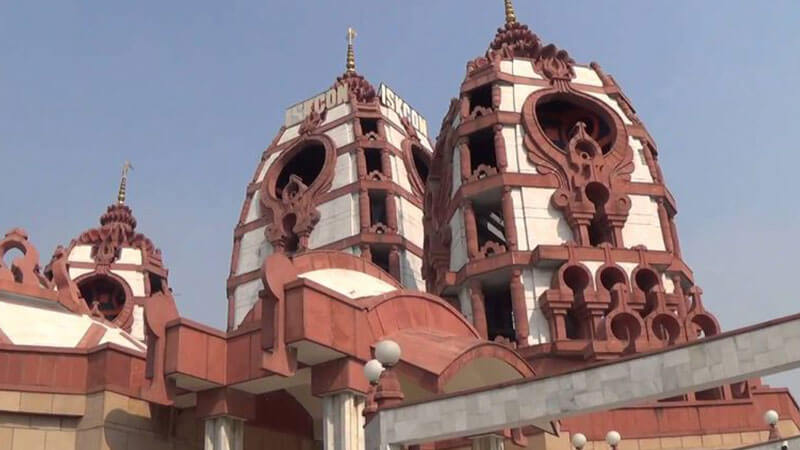
Set on Hare Krishna Hills, ISKCON Delhi, officially the Sri Sri Radha Parthasarathi Mandir, is one of the most striking temple complexes in the city and as much a cultural experience as a religious one. Beyond the main sanctum, the complex houses a full Vedic cultural centre with animatronic displays, art galleries, and even the world's largest printed edition of the Bhagavad Gita, which makes it worth a visit even for people simply curious about Krishna consciousness. The chanting of "Hare Krishna Hare Rama" fills the halls continuously, and the energy during aarti, with devotees swaying and singing together, is hard not to get swept up in.
ISKCON traces back to Srila Prabhupada, who founded the movement in 1966 to spread the teachings of the Bhagavad Gita around the world, and the Delhi temple, inaugurated in 1998, has since become one of its flagship centres globally. At the core of it all is Krishna as Parthasarathi, the charioteer who guided Arjuna through his moment of doubt on the battlefield of Kurukshetra, and devotees believe he continues to guide anyone who steps inside seeking that same clarity. Many say even one evening aarti here, with the drums building and the whole hall chanting together, leaves them with a sense of peace that lasts for days. If you're visiting during Krishna Janmashtami, don't miss the vibrant Janmashtami celebrations in Delhi, with ISKCON Temple hosting devotional music, midnight aarti, and beautifully decorated festivities.
- Timings:
- Opening – Closing: 4:30 AM to 9:00 PM (sanctum closed 1:00 PM to 4:00 PM for rest)
- Aarti Timing: Mangala Aarti 4:30 AM, Dhoop Aarti 7:15 AM, Raj Bhog Aarti 12:30 PM, Sandhya Aarti 7:00 PM, Shayana Aarti 8:30 PM
- How to Reach:
- Nearest Metro: Nehru Place and Kailash Colony (both Violet Line), a short auto ride away
- About 17 km from IGI Airport, roughly 45 minutes by road
- On site parking available
- Nearby Attractions:
- Lotus Temple
- Kalkaji Mandir
- Nehru Place market
Shri Digambar Jain Lal Mandir
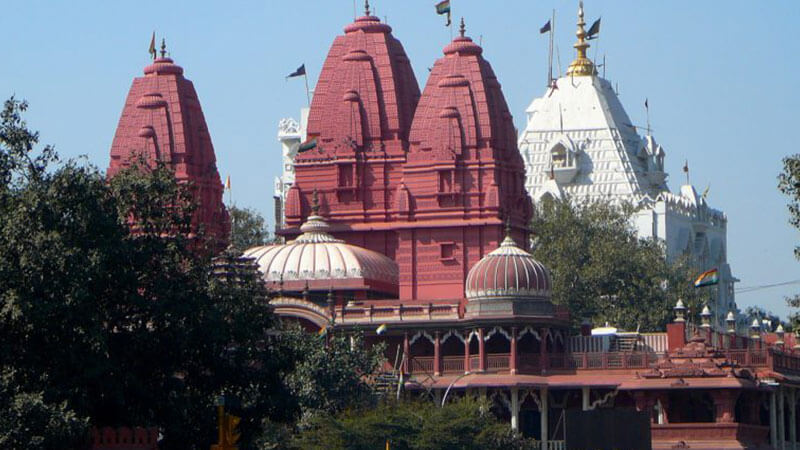
Standing right across from the Red Fort, this red sandstone structure is the oldest and most revered Jain temple in Delhi, and its location at the very entrance to Old Delhi makes it impossible to miss. Originally built in 1656, the Lal Mandir has been expanded and restored several times over, but its essential character hasn't changed: three main chambers housing statues of various Tirthankaras, most notably Lord Mahavira and Lord Adinath. What really sets this temple apart is what's tucked just behind it, the Jain Birds Hospital, one of the only avian hospitals of its kind in the world, treating thousands of injured birds a year completely free of cost, in keeping with the Jain principle of ahimsa, or non-violence toward all living beings.
The temple is dedicated to Parshvanatha, the 23rd Jain Tirthankara, who according to Jain tradition attained enlightenment through years of penance after renouncing a life of royalty. His teachings on compassion are said to be the direct inspiration behind the bird hospital next door, scripture turned into daily practice. Visitors often say watching volunteers gently bandage a pigeon's wing or feed an injured sparrow just metres from the temple's red walls captures the spirit of the place better than any ritual could. Faith here isn't just spoken, it's practised.
- Timings:
- Opening – Closing: Summer 5:30 AM to 11:30 AM and 6:00 PM to 9:00 PM; Winter 6:00 AM to 12:00 Noon and 5:30 PM to 8:30 PM
- Bird Hospital Timing: 8:00 AM to 8:00 PM daily
- How to Reach:
- Nearest Metro: Lal Qila Station (Violet Line), about a minute's walk away
- Alternative: Chandni Chowk Station (Yellow Line), around 1.5 km away
- Old Delhi Railway Station is close by
- Nearby Attractions:
- Red Fort
- Gauri Shankar Temple
- Chandni Chowk market and Jama Masjid
Chhatarpur Mandir
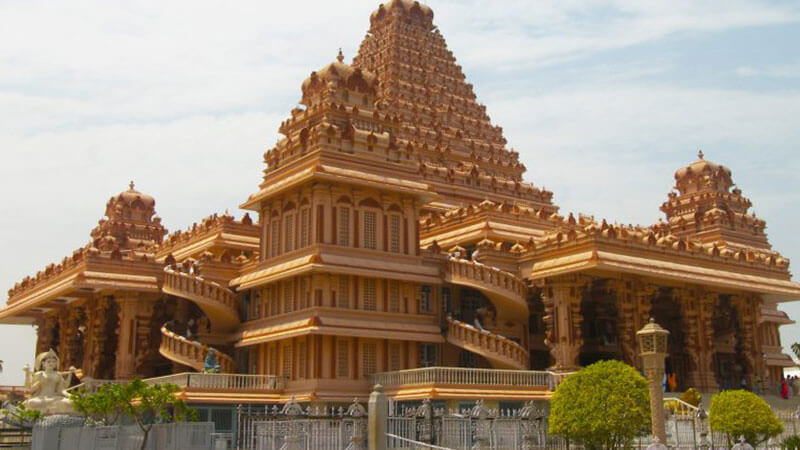
Spread across roughly 70 acres in South Delhi, Chhatarpur Mandir is second in size only to Akshardham among the city's temple complexes, and stepping inside feels like entering a different world entirely. Established by Baba Sant Nagpal Ji in 1974, the complex blends South and North Indian architectural styles across more than 20 individual shrines dedicated to deities like Rama, Radha-Krishna, Shiva, and Lakshmi, all built almost entirely from carved marble. The 100 feet tall Hanuman statue near the entrance sets the tone for the scale of everything that follows, and during Navratri the whole complex turns into one of Delhi's most vibrant festival grounds, lit up and packed with devotees well past midnight.
The presiding deity, Goddess Katyayani, holds real significance in Hindu mythology as the sixth form of Navadurga, born from the collective energy of the gods to defeat evil forces even they couldn't overcome alone. Legend says the sage Katyayan performed intense penance to be blessed with a daughter in Durga's form, and that daughter grew up to slay demons no one else could touch, which is why devotees see her as the ultimate protector, someone strong enough to fight the battles you can't fight yourself. Many visitors tie a thread around the sacred tree within the temple grounds, believing that once tied with a genuine wish, Katyayani Devi eventually makes it come true. During the festive season, Chhatarpur becomes one of the most visited temples to visit during Navratri, drawing thousands of devotees for special prayers and celebrations.
- Timings:
- Opening – Closing: 4:00 AM to 11:00 PM (some sections take a midday break; the main Katyayani shrine opens fully only during Navratri)
- Aarti Timing: Morning and evening aarti performed daily, best experienced during Navratri
- How to Reach:
- Nearest Metro: Chhatarpur Station (Yellow Line), about 1 km away
- Around 12 km from IGI Airport
- Well connected via Mehrauli-Gurgaon Road
- Nearby Attractions:
- Qutub Minar, about 4 km away
- Mehrauli Archaeological Park
- Garden of Five Senses
Lakshmi Narayan Temple (Birla Mandir)
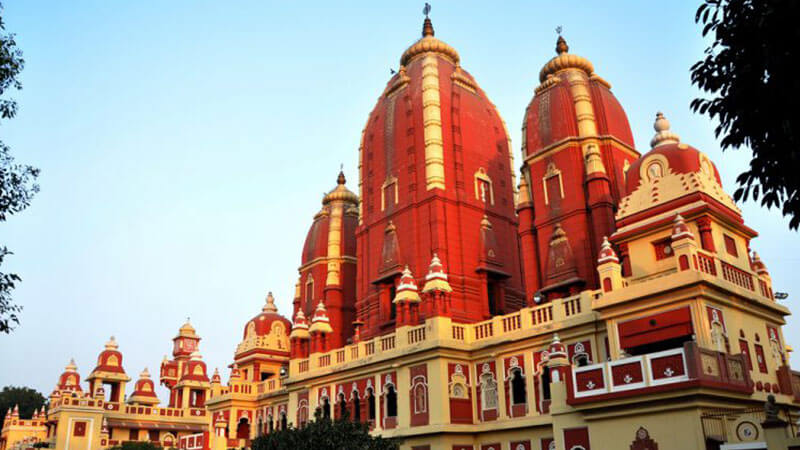
Popularly known as Birla Mandir, this temple on Mandir Marg, just west of Connaught Place, was built by the industrialist B.D. Birla in the 1930s and remains one of the more architecturally rich temples in Delhi. Dedicated to Goddess Lakshmi and Lord Vishnu, the complex is known for its intricately carved walls and pillars, a sprawling garden with artificial caves, waterfalls, fountains, and even a life size horse drawn chariot that draws visitors purely for its craftsmanship. Its central location makes it an easy stop while exploring Delhi's main attractions, and compared to some of the older, narrower temples in Old Delhi, Birla Mandir feels spacious and genuinely built for reflection.
What a lot of people don't realise is that this temple was actually inaugurated by Mahatma Gandhi, on the condition that people of all castes would be allowed to enter freely, a fairly progressive stance for the 1930s that gives the temple a quiet but meaningful place in India's social history. Lakshmi, goddess of wealth and prosperity, and Vishnu, preserver of the universe, are worshipped together here as Lakshmi Narayan, symbolising the belief that true abundance isn't just material, it's balanced and shared. Devotees say the temple's calm gardens, especially early in the morning or during the golden hour before sunset, make it one of the few places in central Delhi where you can genuinely slow down.
- Timings:
- Opening – Closing: 4:30 AM to 1:30 PM, and 2:30 PM to 9:00 PM (timings may vary slightly by season)
- Aarti Timing: Morning aarti around 6:00 AM, evening aarti around 7:00 PM
- How to Reach:
- Nearest Metro: RK Ashram Marg (Blue Line), a short walk away
- Close to Connaught Place, easily reached by auto-rickshaw or cab
- IGI Airport is around 16 km away
- Nearby Attractions:
- Connaught Place
- Gurudwara Bangla Sahib
- National Museum
Kalkaji Mandir
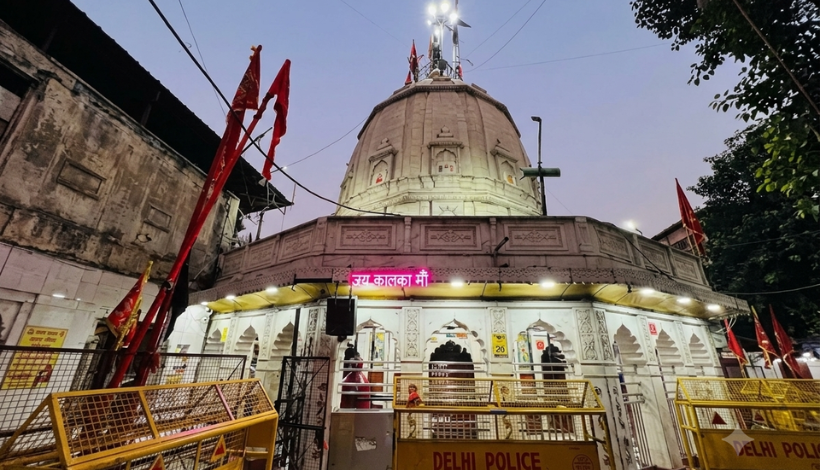
One of the busiest and most powerful Shakti shrines in Delhi, Kalkaji Mandir near Nehru Place is dedicated to Goddess Kali and is often called "Manokamna Siddha Peetha," a place where sincere wishes are said to be granted. The temple's unusual 12 sided central chamber, ringed by a verandah with 36 arches, gives it an architectural identity unlike anything else in the city, and the constant stream of devotees, especially on Saturdays and through Navratri, shows just how central this shrine is to Delhi's spiritual life. Believed to be nearly 3,000 years old and self manifested, Kalkaji is also known for staying open even during solar eclipses, when most temples across India traditionally shut their doors.
According to legend, two demons once terrorised the gods, and when even Lord Brahma refused to step in, Goddess Parvati manifested Kaushki Devi from her own body to fight them. As the demons' blood spilled and multiplied into thousands more, Parvati, worried the battle would never end, summoned an even fiercer form from Kaushki's brow, Goddess Kali, who destroyed every last demon and drank their blood before it could touch the ground and spawn more evil. It's that protective, ferocious energy devotees come seeking here, the reassurance that no matter how overwhelming things feel, there's a force strong enough to end it completely.
- Timings:
- Opening – Closing: 4:00 AM to 11:30 PM (brief closures around 11:30 AM to 12:00 PM and 3:00 PM to 4:00 PM)
- Aarti Timing: Bhog Aarti around 12:00 PM, Shayan Aarti (night) around 10:30 PM
- How to Reach:
- Nearest Metro: Kalkaji Mandir Station (Magenta and Violet Lines), just a few minutes' walk away
- Close to Nehru Place market
- Buses to Nehru Place or Okhla Industrial Area stop nearby
- Nearby Attractions:
- Lotus Temple, about 2 km away
- ISKCON Temple, East of Kailash
- Nehru Place market
Yogmaya Mandir
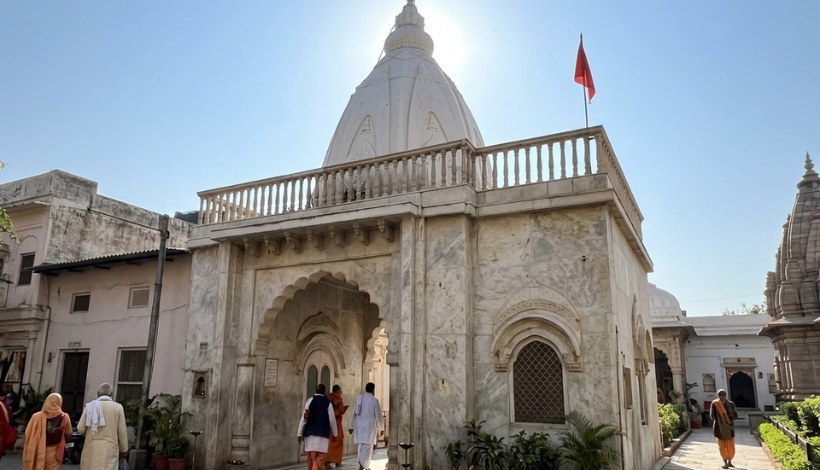
Tucked into the narrow lanes of Mehrauli, a couple of kilometres from Qutub Minar, Yogmaya Mandir is one of the quietest yet most historically significant temples in Delhi. It's counted among the five surviving temples from the Mahabharata period, and unlike its better known siblings like Kalkaji and Hanuman Mandir CP, it has stayed wonderfully under the radar, a genuinely peaceful spot to experience centuries of devotion without the crowds. The temple also plays a part in the Phool Walon Ki Sair festival, a Mughal era tradition where Hindus and Muslims together offer floral canopies, one here and one to a nearby dargah, a small but moving symbol of Delhi's shared heritage.
The story of Yogmaya goes back to the birth of Lord Krishna. When he was born as the eighth child of Vasudeva and Devaki in King Kansa's prison, he was secretly exchanged for a baby girl born the same night to Nanda and Yashoda in Gokul. When the tyrant Kansa tried to kill this child, believing she was the one prophesied to end his reign, she slipped from his hands, rose into the sky, and revealed herself as the goddess Yogmaya, warning him his true destroyer was already safe elsewhere. Devotees believe the Pandavas built this temple after the Mahabharata war in her honour, and even today people visit believing that Yogmaya, the embodiment of divine protection, watches over those who come to her with genuine faith, much like she once protected Krishna himself. After exploring Delhi's sacred temples, you can also plan a short trip to some of the best weekend getaways near Delhi, where you'll find peaceful hill stations, spiritual towns, and heritage destinations within a few hours' drive.
- Timings:
- Opening – Closing: 5:00 AM to 8:30 PM daily
- Aarti Timing: Morning aarti around 5:00 AM, evening aarti around 8:00 PM
- How to Reach:
- Nearest Metro: Qutub Minar Station (Yellow Line), about 500 m away
- Nearest Railway Station: New Delhi Railway Station, around 12.5 km away
- Narrow lanes near Mehrauli Junction, best reached on foot or by auto from the metro
- Nearby Attractions:
- Qutub Minar Complex
- Mehrauli Archaeological Park
- Adham Khan's Tomb
Uttara Swamimalai Temple
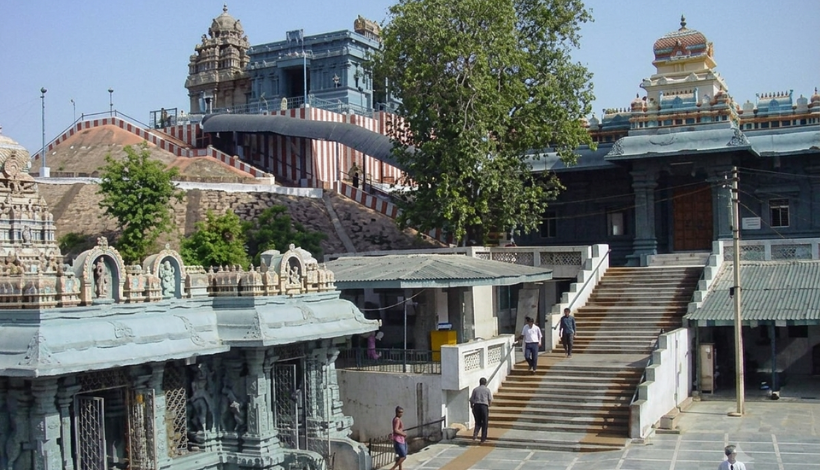
Perched on a small hillock in Sector 7, R.K. Puram, and overlooking Vasant Vihar, Uttara Swamimalai Temple, more popularly called Malai Mandir, is the closest thing Delhi has to a piece of Tamil Nadu. Built entirely out of granite in the Chola style of South Indian architecture, the temple was consecrated in 1973 and has since become the cultural anchor for Delhi's Tamil, Telugu, Kannada, and Malayalam communities. Climbing the roughly 90 steps up to the sanctum feels less like a chore and more like part of the ritual itself, and once you're at the top, the towering gopuram and intricately carved pillars make it easy to forget you're still in Delhi. Beyond the main shrine, the complex also houses temples for Lord Karpaga Vinayagar, Lord Sundareswarar, and Goddess Meenakshi, so a single visit ends up covering an entire family of deities.
The presiding deity here is Lord Murugan, also known as Swaminatha or Kartikeya, the younger son of Shiva and Parvati. As the story goes, Murugan was born specifically to defeat the demon Tarakasura, who had grown so powerful through his penance that no one but a child of Shiva could stop him. Parvati gifted him the Vel, a divine spear that never misses its target, and with it he led the army of the gods to victory, which is why he's worshipped as the god of war, courage, and protection. There's a saying inscribed outside the temple in Tamil, "Yaamirukka Bayamain," meaning "Why fear when I am there," and that's really the heart of why people climb up here again and again. It's less about grand rituals and more about that quiet reassurance that Murugan is watching over them, spear in hand, ready to fight the battles they can't.
- Timings:
- Opening – Closing: 6:00 AM to 12:00 PM, and 5:00 PM to 9:00 PM
- Aarti Timing: Morning aarti around 6:00 AM, evening aarti around 7:00 PM
- How to Reach:
- Nearest Metro: Dhaula Kuan (Airport Express Line) or Hauz Khas (Yellow Line), followed by a short auto or cab ride
- Nearest Bus Stop: Vasant Vihar, a 3-minute walk away
- About 5.7 km from Indira Gandhi International Airport
- Nearby Attractions:
- Hauz Khas Village and Deer Park
- Qutub Minar
- Garden of Five Senses
More Things to Explore in & Around Delhi
Famous Temples Across India
Popular Tourist Destinations from Delhi






 April 17, 2024
 Share
Share
 Download as PDF
  From
From 
 Departure Date
 Travellers & class
 Rent For
 Departure Date








 Share
Share 
{{cmnt.comment}}