Ten years ago, booking a cab in India meant standing at a roadside, negotiating a fare with a driver who had no incentive to be reasonable, hoping the vehicle would arrive at the agreed time, and having no recourse if it did not. The transformation since then is one of the more complete sector overhauls in Indian consumer services and it happened faster than most sectors manage. Cab booking app technology did not improve on the existing system. It replaced it almost entirely.
What drives this replacement is not a single innovation but a stack of services, and the GPS tracking cab systems, dynamic pricing algorithms, driver rating infrastructure, cashless payment integration, and increasingly, AI-driven dispatch and route optimisation. Understanding what each of these actually does helps both travellers who use cab services regularly and those who are still making the mental switch from hailing to tapping. Now let's delve into the transformative power of technology in the realm of transportation and explore how online cab booking services are reshaping the fabric of our travel experience.
From the Roadside to the App: What Actually Changed
The first and most significant shift that digital cab booking produced was traceability. A booked cab through an app is a documented transaction with a named driver, a registered vehicle, a GPS-tracked route, and a timestamped record of the full journey. The informal roadside negotiation had none of these.
Traceability changed the dynamic for drivers and passengers simultaneously. Drivers on platform systems are accountable for their ratings and behaviour in ways that unregistered cab operators never were. Passengers have a complaint mechanism that produces actual consequences rather than the dead end of an unregistered driver who could simply deny the incident.
The shift to digital cab booking also changed how fares work. Metered taxis in Indian cities operated on fixed rates that bore an increasingly distant relationship to actual costs, particularly at night and in traffic. Dynamic pricing fares that adjust based on demand, time, distance, and availability is more honest about the economics of the transaction, even when the surge multiplier at festival time feels punishing from the passenger's side.
GPS Tracking: The Technology That Changed Trust
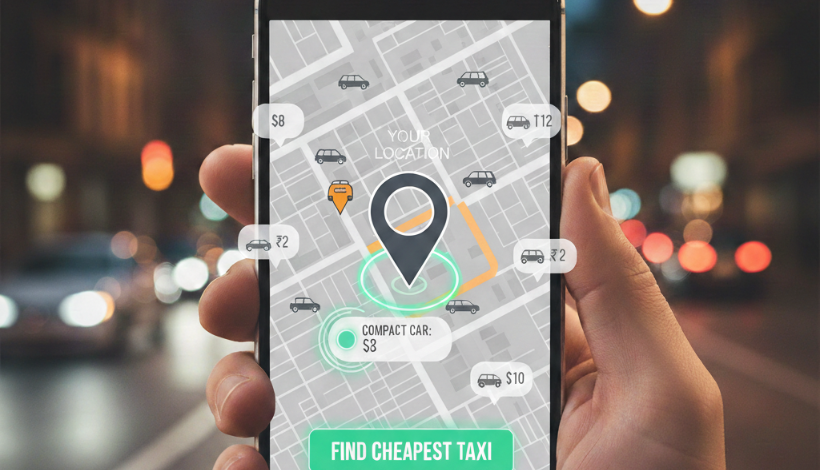
 GPS tracking cab systems are the single most consequential piece of technology in the cab booking stack, and they do more than show a car moving on a map. The live GPS feed enables several downstream features: the live trip share that allows passengers to share their journey in real time with a trusted contact, the route monitoring that flags significant deviations from the expected path, the ETA calculation that accounts for actual traffic conditions rather than estimated distance, and the driver location tracking that allows passengers to see the vehicle approaching rather than waiting uncertainly at a pickup point.
For urban travellers who have used these systems long enough to take them for granted, it is worth noting how specific the safety improvement is. A passenger who shares their live trip with a family member before entering the cab has effectively created an accountability structure for the driver; the knowledge that the journey is being monitored is itself a deterrent. This is not incidental to GPS tracking cab design. It is one of the primary safety functions the technology was designed to deliver.
The GPS infrastructure also enables post-trip dispute resolution. If a driver takes a significantly longer route than necessary, the route data provides an objective record that supports the passenger's complaint rather than leaving it as a passenger's word against a driver's.
Smart Cab Services: What the AI Layer Adds

Smart cab services represent the next generation of what started with GPS and app-based booking. The intelligence layer being added to cab platforms goes beyond navigation and matching; it includes demand forecasting, driver positioning optimisation, personalised ride preferences, and safety monitoring systems that can detect anomalies during a journey.
Demand forecasting uses historical data, event calendars, weather patterns, and real-time booking signals to anticipate where surge demand will occur before it happens. This allows the platform to incentivise drivers to position in areas ahead of demand rather than concentrating in areas where demand has already peaked. The practical outcome for passengers is reduced wait times and more stable pricing than purely reactive surge systems produce.
Driver positioning optimisation, directing drivers toward areas of predicted high demand rather than letting them choose their own positioning, is one of the more significant operational improvements that the AI layer enables. A city's cab fleet that is intelligently positioned ahead of demand is more efficient than the same fleet acting on individual driver intuition.
Cab Booking Features That Have Changed the Passenger Experience
 Cab booking features have expanded significantly beyond the original book-track-pay sequence. Several developments in the last three to four years specifically address the friction points that remained after the basic platform model was established.
Scheduled rides booking a cab for a future time rather than immediately addressing the specific anxiety of airport and railway station departures, where the uncertainty of finding a cab in the morning rush was a consistent source of travel stress. The ability to book a 4am airport pickup the night before, with confirmation and driver assignment in advance, removed one of the last remaining stress points in the platform model.
Cab app safety features have expanded beyond the basic live trip share. SOS buttons within the app, connected directly to emergency services and the platform's own safety teams, represent a meaningful addition to the basic tracking function. Driver verification systems matching the driver's face to the registered photo before the trip begins, via in-app camera prompts, address the specific scenario of a passenger entering the wrong vehicle. Audio and video recording in some vehicle categories, with consent protocols managed by the platform, provide a record of journey events that supports both passenger and driver in dispute situations.
Multiple stop bookings allow passengers to add intermediate stops to a single trip, a practical feature for travellers who need to collect a companion, drop luggage at a hotel before continuing to a meeting, or run a brief errand within a longer journey without the awkwardness of negotiating mid-trip additions with the driver.
Technology in Transport: The Broader Shift

Technology in transport has changed the cab sector most visibly, but the same infrastructure GPS, AI dispatch, cashless payment, rating systems is now extending into the bus and intercity travel segments as well. Intercity cab services, shared-ride platforms for longer distances, and the integration of multiple transport modes within single booking interfaces are all downstream developments of the same technological base.
The shared ride model, in particular, demonstrates how cab booking technology can shift the economics of urban transport. A cab that carries two passengers going in the same general direction, matched by the platform's routing algorithm, provides both passengers a lower fare and the driver a fuller vehicle. The matching precision required to make this work correctly identifying compatible routes, predicting each passenger's destination, managing pickup sequencing is only possible at scale with the AI layer that underpins smart cab services.
How EaseMyTrip's Cab Platform Applies These Technologies
EaseMyTrip's cab booking integration within its travel platform represents the natural extension of cab booking app technology into the multi-modal travel context. A traveller booking a flight from Delhi to Bengaluru, hotel accommodation for three nights, and a cab from Kempegowda Airport to the hotel all within a single booking session requires the cab platform to receive accurate flight timing data, departure terminal information, and real-time flight status to manage the pickup correctly.
The AI integration in EaseMyTrip's platform monitors booked flight status and adjusts cab pickup timing automatically when a flight is delayed, a feature that removes the need for the passenger to manually cancel and rebook the cab when a delay is announced. This is the specific kind of AI application that digital cab-booking platforms are increasingly capable of and that makes the difference between a system that books a cab and a system that manages the full journey.
Cab booking features within EaseMyTrip also include verified driver profiles, live GPS tracking cab integration visible within the travel app rather than requiring a separate cab platform, and the consolidated payment infrastructure that processes cab, flight, and hotel bookings through a single checkout. As AI tools become more capable of anticipating journey disruptions and managing the knock-on logistics automatically, EaseMyTrip is building towards a platform where the cab is not a separate booking decision but an intelligent extension of the overall trip plan. For travellers who book all their journey elements in one place, that level of integrated, smart cab services functionality is what converts a collection of separate bookings into a managed travel experience.
FAQs
Q: How has cab booking app technology improved safety for passengers?
Cab booking app technology has improved passenger safety through several specific features: live GPS tracking that allows real-time route monitoring and sharing with trusted contacts, driver identity verification against registered platform photos before boarding, SOS buttons within the app connected to emergency services and platform safety teams, and timestamped journey records that provide objective documentation for post-trip dispute resolution. These features combined offer an accountability framework for both driver and passenger that unregistered cab services do not provide.
Q: What is the role of GPS tracking in modern cab services?
GPS tracking cab systems do more than display the car's location on a map. They enable live trip sharing with trusted contacts, real-time route deviation monitoring, accurate ETA calculation based on actual traffic rather than estimated distance, driver approach visibility before pickup, and post-trip route records that support dispute resolution. The GPS infrastructure is the foundational technology on which most other cab platform safety and efficiency features are built.
Q: What are the most useful cab booking features for frequent travellers?
The most useful cab booking features for frequent travellers are scheduled ride booking for advance airport and railway station pickups, live trip sharing integrated into the app, multi-stop trip booking for journeys with intermediate requirements, driver rating history visible before trip acceptance, and cashless payment with digital receipt generation. For travellers who book cabs as part of broader multi-modal trips, the integration of cab bookings within a single travel platform that monitors flight status and adjusts pickup timing automatically is increasingly the most valuable feature of all.
Q: How does AI improve smart cab services beyond basic GPS tracking?
Smart cab services use AI across several functions beyond navigation: demand forecasting to position drivers ahead of peak demand rather than reacting to it, dynamic pricing models that balance passenger cost with driver incentive, personalised ride preference storage that applies previous choices automatically to new bookings, route optimisation that accounts for real-time traffic, and safety monitoring systems that can detect journey anomalies and trigger alerts. The AI layer is what converts a GPS-and-app system into a service that anticipates needs rather than merely responding to them.
Q: How does EaseMyTrip integrate cab booking technology into its travel platform?
The platform of EaseMyTrip is a combination of cab booking technology with flight and hotel bookings in one interface. The cab service receives real-time flight status data to manage the timing of airport pickup when flights are delayed. The GPS tracking cab functionality is visible within the travel app instead of a separate platform. Verified driver profiles are displayed before trip confirmation. Cashless payment is processed through the same checkout as all other trip elements. With the development of AI tools, the platform is building towards automatic journey management that automatically adjusts cab bookings in response to flight delays without requiring manual intervention from the traveller.





 May 31, 2024

 Share
 Download as PDF
 From

 Departure Date
 Travellers & class

 Rent For
 Departure Date













{{cmnt.comment}}