The bus booking screen on most platforms lists five or six different coach types for the same route, with fares that can differ by a factor of three or four between the cheapest and the most expensive option. Ordinary. Non-AC Sleeper. AC Seater. Semi-Sleeper. Volvo AC Sleeper. The categories sound distinct, but the descriptions are rarely detailed enough to make the choice obvious, particularly for travellers who have not experienced each type and are trying to decide whether the fare premium is justified for their specific journey. Travellers comparing different long-distance services can also explore this guide to types of buses for long-distance travel to understand how the major bus categories differ.
The AC sleeper vs. Volvo bus difference is the most commonly confused comparison. They are not the same thing, and the distinction matters for overnight journeys specifically. For a broader look at planning and managing an overnight journey, travellers can also refer to this overnight bus travel guide. This guide covers what each category actually provides, where the value sits in the hierarchy, and how to make the right call for a specific trip rather than relying on the most expensive option being the best or the cheapest being an acceptable compromise.
The Bus Type Hierarchy: What Each Category Means
Ordinary Non-AC Bus
The baseline of the long-distance bus market is fixed upright seats, no air conditioning, and windows that open. State transport corporation services dominate this category. For journeys under three hours in cool weather, an ordinary bus is entirely manageable, and the fare saving over premium categories is meaningful without the comfort sacrifice being significant.
For overnight journeys or routes through hot-climate regions in summer, the ordinary bus asks for more than most travellers want to give. The seat does not recline beyond a modest angle, the temperature inside depends entirely on the outside air, and sustained overnight travel in this configuration requires a tolerance for discomfort that is not universal.
The bus seat type guide position for ordinary buses is appropriate for short daytime journeys but not appropriate for overnight runs of more than five hours in most conditions.
AC Seater
An improvement over ordinary air-conditioned interiors, seats that recline to approximately 120 to 130 degrees, typically 2+2 configuration with a small seat pitch advantage over ordinary buses. Volvo B7R and similar multi-axle chassis are common in this category on premium state routes, and the build quality of the vehicle itself is noticeably better than the ordinary bus category.
For daytime journeys of four to seven hours, an AC seater is the practical sweet spot: the air conditioning removes the heat and humidity variable, the recline is adequate for a few hours of rest if the journey crosses a midday or afternoon window, and the fare is lower than the full sleeper categories.
The specific limitation is that 120 to 130 degrees of recline is not a sleeping position. It is a resting position. For journeys that extend past midnight, the AC seater asks the traveller to sleep in a configuration that most people find uncomfortable over more than three or four hours.
Semi-Sleeper Bus
The semi-sleeper vs sleeper bus distinction is the one that causes the most confusion in the booking process. A semi-sleeper provides a seat that reclines to approximately 140 to 160 degrees, significantly further than an AC seater but not fully horizontal. The seat width is typically better than a standard AC seater, and the 2+2 or 2+1 configuration gives more lateral space.
For overnight journeys of six to ten hours, a semi-sleeper from a quality private operator, VRL, SRS, Orange Travels, or Paulo Travels, depending on the region, is a reasonable middle-ground option. The recline gets close enough to a lying position that sleep is achievable for most travellers across a full night, and the fare sits meaningfully below the full AC sleeper.
The honest limitation is that "semi-sleeper" as a category label is applied inconsistently across operators. One operator's semi-sleeper may recline to 155 degrees; another's may only reach 135. Reading specific passenger reviews for the operator before booking is more reliable than trusting the category name alone.
Volvo Bus: What the Name Actually Means
The Volvo bus vs AC sleeper comfort comparison starts with understanding what "Volvo" means in the Indian bus market. Volvo is a chassis manufacturer, not a seat category. A "Volvo bus" refers to a service operating on a Volvo B9R, B11R, or similar multi-axle coach chassis known for better suspension, a smoother ride, and higher build quality than older coach platforms.
A Volvo bus can be configured as a seater, a semi-sleeper, or a full sleeper. The category refers to the seat type, not the chassis. When operators advertise "Volvo AC Seater" or "Volvo AC Sleeper", the Volvo designation refers to the ride quality and chassis, while the seater or sleeper designation refers to the seat configuration.
The AC sleeper vs Volvo bus difference is therefore not a direct apples-to-apples comparison; an AC sleeper on an older coach chassis and an AC sleeper on a Volvo B9R are in the same category (full horizontal berth) but on different vehicle platforms. The Volvo chassis produces a noticeably smoother ride on highway stretches and at the ghat sections that older chassis find more difficult.
When an operator lists a "Volvo Sleeper", it is offering a full sleeping berth (AC or non-AC) on a Volvo chassis, which is a different product from both the standard AC sleeper on an older chassis and the Volvo seater with no sleeping provision.
AC Sleeper Bus
The AC sleeper is the top of the bus category hierarchy for overnight travel with full horizontal berths, air-conditioned interiors, individual berth curtains on most quality operators, and in the premium configurations, charging points and small individual screens.
The AC sleeper vs Volvo bus difference when both are properly configured is the chassis quality. The same full-horizontal sleeping experience on a Volvo B9R ride is noticeably smoother than on an older frame, particularly on ghat roads, because the Volvo's suspension absorbs the surface variation more effectively.
AC sleeper berths come in lower and upper configurations. Lower berths are preferred for the same reasons: they are easier to access on trains, have no climbing, and provide slightly better ventilation in most coaches. Upper berths are cheaper and more private but require physically getting up and down at intermediate stops.
The double-width sleeper berth, wide enough for two passengers, is available on several private operators and is a popular booking for couples. The pricing is typically 1.5 to 1.8 times a single berth, making it more economical than two separate single berths at the same operator. Once you have chosen a sleeper bus, these essential tips for a comfortable sleeper bus journey can help you prepare for the trip.
The Best Bus Type for an Overnight Journey: How to Decide
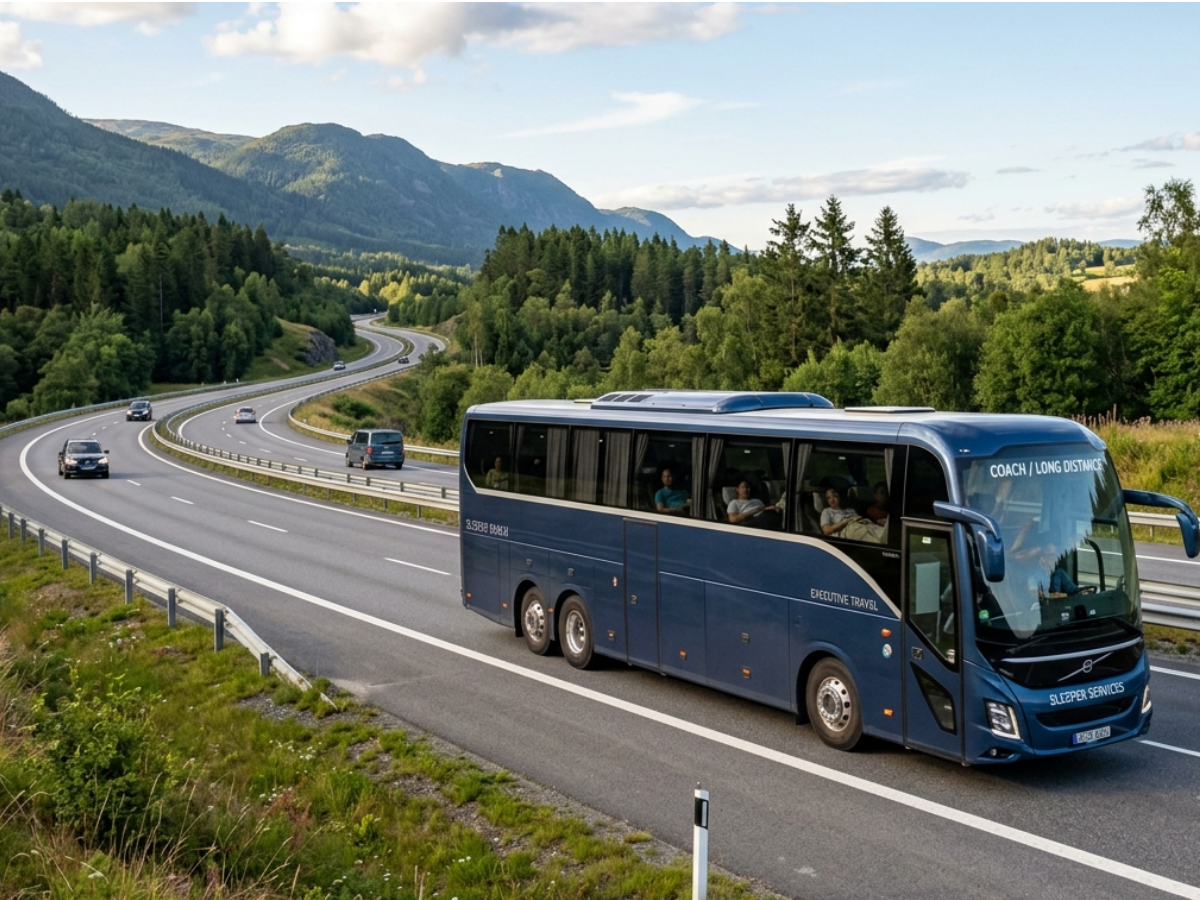
The best bus type for an overnight journey is the one that matches the journey length and the individual's sleep requirement, not automatically the most expensive category.
Under five hours, any time of day: The AC seater is the sweet spot. The air conditioning is valuable, the recline is adequate for a rest, and the fare is efficient relative to the journey length. Ordinary bus if the temperature is cool and the journey is under three hours.
For a five- to nine-hour overnight: a semi-sleeper from a quality operator is the value call if budget is a constraint. An AC sleeper lower berth is the comfort call if rest quality is the priority. The semi-sleeper vs sleeper bus fare difference on most routes is ?200 to ?600; the sleep quality difference across eight hours is more significant than this increment suggests.
Nine hours and above, overnight: AC sleeper is the category where the investment is justified. A twelve- to fifteen-hour overnight run on a semi-sleeper asks the body to sleep at 150 degrees across most of the night; the same journey on a full sleeper berth allows genuinely horizontal rest that arrives at the destination less depleted. The Volvo chassis version of the AC sleeper is worth the incremental premium for ghat routes; specifically, the suspension difference on mountain road sections is genuinely noticeable.
A Practical Bus Seat Type Guide
The bus seat type guide decision tree simplified:
- Short daytime journey under three hours in cool weather with an ordinary or AC seater, lowest practical fare.
- Daytime journey of three to seven hours: AC seater, air conditioning is the priority.
- Overnight journey of five to nine hours semi-sleeper if budget is the primary constraint; AC sleeper lower berth if rest quality is the priority.
- Overnight journey over nine hours in an AC sleeper on a Volvo chassis where available; the quality difference on long runs justifies the premium.
- Couples on any overnight journey over five hours get a double sleeper berth where available; it is typically better value than two single berths and significantly more comfortable.
How EaseMyTrip Makes the Bus Type Decision Clearer
The AC sleeper vs Volvo bus difference is difficult to assess from a booking platform that displays only category names without explaining what they mean or showing the actual coach configuration. EaseMyTrip's bus booking platform addresses this specifically; operator-level photographs of the coach interior, seat configuration diagrams, and passenger review summaries are displayed alongside the fare and category name, allowing travellers to assess what they are actually booking rather than trusting a category label. Travellers can book bus tickets onlinewith EaseMyTrip and compare available operators, seat types, fares, and schedules before choosing the right service.
The platform's AI-powered operator rating tools surface the Volvo bus vs AC sleeper comfort comparison for the specific route searched, identifying which operators run Volvo chassis on that corridor, which have the best review scores for overnight comfort, and which have the most reliable departure and arrival timings. As AI continues to improve how booking platforms personalise coach recommendations matching the suggested bus type to the journey length, departure time, and the traveller's reviewed preference history EaseMyTrip is building towards a system that recommends the best bus type for an overnight journey for each traveller's specific trip rather than presenting an undifferentiated list of options by price. For a category of travel where the right choice depends on details that the fare alone does not reveal, that kind of specific, intelligent recommendation is what makes the booking decision genuinely informed.
FAQs
Q: What is the actual AC sleeper vs Volvo bus difference?
The AC sleeper vs Volvo bus difference is not a category comparison; it is a chassis and configuration comparison. "Volvo" refers to the coach chassis manufacturer (Volvo B9R, B11R), which provides better suspension and ride quality than older platforms. "AC sleeper" refers to the seat type with full horizontal berths with air conditioning. A Volvo Sleeper combines both: the full sleeping berth on the Volvo chassis. An AC sleeper on an older chassis provides the same sleeping position but on a less smooth ride. The Volvo chassis premium is most noticeable on ghat routes and long-distance overnight runs.
Q: What is the difference between a semi-sleeper and a sleeper bus?
Semi-sleeper vs sleeper bus is a recline angle comparison. A semi-sleeper reclines to approximately 140 to 160 degrees, closer to lying down than a standard seater but not fully horizontal. A sleeper bus provides full horizontal berths; the passenger lies flat for the duration of the journey. For overnight journeys under eight hours, a semi-sleeper from a quality operator is manageable for most travellers. For journeys over nine hours, the full horizontal position of a sleeper berth produces meaningfully better rest that justifies the fare difference.
Q: Which is the best bus type for an overnight journey?
The best bus type for an overnight journey depends on the journey length. For five to nine hours, a semi-sleeper from a quality operator or an AC sleeper lower berth, depending on how much the sleep quality matters versus the fare difference. For nine hours and above, an AC sleeper on a Volvo chassis is the practical optimum; the horizontal berth allows genuine rest across the full journey, and the Volvo suspension makes the long run on highways and ghat sections noticeably more comfortable than on older chassis.
Q: How does the Volvo bus vs AC sleeper comfort comparison work for long routes?
Volvo bus vs AC sleeper comfort on long routes (twelve hours or more) is primarily about the ride quality rather than the sleeping position; both are horizontal berths with air conditioning. The Volvo B9R chassis provides better suspension absorption on highway undulations, bridge joints, and ghat curves, which means less disturbance during the sleeping hours. Operators who run Volvo chassis on overnight routes receive consistently better comfort reviews than the same route on older coach platforms, with the difference most pronounced on routes that include significant ghat or mountain road sections.
Q: How can EaseMyTrip help choose the right bus type?
EaseMyTrip's bus booking platform displays coach interior photographs, seat configuration details, and passenger review summaries alongside fare and category information, allowing travellers to assess the AC sleeper vs Volvo bus difference and the bus seat type guide options for a specific route before booking. AI-powered operator ratings surface the best-reviewed overnight operators by route, flagging which services run Volvo chassis and which have the most consistent comfort and punctuality scores. For travellers choosing between a semi-sleeper and a full sleeper on a nine-hour overnight route, having review-based quality information alongside the fare comparison is what makes the booking decision a genuinely informed one rather than a guess based on category names.






 September 30, 2026
 Share
Share
 Download as PDF
  From
From 
 Departure Date
 Travellers & class
 Rent For
 Departure Date









 Share
Share 








{{cmnt.comment}}