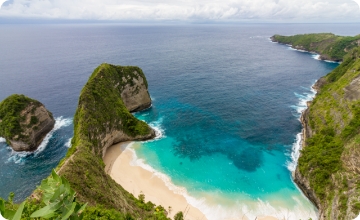
The ferry from Split to Hvar takes about an hour. For most of that crossing, you sit on the open deck and watch the Adriatic shift from deep blue to green as the islands narrow the channel.
That crossing, before you have even arrived, already tells you something about how Croatia works as a destination. The country is compact, coastal, and built around water. Dubrovnik's walls and Split's Diocletian's Palace earn their reputations, too.
For Indian travellers, Croatia tour packages offer something genuinely different from the standard European itinerary of museums, cathedrals, and cobbled city centres.
Why Do Travellers Keep Coming Back to Croatia?
Part of the answer is how much variety fits into one country: three days in Dubrovnik's medieval old city, an overnight ferry to Split, and a car hire to Plitvice Lakes. Many first-time visitors prefer Croatia trip packages that combine these in one itinerary.
The landscape shifts from karst limestone coastline to forested highland national parks without a single dull stretch in between. Here are some of the biggest reasons Croatia continues to draw travellers back year after year:
The Practical Case for Croatia from India
Croatia joined the Schengen Area in January 2023 and adopted the euro at the same time. For Indian travellers, one visa covers the whole trip, and the same currency works across the border into Slovenia. Before planning your itinerary, it’s worth going through the visa requirements for 2026 to understand the latest documentation and Schengen rules.
A mid-range hotel in Split typically costs between ₹7,000 and ₹12,000 per night. A sit-down lunch at a konoba, a traditional Croatian tavern, runs around ₹1,200 to ₹2,000 per person. Luxury Croatia tour packages often include boutique hotels along the Dalmatian coast with private ferry transfers between islands.
A Coast with Real Character
Croatia's Dalmatian coast runs for over 1,700 kilometres and includes more than a thousand islands. Hvar is cosmopolitan and busy in summer.
Vis is quieter and largely undeveloped. Korcula has a walled old town that some travellers prefer to Dubrovnik precisely because it is calmer and easier to move through.
History That Is Still in Use
Diocletian's Palace in Split is not a ruin you observe from behind a rope. People live and work inside it. There are cafes, apartments, and shops built directly into Roman walls that date to around 300 AD.
Walking through the palace at dusk, when the tour groups thin out and restaurants start setting up tables on the stone floors, gives you a certain sensory experience that a conventional archaeological site simply cannot replicate.
What Sets Croatia Apart from Other Mediterranean Destinations
Croatia holds its own through a few specific qualities that are harder to replicate elsewhere. Travellers exploring beach tour packages that combine coastal scenery with island-hopping find that Croatia is one of the strongest options in Europe for that specific mix.
Here’s what Croatia does better than most Mediterranean destinations right now:
The Walled Cities Are Genuinely Intact
Dubrovnik's city walls form a complete 1,940-metre circuit around the old town. Walking the full circuit takes about two hours, and the views from the seaward side, where the Adriatic drops away below the limestone walls, are unlike anything you see from street level. Visiting in May, June, September, or October makes a significant practical difference to how much you enjoy the place.
Plitvice Lakes Is a Different Kind of Natural Attraction
Most coastal Croatia itineraries include at least a day trip to Plitvice Lakes National Park, a UNESCO World Heritage Site about two hours inland from Zadar. The park holds 16 terraced lakes connected by waterfalls, all fed by rivers that carry dissolved minerals, giving the water an unusual turquoise colour.
The boardwalk routes are well-maintained but busy in peak season. Route B, the longer six-kilometre circuit, avoids the most congested sections near the lower lakes. Going on a weekday in early June or late September is the most comfortable option.
Island Hopping Without a Sailing Background
Croatia has one of the most developed ferry networks in the Mediterranean, run primarily by Jadrolinija. Catamarans and car ferries connect Split and Dubrovnik to the main islands on regular schedules throughout the summer.
Most Croatia tour packages also offer chartered sailing trips that depart from Split every Saturday during the season. Most include a skipper, so you do not need any sailing experience.
Places Worth Your Time in Croatia
The list of destinations that look good in photographs is long. Here are the ones that hold up completely once you are actually standing in them, too:
Dubrovnik
Dubrovnik is the natural starting point for most Croatia trip packages, and the reputation is largely justified. The old town is one of the best-preserved medieval city centres in Europe.
Filmed extensively as King's Landing in Game of Thrones, the city has seen a sharp rise in visitors since the series ran. The cable car up to Mount Srd provides the best aerial views and a useful break from old-town crowds.
Stay at least two nights to see the city early in the morning, before day-trippers from cruise ships fill the Stradun.
Split
Split is Croatia's main ferry hub for the Dalmatian islands. The Riva, the long seafront promenade running along the south face of the palace walls, fills with locals every evening.
Split works well as a two-to-three-night base with day trips to Hvar, Brac, or the nearby Krka National Park. Family-friendly Croatia tour packages usually include guided sightseeing, ferry connections, and centrally located stays.
Hvar
Hvar Town has a reputation as a party destination, which is accurate but incomplete. The lavender fields in the island's interior, the quieter village of Stari Grad with its own intact walls, and the Pakleni Islands offshore, accessible by water taxi in 15 minutes, are all considerably calmer than the main harbour.
Rovinj
Rovinj sits on the Istrian peninsula in northern Croatia and has a noticeably different feel from the Dalmatian coast. The old town climbs a hill above the harbour with cobblestone streets too narrow for vehicles and a skyline built around the Baroque church of St Euphemia.
The surrounding Istrian region produces truffles and some of Croatia's more respected wines. Rovinj pairs well with Pula, 30 kilometres south, where a remarkably intact Roman amphitheatre, dating to the 1st century AD, hosts open-air concerts through the summer.
How to Get to Croatia from India
There are no direct flights from India to Croatia, but with the right connection and a clear picture of your onward transport options, getting there is far simpler than it might seem.
By Air
The four main routing options are Emirates via Dubai, Turkish Airlines via Istanbul, Lufthansa via Frankfurt, and KLM via Amsterdam. Emirates and Turkish Airlines tend to offer the most competitive fares and the shortest layovers for travellers departing from Delhi, Mumbai, and Bangalore.
By Train
Zagreb connects Croatia to the broader European rail network and serves as the country's main rail hub. Croatian Railways (HZ) operates domestic services.
For international connections, Eurail passes cover Croatia and are worth considering if your trip spans multiple European countries. Travellers can book tickets for Zagreb–Ljubljana and Zagreb–Budapest through the Eurail website or directly via the respective national rail operators.
Tip: Book in advance during the summer because cross-border services fill quickly.
By Road
The road network is well-maintained, and the motorway system connects Zagreb to Split, Rijeka, and the Istrian peninsula efficiently. Road entry is most practical if you are already elsewhere in the Balkans or Central Europe.
The Dalmatian coast road (D8) south of Split is scenic but narrow and slow in peak season. Allow extra time if driving this stretch in July or August.
By Sea
The Adriatic ferry network is one of the most developed in the Mediterranean. Jadrolinija and SNAV operate seasonal ferry routes between Italy and Croatia. The main crossings are:
- Ancona – Split (approx. 11 hours overnight)
- Ancona – Zadar (approx. 7 hours)
- Bari – Dubrovnik (approx. 8 to 9 hours overnight)
- Venice – Split or Pula (seasonal, approx. 8 to 10 hours)
These routes make sense if you are combining Croatia with Italy or if you want to arrive directly in Dalmatia. Cabins are available on overnight crossings.
Best Time to Visit Croatia
With 21.8 million tourist arrivals in 2025, Croatia's crowd season concentrates heavily in July and August. Those months bring the warmest sea and the longest days, but they also bring the highest hotel rates, the fullest ferries, and Dubrovnik's old town streets at their most congested.
So, the right time to go depends entirely on what you want from the trip. Here’s a quick breakdown of what each season in Croatia is actually like:
| Season | Months | Temperature | Best For |
|---|
| Spring |
April to June |
18°C to 26°C |
First visits, lower prices, manageable queues |
| Summer |
July to August |
28°C to 35°C |
Beach swimming, full island ferry schedule |
| Autumn |
September to October |
20°C to 27°C |
Sea still warm, 20 to 30 percent cheaper |
| Winter |
November to March |
8°C to 14°C |
City breaks, Dubrovnik without crowds, budget rates |
Family-friendly coastal tour packages are especially popular during the European summer season between June and August.
Things to Know Before You Travel to Croatia
Here are a few practical realities that first-time visitors do not always find out until they are already on the ground:
- Visa: Croatia is part of the Schengen Area. Indian passport holders require a Schengen visa, valid across 26 member countries. Apply at least 6 to 8 weeks before travel. The visa fee runs approximately ₹7,500 to ₹9,000. Processing typically takes 10 to 15 working days, though peak-season applications can take longer.
- Ferry bookings: Jadrolinija, the main ferry operator, allows advance online booking. Car ferry spaces sell out weeks ahead of time in July and August. Passenger catamaran tickets are easier to get last-minute outside of peak season, but booking ahead still saves queuing time at busy ports.
- Dubrovnik entry fees: The walls walk costs around ₹2,800 per person and sells out early on busy days. Tickets bought online the evening before are more reliable than trying at the gate on the morning of your visit.
- Driving: Croatia drives on the right. The Dalmatian coast road south of Split is scenic but narrow in sections and slow in peak season. Croatian highways require a motorway vignette that costs around ₹500 to ₹800, depending on the duration, and travellers can buy it at border crossings and petrol stations.
- Language: Croatian is the official language. People speak English widely in tourist areas, hotels, and coast-facing restaurants. Away from the main tourist trail, on smaller islands and in inland towns, English is less common.
- Water: Tap water in Croatia is safe to drink throughout the country. The local mineral water, Jamnica, is available everywhere, but tap water is fine and saves money over buying bottles.
Travellers who want to extend their Croatia trip southward will find Montenegro tour packages that cover Kotor Bay and the old town walls work comfortably as a two-night addition based out of Dubrovnik. If you’re travelling as a family, it’s also worth exploring these essential tips for booking flights with kids.
What to Eat and Drink in Croatia
Croatian food is regional rather than nationally uniform. A few things are worth seeking out wherever you are:
- Peka: Slow-cooked lamb or octopus covered with a bell-shaped lid and buried in embers for several hours.
- Buzara: Mussels or prawns cooked in white wine, garlic, olive oil, and breadcrumbs.
- Istrian truffles: The Istrian peninsula takes truffles seriously. Both black and white varieties appear on menus in Rovinj and the hill town of Motovun.
- Prosek: A sweet Dalmatian dessert wine made from sun-dried grapes. Not widely exported, which is one of the main reasons to drink it here. Ask for a glass after dinner at any coastal restaurant.
- Local beer: Karlovacko and Ozujsko are the two main Croatian lagers. A half-litre at a bar in Split or Dubrovnik costs around ₹250 to ₹350.
Plan Your Croatia Holiday with EaseMyTrip
Croatia suits travellers who are happy to let the schedule shift a little: miss a ferry, find a different beach, eat somewhere unplanned. EaseMyTrip Holidays makes it straightforward to pull the trip together with zero booking fee on flights.
Whether you want a fully structured itinerary or a flexible set of bookings you piece together yourself, every Croatia tour package gives you full transparency on pricing and inclusions. Book yours with EaseMyTrip today!


 AED
AED  THB
THB  USD
USD GBP
GBP








 Compare Packages(0{{CompPack.length}})


 Recommended




 No
Cost EMI Starts from
No
Cost EMI Starts from


 Compare Packages