A well-packed carry-on can make the difference between a smooth, stress-free flight and an uncomfortable journey. Keep essential documents, valuables, medications, electronics, chargers, and a power bank within easy reach, along with comfort items like a neck pillow, eye mask, earplugs, lip balm, and a lightweight layer for long-haul flights. Pack healthy snacks, an empty reusable water bottle, and a spare set of clothes to stay comfortable during delays or in case your checked luggage is delayed. Organise your bag so frequently used items are easily accessible, follow airline liquid and cabin baggage restrictions, and always check your airline's size and security guidelines before departure. With smart planning and the right essentials, your carry-on becomes more than just a bag—it ensures you're prepared, comfortable, and ready for every stage of your journey.
There is a particular kind of chaos that comes from a badly packed carry-on. The wrong things end up at the bottom, the security tray fills up awkwardly, and somewhere over the Bay of Bengal you realise the one thing you actually needed is in the bag in the hold. It is an avoidable problem, and avoiding it takes less effort than most people think. A good carry-on packing list is not about packing more; it is about packing the right things in the right order. Whether the journey is two hours or fourteen, what goes into the cabin bag directly affects how the flight feels. Before focusing on your cabin bag, it's worth reading our ultimate guide to packing for your epic journey, which covers smart packing strategies for every type of traveller.
Why What You Pack in the Cabin Matters More Than Most Travellers Think
Checked luggage handles the bulk. The carry-on handles everything else: the things needed during the flight, the items too valuable or fragile to check in, and the essentials required if the checked bag does not arrive when you do.
That last scenario is more common than airlines like to admit. Having a carry-on bag with a change of clothes, medication, and key documents means a delayed bag is an inconvenience rather than a crisis. It is the single most practical reason to think carefully about what to pack for a flight rather than treating the cabin bag as an afterthought. Your carry-on is only one part of efficient packing. These practical suitcase packing tips will help you organise your checked baggage just as effectively.
The Carry-On Packing List, Section by Section
Documents and Valuables
This is the non-negotiable category. Passport, boarding pass, visa documents, travel insurance details, and any booking confirmations should be in the carry-on, never the checked bag. A physical copy of hotel addresses and emergency contacts is worth adding not because digital copies fail regularly, but because they occasionally do at the worst possible moment.
Keep these in one dedicated pocket or pouch, always in the same place. Fumbling through the bag at immigration is a particular kind of stress that is entirely preventable. Credit and debit cards, cash in the destination currency, and any expensive electronics (laptop, camera, noise-cancelling headphones) belong in the cabin as well. Airlines accept no liability for valuables placed in checked luggage, and that policy exists for good reason.
Medications and Health Essentials
Any prescription medication should be in the carry-on without exception, in its original labelled packaging where possible. For international flight packing, this is especially important; customs checks in some countries require documentation for certain medications, and having the original packaging removes any ambiguity.
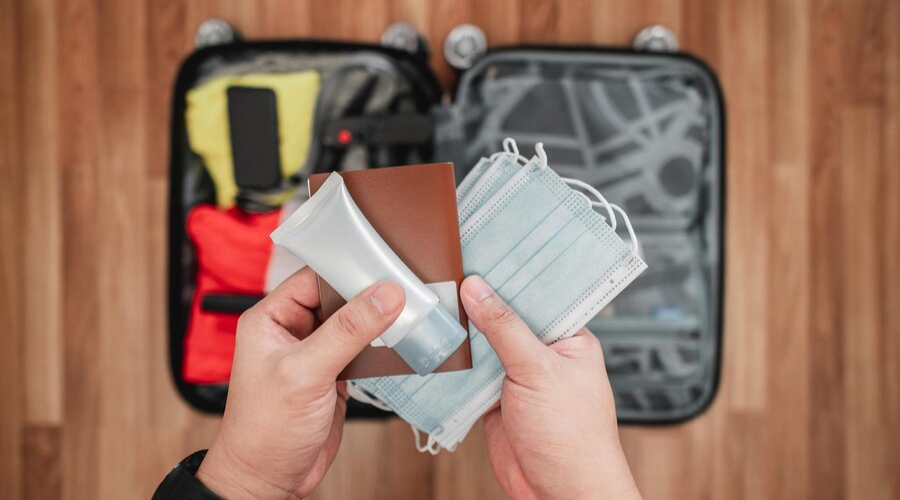
Beyond prescriptions, a basic kit covering pain relief, antihistamines, motion sickness tablets, and a small supply of rehydration salts covers the majority of in-flight health situations. Long-haul travellers frequently underestimate how dehydrating cabin air is. Having electrolyte sachets within reach makes a real difference by hour ten. A small tube of hand cream and lip balm belongs here too. Neither feels essential at the gate. Both feel essential somewhere over the Arabian Sea.
Electronics and Cables
The flight carry-on essentials for electronics are consistent regardless of trip length: a phone charger, a power bank, earphones or headphones, and the relevant adapter for the destination. A short USB cable is worth packing separately from the longer one; it takes up almost no space and is useful at airport charging stations where plug access is limited.
Download films, podcasts, and playlists before leaving. In-flight entertainment systems vary enormously in quality, and having personal content as a backup removes dependency on whatever the airline has loaded. For those who work on flights, having the laptop charger accessible rather than buried is worth organising before boarding. If you're planning to work on the go, check out our guide to the top tech gear for remote work while travelling to stay productive wherever your journey takes you.
Comfort Items
This category is where most carry-on bag packing tips make the biggest practical difference. A neck pillow takes up space but genuinely changes the experience on anything over four hours. A lightweight scarf or thin layer serves double duty: warmth on a cold aircraft and a blanket substitute when the airline's offering is thin.
An eye mask and a pair of earplugs are small enough to fit in a side pocket and are among the highest return-on-space items in any cabin bag. Cabin noise is a consistent low-level stressor on long flights, and blocking both light and sound meaningfully improves rest quality. For those who struggle with dry eyes on flights, preservative-free eye drops are worth adding to the list. Contact lens wearers in particular will appreciate this by the end of a long-haul sector.
Snacks and Hydration
Airport and in-flight food is expensive, inconsistent, and not always timed well. Carrying a small supply of snacks, nuts, a cereal bar, and dried fruit covers the gaps between meal services and is useful if the flight is delayed on the ground. An empty reusable water bottle is worth packing in the carry-on and filling after security. Most airports have water refill stations post-security, and having a bottle avoids depending on the cabin crew's trolley timing for hydration throughout the flight.
A Change of Clothes
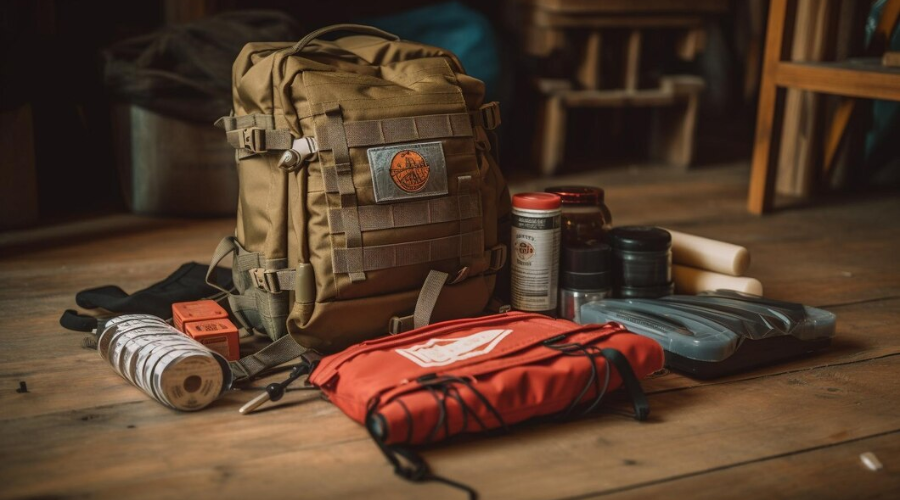
On any flight over six hours, or any journey with a connection, a change of clothes in the carry-on is genuinely worth the space. If the checked bag is delayed, it provides immediate relief. If it is not, it still serves as a fresh layer for arrival after a long overnight sector. Compactly packing a lightweight t-shirt and underwear rather than a full outfit keeps the space footprint minimal. If you're travelling with checked baggage as well, explore the best ways to pack your suitcase to maximise space while keeping your belongings organised. Travelling light is easier than it seems. Learn how to pack for a two-week trip using only a small carry-on bag without compromising on essentials.
Security and Airline Rules Worth Knowing
A flight essentials checklist is only useful if it accounts for what is actually permitted through security. Liquids in hand luggage are restricted to containers of 100ml or less in most countries, placed in a single transparent resealable bag of no more than one litre capacity. This applies to toiletries, liquid medications, and food items.
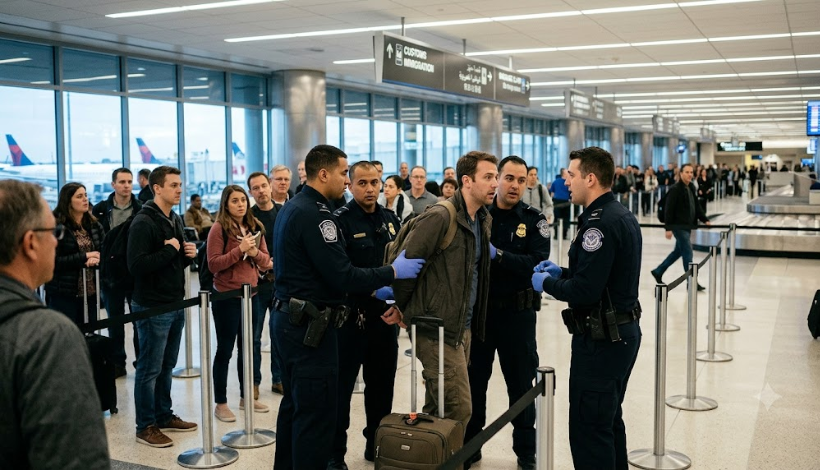
TSA-approved carry-on items and the equivalent rules under other aviation authorities follow similar principles globally, but specific restrictions vary. Sharp objects, certain sporting equipment, and some battery types are prohibited or restricted in the cabin. Checking the airline's specific restrictions before packing rather than relying on general knowledge avoids problems at the security lane.
Carry-on luggage tips around size limits are equally important. Maximum cabin bag dimensions vary between airlines and between aircraft types on the same airline. Low-cost carriers in particular enforce size restrictions strictly, and a bag that fits in one airline's overhead locker may be checked at the gate on another. Checking dimensions against the specific airline before travel removes this uncertainty entirely. Beyond packing, don't forget the important international travel essentials, including travel documents, adapters, insurance, and destination-specific requirements.
How EaseMyTrip Takes the Guesswork Out of Travel Preparation
Knowing what to pack is one part of the equation. Knowing what the airline permits, what the destination requires, and how to manage the logistics of a multi-leg journey is another. EaseMyTrip has been building AI-powered tools into its platform that surface this kind of contextual information alongside booking airline baggage policies, destination entry requirements, and real-time flight updates accessible through a single interface.
For travellers planning international flight booking, the ability to check airline-specific carry-on rules, destination customs restrictions, and connection timings without switching between multiple sources removes a significant layer of pre-trip friction. As AI continues to make travel platforms more responsive to individual itinerary details rather than generic advice, EaseMyTrip is positioning itself at the front of that shift, building a platform that prepares travellers for the journey, not just books them onto it.
FAQs
Q: What should always be in a carry-on bag regardless of trip length?
The non-negotiables on any carry-on packing list are travel documents, prescription medications, valuables such as electronics and cards, a phone charger, and a power bank. These are the items that create the most significant problems if they end up in a lost or delayed checked bag. Beyond these, a change of clothes, basic pain relief, and earphones cover the majority of in-flight situations regardless of journey length.
Q: How do liquid restrictions work for carry-on luggage?
Under current aviation rules in most countries, liquids in cabin bags must be in containers of 100 ml or less, all placed in a single transparent resealable bag with a maximum capacity of one litre. This applies to toiletries, drinks, and liquid medications. TSA-approved carry-on item rules in the United States follow a similar framework, as do regulations under the UK Civil Aviation Authority and European equivalents. Checking the specific rules of the country of departure is advisable, as minor variations exist.
Q: What are the most useful comfort items to pack in a carry-on for long-haul flights?
For long-haul travel, the flight carry-on essentials for comfort are a neck pillow, an eye mask, earplugs or noise-cancelling headphones, a lightweight scarf or layer, and lip balm. Preservative-free eye drops are particularly useful for contact lens wearers. These items are small relative to the difference they make on a flight of eight hours or more, and most fit easily in a side pocket without taking meaningful space from the main compartment.
Q: How can travellers avoid problems at security with their carry-on?
Following the standard carry-on bag packing tips around liquids and restricted items removes most security friction. Keeping electronics and liquids in easily accessible pockets rather than buried in the main compartment speeds up the security tray process. Wearing shoes that are easy to remove, avoiding excessive metal in clothing, and having boarding documents ready before reaching the scanner all reduce the time spent at the checkpoint. Checking the airline's specific prohibited items list before packing is more reliable than relying on general assumptions.
Q: How does EaseMyTrip help travellers prepare their carry-on for international flights?
EaseMyTrip's platform surfaces airline-specific baggage policies and carry-on size restrictions alongside flight bookings, which means travellers have access to the relevant rules for their specific airline rather than generic guidance. For international flight packing, the platform also provides destination entry requirement information, helping travellers understand what documentation and items need to be in the cabin before they reach the airport. AI-powered updates on flight status and gate information mean that on the day of travel, relevant details are accessible without switching between multiple apps or websites.






 September 16, 2024
 Share
Share
 Download as PDF
  From
From 
 Departure Date
 Travellers & class
 Rent For
 Departure Date









 Share
Share 





{{cmnt.comment}}