August is one of the best times to visit Spiti Valley, as its unique rain-shadow geography keeps the region largely dry despite the monsoon affecting much of India. While the valley offers clear skies, blooming alpine meadows, and stunning attractions like Chandratal Lake, Key Monastery, Pin Valley, Tabo, Dhankar, and Nako, travellers should be prepared for challenging road conditions at Rohtang La, Batal–Gramphoo, and Maling Nala, where landslides can occur during heavy rains. Starting early, checking real-time road updates, carrying a suitable high-clearance vehicle, and building buffer days into your itinerary are key to a successful trip. With proper planning and advance bookings for transport, accommodation, and permits, a Spiti Valley road trip in August is one of India's most rewarding Himalayan adventures.
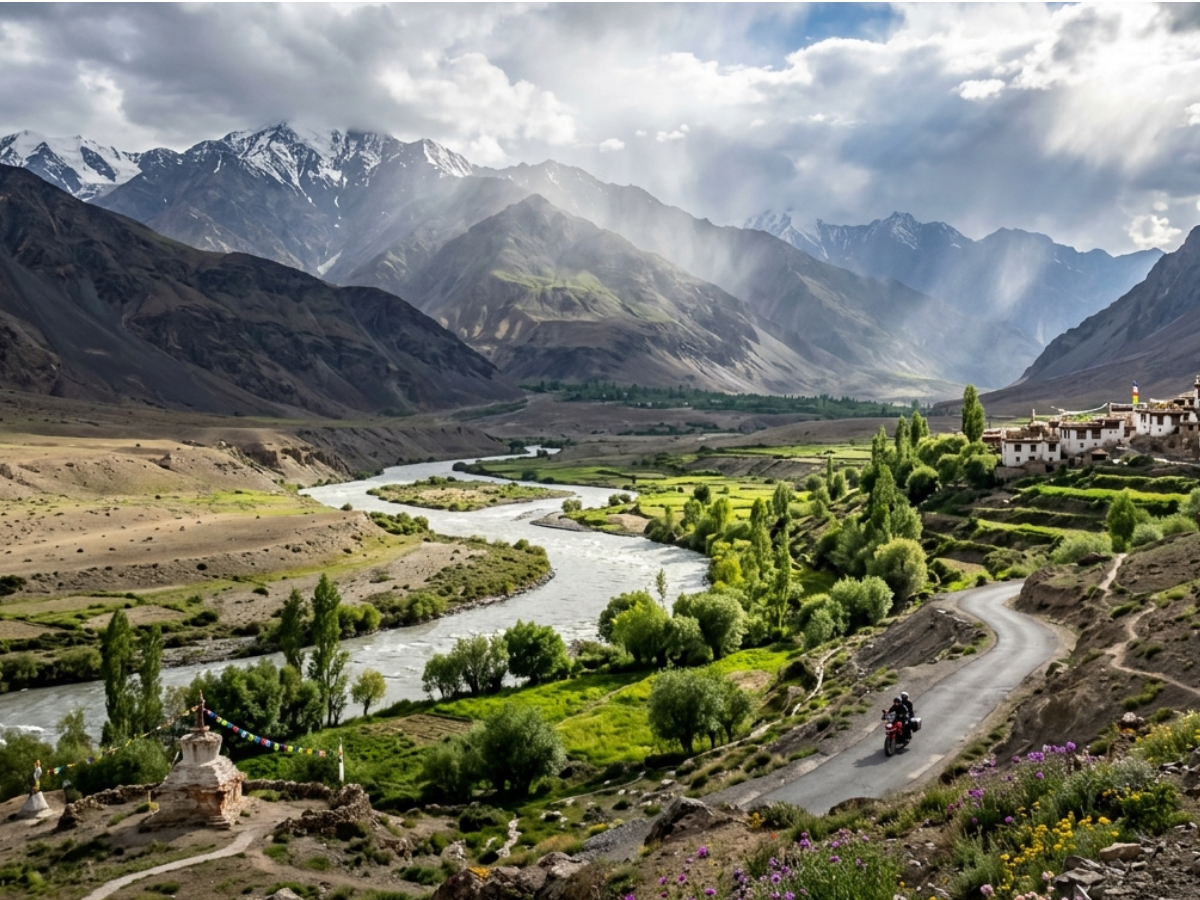
August in Spiti Valley is one of those travel experiences that requires some context before it makes sense. Most of India in August is wet, grey, and difficult. Spiti, sitting in the trans-Himalayan cold desert at altitudes between 3,800 and 4,500 metres, is not. The same monsoon system that saturates the Kullu Valley and the Kangra foothills loses most of its moisture before crossing the Rohtang La and the Kunzum ranges, and what reaches the Spiti river valley is a fraction of its original intensity enough to touch the high passes with brief cloud cover, not enough to turn the brown cold desert into mud.
A Spiti Valley road trip in August is, for the right traveller, one of the more rewarding things possible in India during the monsoon months. For the unprepared traveller, it is a logistics problem encountered at altitude, often on a narrow road above a river gorge, without a phone signal to call for help. This guide covers both the opportunity and the reality. If you're planning a longer journey, our complete Spiti Valley travel guide covers permits, routes, attractions, and travel tips in greater detail.
Why August Is the Right Month for a Spiti Road Trip
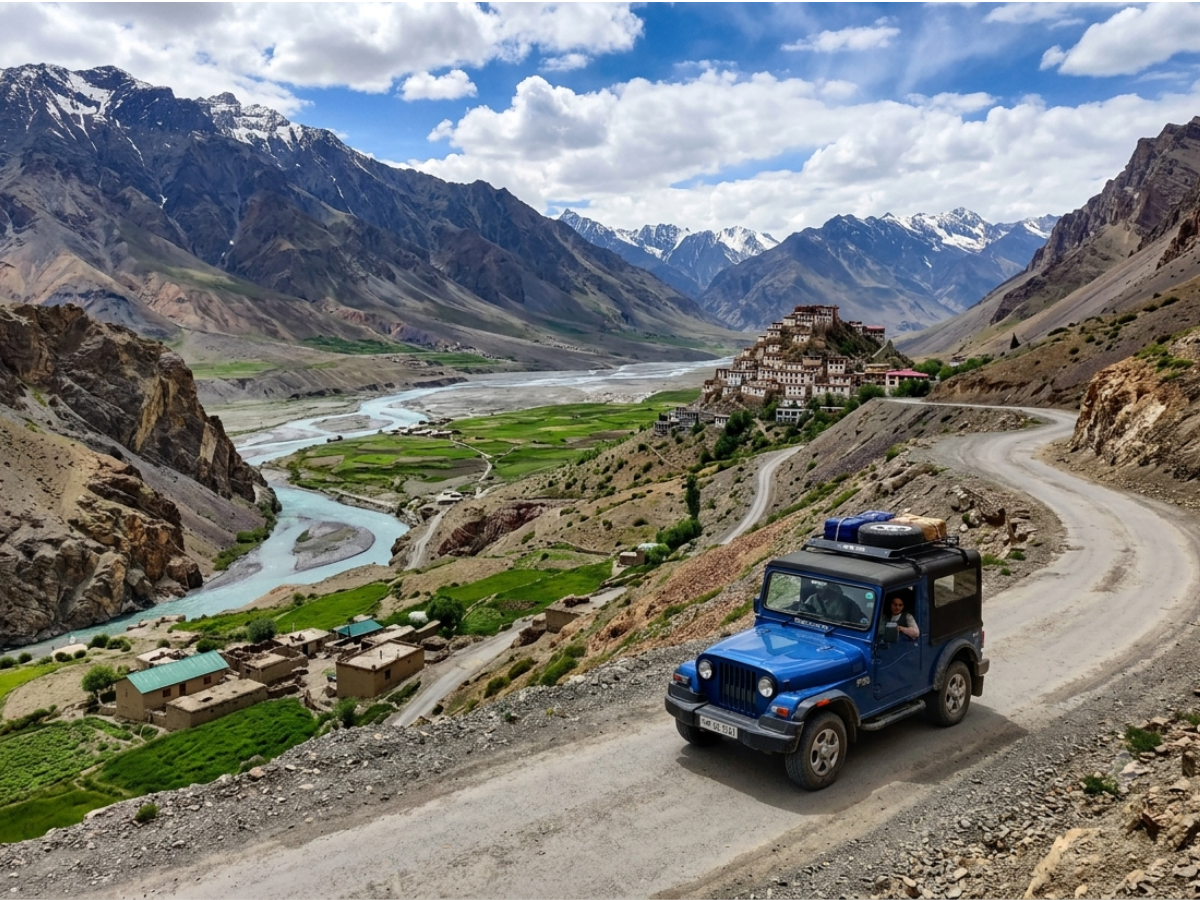
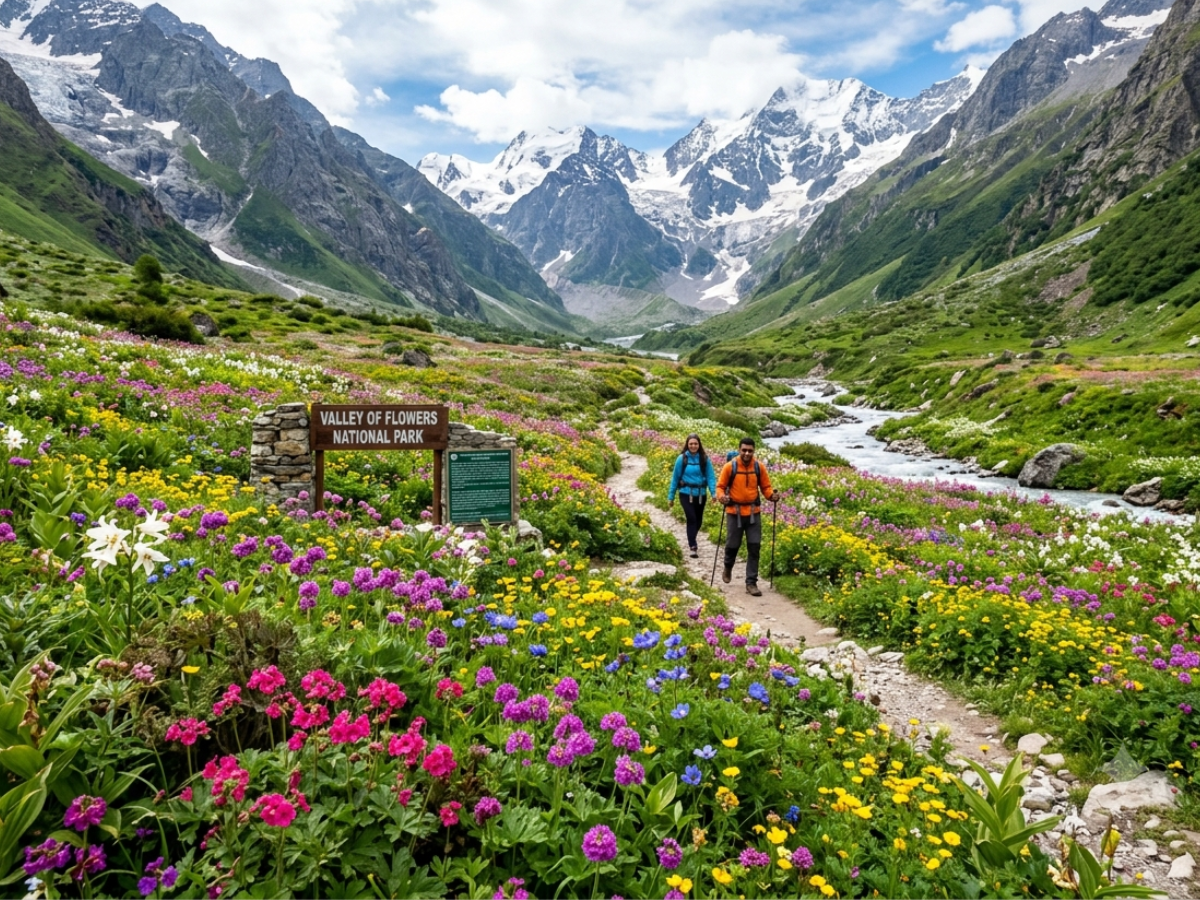
The Spiti Valley road trip in August case starts with the road situation. The Manali–Spiti route via Rohtang and Kunzum La opens fully by June and remains accessible through October in most years. August sits in the middle of this window the early season snow and ice have cleared from the passes, the high-altitude wildflowers are at their peak in the meadows around Chandratal and the Kunzum range, and the sky above 3,500 metres is, more often than not, a blue that the dust and haze of September occasionally compromise.
The monsoon risk in August is real and concentrated at specific points rather than uniformly distributed. The Rohtang La and the Batal–Gramphoo section, which sit at the interface between the Kullu Valley's wetter climate and Spiti's rain shadow, are the sections where landslides and road damage occur when the monsoon is heavier than usual. The Spiti River Valley itself, from Kaza to Tabo to Nako, is a dry desert country where August rain is brief and light.
Understanding this geography before departure is what separates travellers who manage the Spiti Valley road trip in August successfully from those who arrive at Rohtang in a blocked queue and return to Manali having not seen a monastery.
The Route: Manali to Spiti
The Manali to Spiti Route via Rohtang and Kunzum La
The standard Manali to Spiti route covers approximately 200 kilometres from Manali to Kaza, the main town in the Spiti Valley, and takes between nine and twelve hours on a good day, more if road conditions on the ghat sections require caution.
Day 1: Manali to Chandratal (via Rohtang and Batal):
Leave Manali no later than 6am. The Rohtang permit, required for all vehicles crossing the pass, must be obtained online 24 to 48 hours before travel from the HRTC e-pass portal. The permit window is morning-only, and late departures miss it.
From Rohtang (3,978 metres) the road descends into Gramphoo, then follows the Chandra River through Batal to the turnoff for Chandratal Lake. The 14-kilometre track from the Batal–Kunzum junction to the Chandratal campsite is not paved and requires a vehicle with reasonable ground clearance SUVs manage it comfortably, smaller hatchbacks do not.
Chandratal at 4,250 metres is the first overnight stop on the Spiti Valley itinerary and one of the most memorable. The lake at dusk and dawn shifts through colours that the midday versions do not replicate. Tents at the campsite are basic but functional. Temperatures drop significantly after sunset; prepare for 2 to 5 degrees at night regardless of the August daytime warmth.
Day 2: Chandratal to Kaza (via Kunzum La):
The Kunzum Pass at 4,590 metres is the highest point on the Manali to Spiti route and requires the same early departure logic as Rohtang clouds build through the afternoon, and the visibility on the pass road narrows. From Kunzum the road descends to Losar, the first village in Spiti proper, and then follows the Spiti River through Pin Village turnoff and up to Kaza.
Kaza at 3,800 metres is the administrative and commercial centre of the Spiti Valley banks, SIM card top-up, fuel (the last reliable fuel before the Shimla side), and the widest accommodation range in the valley. Plan two nights here as the base for the upper Spiti exploration.
What to See: The Spiti Valley Itinerary
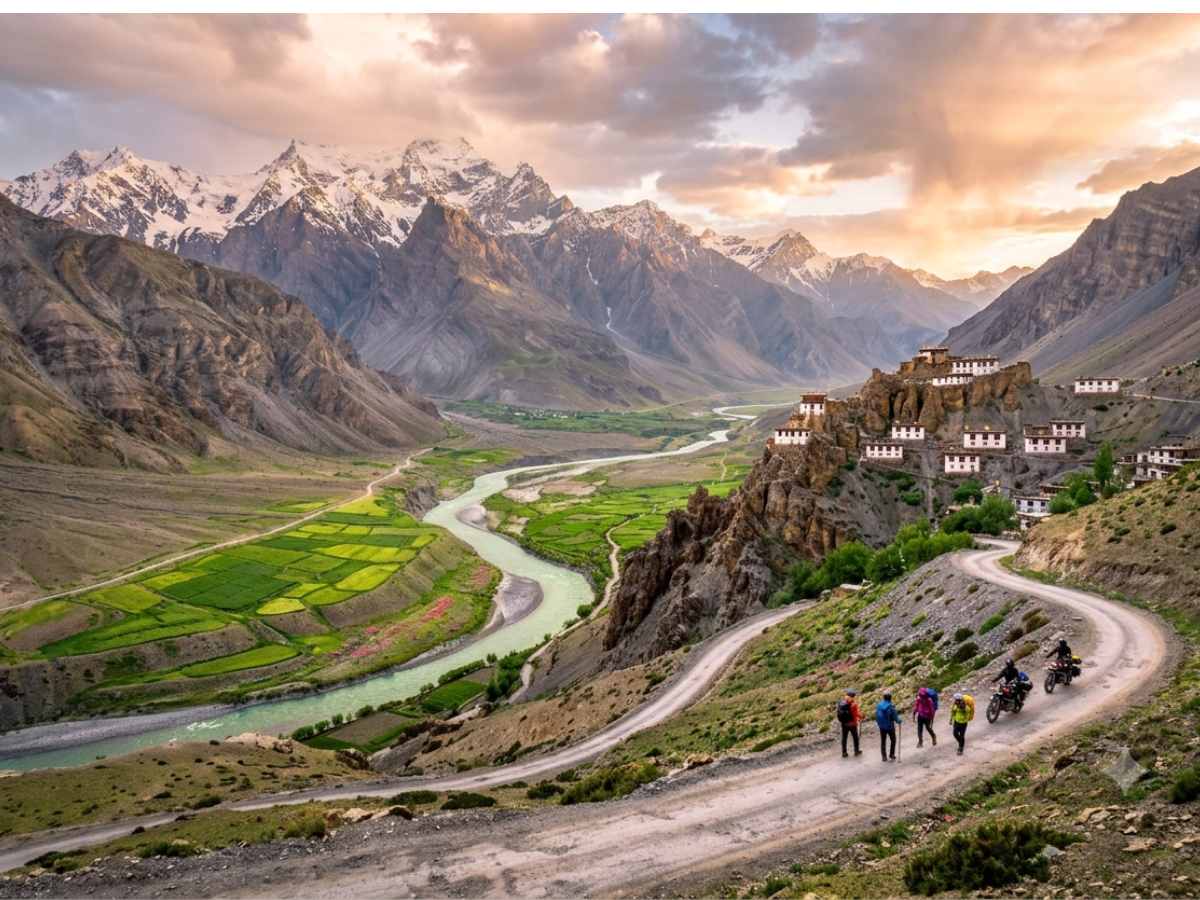
Key Monastery Circuit from Kaza
Key Monastery (4,166 metres) sits on a ridge above Kaza and is the largest in Spiti, a working institution with monks in residence, a three-day festival in June and July, and a museum holding thangkas and manuscripts. The August visit misses the festival but gains the post-festival quiet when the monastery is less crowded and more accessible for genuine exploration rather than crowd navigation.
Kibber Village at 4,205 metres is one of the highest motorable villages in the world and provides the first clear view of the Spiti valley's scale a wide brown landscape with the river a silver thread in the floor, the snow-capped peaks of the Kinnaur range visible to the east.
Pin Valley, the side valley that branches south from the Spiti River, is worth a half-day for its different character: greener and narrower, with the snow leopard habitat of the Pin Valley National Park in the higher sections. The Pin Valley on a clear August morning, with the wildflowers on the river bank against the grey rock walls, is the specific landscape that the Spiti Valley road trip in August produces and that no other month replicates.
Tabo and Dhankar
Tabo Monastery, 47 kilometres east of Kaza, holds what is frequently described as the finest collection of early Buddhist art in the Himalayas. Dating to 996 CE, the nine temples of the original complex contain murals, stucco figures, and manuscript collections that the Dalai Lama has compared to the Ajanta caves. The white adobe walls and the cave monastery above the village make Tabo one of the more visually coherent and historically significant stops on any Spiti Valley itinerary.
Dhankar, between Kaza and Tabo, provides the dramatic vertical structure that the valley floor sites lack: a fort-monastery perched on a cliff above the confluence of the Spiti and Pin rivers, looking almost structurally impossible from below. The walk up from the village takes 20 minutes and opens into a viewpoint across both river valleys that is worth arriving before 8am to photograph in the right light.
Nako and the Route Toward Kinnaur
For travellers extending the Spiti Valley road trip in August into Kinnaur, the road east from Tabo through Nako provides a transition from the high cold desert to the greener, more forested Kinnaur landscape. Nako's Lake, a small high-altitude reservoir surrounded by willows at 3,625 metres, is a gentle counterpoint to Chandratal's drama.
The Maling Nala section between Nako and the Kinnaur border has historically been the most slide-prone section of the route and should be crossed early in the morning when road clearing operations have had time to address any overnight disruption.
Spiti Valley Road Conditions in the Monsoon
Spiti Valley road conditions in the monsoon are the most important planning variable for an August visit. The specific points of vulnerability are:
- The Rohtang La section on the Manali approach is the most slide-prone point on the circuit and the one that generates the most road closures during heavy monsoon events in the Kullu Valley below.
- The Batal–Gramphoo section: a narrow riverside road that takes the brunt of any Chandra River flooding.
- The Maling Nala section between Nako and Puh is historically the most unreliable stretch in August on the Kinnaur approach.
Spiti Valley road conditions in the monsoon are best checked through two sources: the Manali Traffic Police Facebook page, which posts real-time road condition updates including Rohtang status, and the BRO (Border Roads Organisation) helpline at 1800-419-8506, which covers the higher passes. Checking both on departure morning rather than the night before provides the most current information.
How EaseMyTrip Supports Spiti Valley August Planning
A Spiti Valley road trip in August requires coordinating flights or trains to Manali, allowing travellers to conveniently book train tickets based on their preferred route, vehicle hire for the mountain circuit, camping and guesthouse bookings across Chandratal, Kaza, Tabo, and potentially Nako, and the Rohtang permit process, a multi-element itinerary that is more logistically demanding than most domestic trips.
EaseMyTrip's platform surfaces flight options into Bhuntar (Kullu–Manali Airport) and Chandigarh alongside cab hire options for the mountain circuit, helping travellers build the access logistics without managing each element across separate platforms. For the return leg, most travellers who enter via Manali exit through Shimla on the Kinnaur route. Those preferring public transport can also book bus tickets for onward journeys between Shimla, Chandigarh, Delhi, and other major cities. The platform's multi-modal search helps sequence the Shimla exit with return flight options from Chandigarh or Delhi without requiring a separate research exercise.
As AI continues to improve how booking platforms integrate real-time road condition data and permit status into travel planning tools, EaseMyTrip is building towards a system that surfaces Rohtang permit availability and pass condition alerts at the itinerary planning stage rather than leaving these as last-minute checks on departure morning. For a Spiti Valley road trip in August where the road conditions on a single pass determine whether the trip proceeds as planned, that kind of proactive, condition-aware planning support changes the quality of the preparation considerably.
FAQs
Q: Is the Spiti Valley road trip in August safe and recommended?
A Spiti Valley road trip in August is safe and recommended for travellers who understand the specific risks and plan around them. The valley itself is in a rain shadow and receives minimal monsoon rainfall; the cold desert landscape is dry and accessible. The risk is concentrated at the Rohtang La and Batal–Gramphoo sections on the Manali approach, where monsoon conditions in the lower Kullu Valley can cause landslides and road closures. By checking the road conditions on the morning of departure, leaving Manali before 6am and building buffer days into the itinerary, the main risks can be mitigated and shouldn’t require the trip to be rescheduled.
Q: What is the best Spiti Valley itinerary for a 7 to 10-day August trip?
The best Spiti Valley itinerary for 7 to 10 days in August runs:
-
Day 1: Manali to Chandratal via Rohtang and Batal;
-
Day 2: Chandratal to Kaza via Kunzum La;
-
Days 3–4: Kaza base for Key Monastery, Kibber, and Pin Valley;
-
Day 5: Kaza to Tabo via Dhankar;
-
Day 6: Tabo to Nako;
-
Days 7–8: Nako to Sangla via the Kinnaur route (if extending);
-
Day 9: Sangla to Shimla for an exit-Flight connection from Chandigarh.
Buffer days are worth building at Chandratal and Kaza for road condition flexibility.
Q: What are Spiti Valley road conditions like in the monsoon, and how should travellers prepare?
Spiti Valley road conditions in the monsoon are variable by section. The Spiti River Valley itself is generally dry and drive-able throughout August. The vulnerable sections are Rohtang La, the Batal–Gramphoo riverside stretch, and the Maling Nala near Nako. Preparation involves checking the Manali Traffic Police Facebook page and the BRO helpline (1800-419-8506) on departure morning, departing Manali before 6 am to cross Rohtang in the morning window, carrying extra fuel after Kaza where the next reliable pump is at Nako or across the Kinnaur border, and building one to two buffer days into the itinerary for road clearing delays.
Q: How difficult is the Manali to Spiti route for a first-time Himalayan road tripper?
The Manali to Spiti route is demanding but not technically expert-level for an experienced driver in a suitable vehicle. The critical requirements are a vehicle with adequate ground clearance and good tyres the Chandratal track and several sections of the Spiti valley road are unpaved and require clearance that small sedans do not provide. The driving skills required are attentiveness on narrow ghat sections, comfort with sustained altitude driving, and willingness to stop and assess rather than push through uncertain conditions. First-time Himalayan drivers are better advised to hire a local driver familiar with the route rather than self-driving the entire circuit. Travellers looking for a hassle-free experience can also explore curated Spiti Valley tour packages that include transport, accommodation, and guided sightseeing.
Q: How can EaseMyTrip help plan a Spiti Valley road trip in August?
EaseMyTrip’s platform helps travellers planning a Spiti Valley road trip in August by showing flight options into Bhuntar and Chandigarh and vehicle hire availability for the mountain circuit from Manali. For the standard entry-by-Manali, exit-by-Shimla route, the platform’s multi-modal search schedules the Shimla exit with return flight options without the need for a separate planning exercise. AI-powered tools are developing to flag Rohtang permit requirements and road condition alerts at the itinerary planning stage, helping travellers prepare for the specific logistics of the August window rather than discovering them on departure morning.






 August 3, 2026
 Share
Share
 Download as PDF
  From
From 
 Departure Date
 Travellers & class
 Rent For
 Departure Date





 Share
Share
{{cmnt.comment}}