Meghalaya is at its most spectacular during the monsoon, especially in July and August, when heavy rainfall transforms its waterfalls, forests, rivers, and valleys. The Nongriat trek leads to the famous Double Decker Living Root Bridge through around 3,500 slippery stone steps, while Nohkalikai Falls reaches its fullest flow near Cherrapunji. Mawlynnong, known for its community-maintained cleanliness, offers lush forests, a living root bridge, bamboo skywalk, and an authentic Khasi village experience. Monsoon travel requires proper preparation, including sturdy closed-toe footwear, rain protection, waterproof bags, flexible sightseeing plans, and advance accommodation bookings. Despite challenging trails and occasional road disruptions, Meghalaya’s wet season offers the most dramatic and immersive experience of its natural and cultural landscapes.
Meghalaya means "abode of clouds," and in July and August the name is not metaphorical. The clouds sit in the valleys rather than above them, mist moves through the streets of Shillong in the mornings, and the rain, which can arrive horizontally in Cherrapunji, is a constant presence rather than a weather event. Most travellers treat this as a reason to avoid the northeast in the monsoon. The ones who have actually been there in July treat it as the reason to go.
This Meghalaya monsoon travel guide covers the three experiences that define the state's wet season: the living root bridge trek at Nongriat, the Nohkalikai Falls at their fullest, and the village of Mawlynnong, with specific attention to what each involves in practice rather than in the idealised versions that most travel writing presents.
Why Monsoon Is Meghalaya's Most Honest Season
The Meghalaya monsoon travel guide case starts with a geographical fact: Cherrapunji and Mawsynram, both in Meghalaya's East Khasi Hills district, receive among the highest annual rainfalls recorded anywhere on earth. The living root bridges exist because the Khasi people needed river- crossing structures that survived and strengthened in precisely this environment. The waterfalls that make Meghalaya visually extraordinary exist because of the rain. Visiting in November or January, when the state is technically more comfortable, means seeing the aftermath of the monsoon rather than the thing itself.
The trade-off is real. Some roads become unreliable. The Nongriat trek is genuinely slippery in the rain. Accommodation options in smaller villages have limited capacity and can feel austere in wet weather. These are conditions to manage rather than reasons to stay home.
The Living Root Bridges: Nongriat Trek
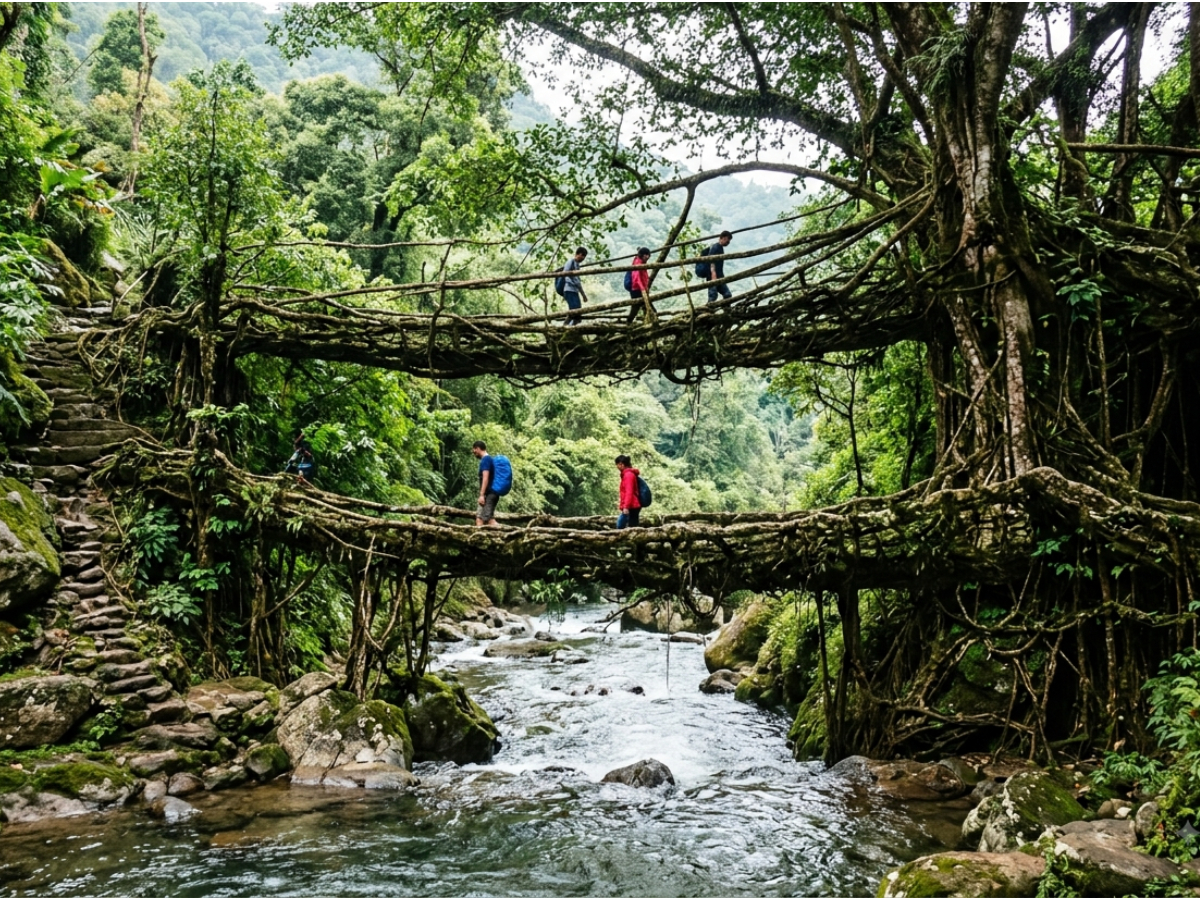
What the Living Root Bridges Actually Are
The living root bridges on the Nongriat trek are not a metaphor and not a construction in any conventional sense. They are bridges made from the aerial roots of rubber fig trees, guided over decades across rivers by Khasi communities who trained the roots along bamboo or hollow betel nut trunk frameworks until they crossed, took hold on the opposite bank, and became load-bearing. The oldest are several hundred years old. They strengthen as they age, which makes them the opposite of the steel suspension bridges that corrode and weaken over the same timescale.
The Double Decker Living Root Bridge at Nongriat is the most photographed of the two bridges stacked vertically, the upper one less complete than the lower but still fully functional. There are other root bridges in the surrounding area, including the Umshiang single bridge that is arguably more impressive structurally, and a swimming hole below the double-decker where the river pools between boulders.
The Trek Itself
The living root bridges on the Nongriat trek require understanding what the descent and ascent involve before committing to the day. The standard approach from Tyrna village involves approximately 3,500 stone steps descending to Nongriat, roughly 500 metres of elevation loss, and the same steps on the return. In dry conditions this takes three to four hours to return; in monsoon conditions, with wet stone steps and occasional patches of genuine mud, it takes longer and requires appropriate footwear and concentration.
Flip-flops are genuinely not appropriate on this trail regardless of how many people arrive wearing them. Closed-toe shoes with grip, trail runners or trekking shoes are the minimum sensible equipment. Trekking poles make the return ascent significantly easier and are available for hire at the Tyrna trailhead.
The monsoon complicates and enhances the trek simultaneously. The forest is at its most saturated green, the sound of the river below is constant through the trees, and several smaller cascades appear on the steep walls of the gorge that are entirely absent in dry season. The bridge itself, with the river running full beneath it and the mist in the gorge, is a significantly more dramatic visual than the same structure in October or November.
Nohkalikai Falls: The Best Time to Visit Is Now
What Nohkalikai Is
Nohkalikai Falls near Cherrapunji is the tallest plunge waterfall in India at approximately 340 metres, dropping from the plateau edge into a green pool at the base. The falls carry a local legend the name translates roughly to "jump of Ka Likai," a woman from the village that the guides will tell at the viewpoint, and the combination of the story and the scale makes this one of the more resonant natural sites in the northeast.
Nohkalikai Falls: Best Time to Visit
The Nohkalikai Falls best time to visit is unambiguously the monsoon window of July and August. The falls exist because of the Cherrapunji rainfall, and at peak monsoon the volume of water coming over the plateau edge is dramatically greater than at any other time of year the sound is audible from the road before the viewpoint comes into view, and the spray reaches the viewing platforms on days when the wind is from the right direction.
In the drier months, November and December, the falls narrow to a fraction of their monsoon volume. The visual comparison between a July photograph and a November photograph of the same falls is stark enough to constitute genuinely different experiences.
The viewing platforms at the Nohkalikai viewpoint are accessible by road from Cherrapunji town, approximately 8 kilometres. The platform provides a clear view into the gorge below, and on clear days the green pool at the base is visible. Cloud cover frequent in monsoons can obscure the base and, on occasion, the mid-section of the falls, which is one of the conditions that requires flexibility in timing: visiting twice if the first view is obscured is worth doing if the accommodation allows it.
Mawlynnong: The Cleanest Village Guide
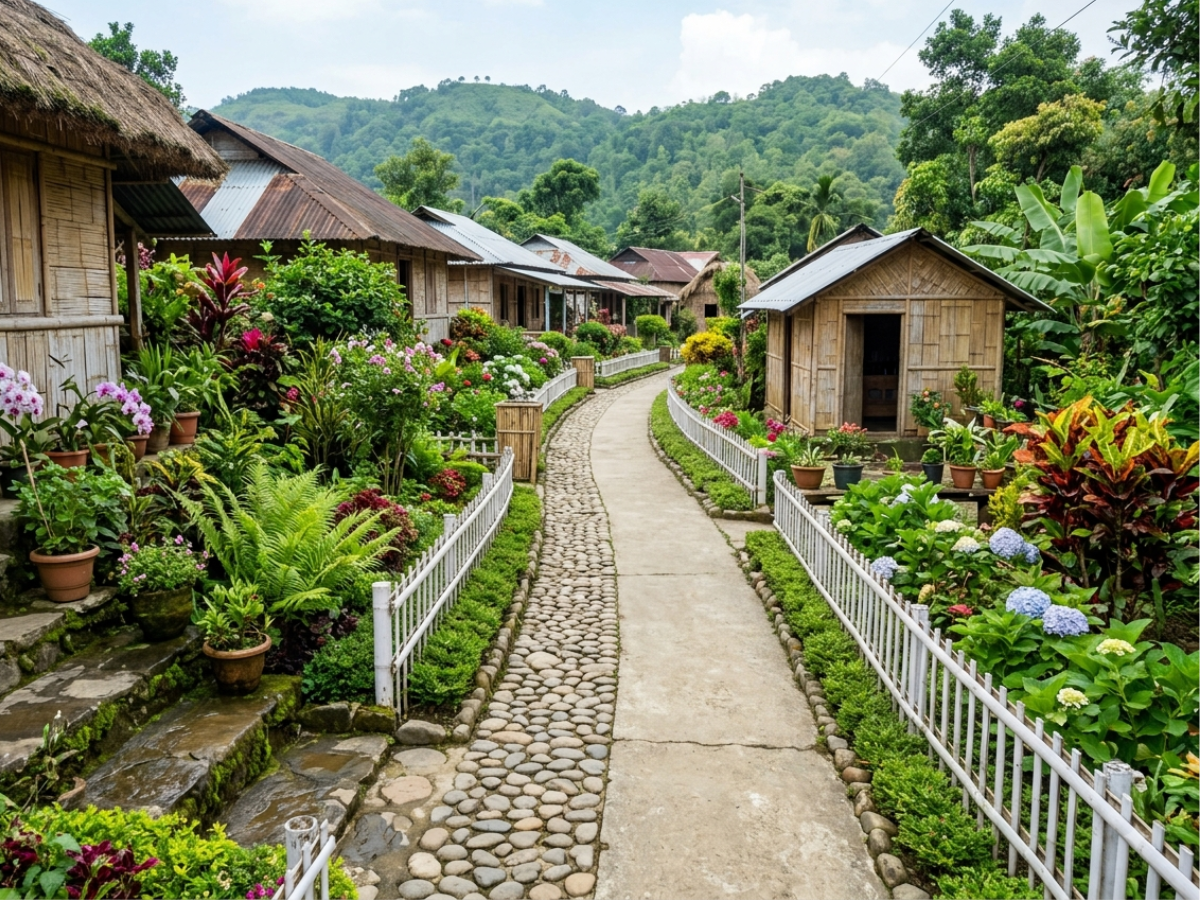
What Mawlynnong Actually Is
Mawlynnong, the cleanest village guide section, starts with some context about the designation. The "cleanest village in Asia" title was awarded by a travel magazine in 2003 and has been repeated so frequently that the village has had to manage the tourist volume that the reputation generates. The cleanliness is real and maintained through genuine community effort, bamboo dustbins at regular intervals, a composting system, and a specific village culture around waste management. The commercialisation is also real, with souvenir stalls and homestay pricing that reflect the village's awareness of its own reputation.
What Mawlynnong offers beyond the cleanliness designation is its setting. The Khasi Hills village surrounded by forest, with a living root bridge within walking distance and a sky walk constructed from bamboo that provides a view across the valley toward Bangladesh, is genuinely worth seeing. The village church, the betel nut plantation surrounding the settlement, and the daily rhythms of a Khasi community that has made tourism work for it rather than against it make for a visit that rewards a slower pace than a photo-stop allows.
Monsoon Mawlynnong
The monsoon makes Mawlynnong more beautiful and slightly more challenging simultaneously. The surrounding forest is at its fullest green, the single-rooted bridge near the village has the river below it running rather than trickling, and the skywalk view on clear days shows the Bangladeshi plains below the hills through the monsoon haze. Accommodation should be booked well in advance for the July and August period, as the village's homestay capacity is limited and the reputation brings visitors regardless of the weather.
The road from Shillong to Mawlynnong takes approximately three hours and runs through the East Khasi Hills, with the final section descending toward the Bangladesh border plain. The road is generally well-maintained, but the monsoon can produce occasional disruptions on the descent section.
Practical Notes for a Monsoon Meghalaya Trip
The sequence that most Meghalaya monsoon travel guide itineraries follow is: Shillong for two nights as the base, a day trip to Mawlynnong and the single root bridge, an overnight in Cherrapunji for the Nohkalikai Falls and Mawsmai Cave, and then the Nongriat trek as a separate day.
The Nongriat trek requires a night in Cherrapunji or the guesthouse at Nongriat itself the descent and ascent in a single day from Shillong is possible but leaves very little time at the bridge. Staying at Nongriat's basic guesthouses allows an early morning visit to the bridge before the day-trip crowd descends from Tyrna, which transforms the experience from a popular attraction to something closer to a quiet encounter.
Footwear and waterproofing are the two most common preparation failures. Waterproof bags for electronics, a quality rain jacket rather than a flimsy poncho, and closed-toe grip shoes for the Nongriat steps are not optional in July and August.
How EaseMyTrip Supports Meghalaya Monsoon Planning
A Meghalaya monsoon travel guide trip involves flights to Shillong accessible via Umroi Airport, with connections through Kolkata and Guwahati alongside road transfers for the Cherrapunji circuit and accommodation across the limited-capacity village homestays that fill quickly for July and August. EaseMyTrip's platform surfaces flight options into Umroi and Guwahati alongside cab transfer availability for the Shillong–Cherrapunji–Mawlynnong circuit, helping travellers build the access logistics without managing each element separately.
For the living root bridges on the Nongriat trek, specifically where the Nongriat guesthouse accommodation is genuinely limited and books weeks ahead during peak monsoon, the platform's AI-powered availability tools help identify options before the window closes. As AI continues to improve how booking platforms handle the specific logistics of northeast India travel, EaseMyTrip is building towards a system that makes Mawlynnong the cleanest village guide itinerary as bookable as a Goa weekend. For a state whose most spectacular experiences are inseparable from the monsoon that most platforms treat as a deterrent, that kind of intelligent, monsoon-specific planning support is what converts an aspirational trip into a confirmed one.
FAQs
Q: Is the Meghalaya monsoon travel guide suitable for first-time visitors to the northeast?
A Meghalaya monsoon travel guide trip is suitable for first-time visitors to the northeast with realistic preparation. Meghalaya has better tourist infrastructure than most other northeastern states. Shillong has good accommodation across price ranges, the Cherrapunji circuit is well-established, and the Nongriat trek is guided rather than requiring independent navigation. The monsoon adds physical demands to the Nongriat steps and requires waterproofing preparation, but does not make the state inaccessible for reasonably fit travellers who come equipped for the conditions.
Q: When is the best time to visit Nohkalikai Falls?
Nohkalikai Falls, best time to visit is July and August, when the Cherrapunji rainfall is at its peak volume and the waterfall is running at its fullest. The falls narrow dramatically in the drier winter months, the visual difference between a monsoon and a post-monsoon Nohkalikai visit is significant enough that the falls are genuinely different experiences in the two seasons. October and November are more comfortable in terms of weather but produce a substantially less impressive waterfall. Visitors who want to see the falls at their full scale should plan specifically for the monsoon window.
Q: How difficult are the living root bridges on the Nongriat trek in monsoon conditions?
The living root bridges on the Nongriat trek in monsoon involve approximately 3,500 stone steps with significant elevation loss and gain across wet, sometimes slippery surfaces. In dry conditions the trek takes three to four hours to return; in monsoon conditions with careful footwork on wet stone, allow four to five hours and plan for slower sections. The trek is manageable for most reasonably fit adults who come in appropriate footwear closed-toe shoes with grip are essential. Flip-flops and smooth-soled shoes are genuinely hazardous on the wet steps. Trekking poles available for hire at Tyrna make the return ascent considerably easier.
Q: What makes Mawlynnong worth visiting during the monsoon?
Mawlynnong, the cleanest village guide in monsoon visits the village at its most visually appealing the surrounding Khasi Hills forest is fully leafed and the deepest green of the year, the single root bridge near the village has the river running beneath it rather than at a trickle, and the sky walk view toward Bangladesh shows the plains below the hills through the monsoon mist. The cleanliness that earned the village its designation is maintained year-round and is not affected by the rain. Accommodation must be booked well in advance for the July and August peak, as the village's homestay capacity is limited relative to the visitor volume the reputation generates.
Q: How can EaseMyTrip help plan a Meghalaya monsoon trip?
EaseMyTrip's platform helps travellers following this Meghalaya monsoon travel guide by surfacing flight options to Shillong via Umroi Airport and Guwahati alongside cab transfer availability for the Shillong–Cherrapunji–Mawlynnong circuit. AI-powered availability tools flag accommodation options at limited-capacity locations, including the Nongriat guesthouses and Mawlynnong homestays, before they fill for the peak monsoon window. For travellers combining Meghalaya with other Northeast India destinations, such as Kaziranga, Majuli, or Tawang, the platform's multi-modal search builds connected routes across what can otherwise be a complex multi-state itinerary.






 August 13, 2026
 Share
Share
 Download as PDF
  From
From 
 Departure Date
 Travellers & class
 Rent For
 Departure Date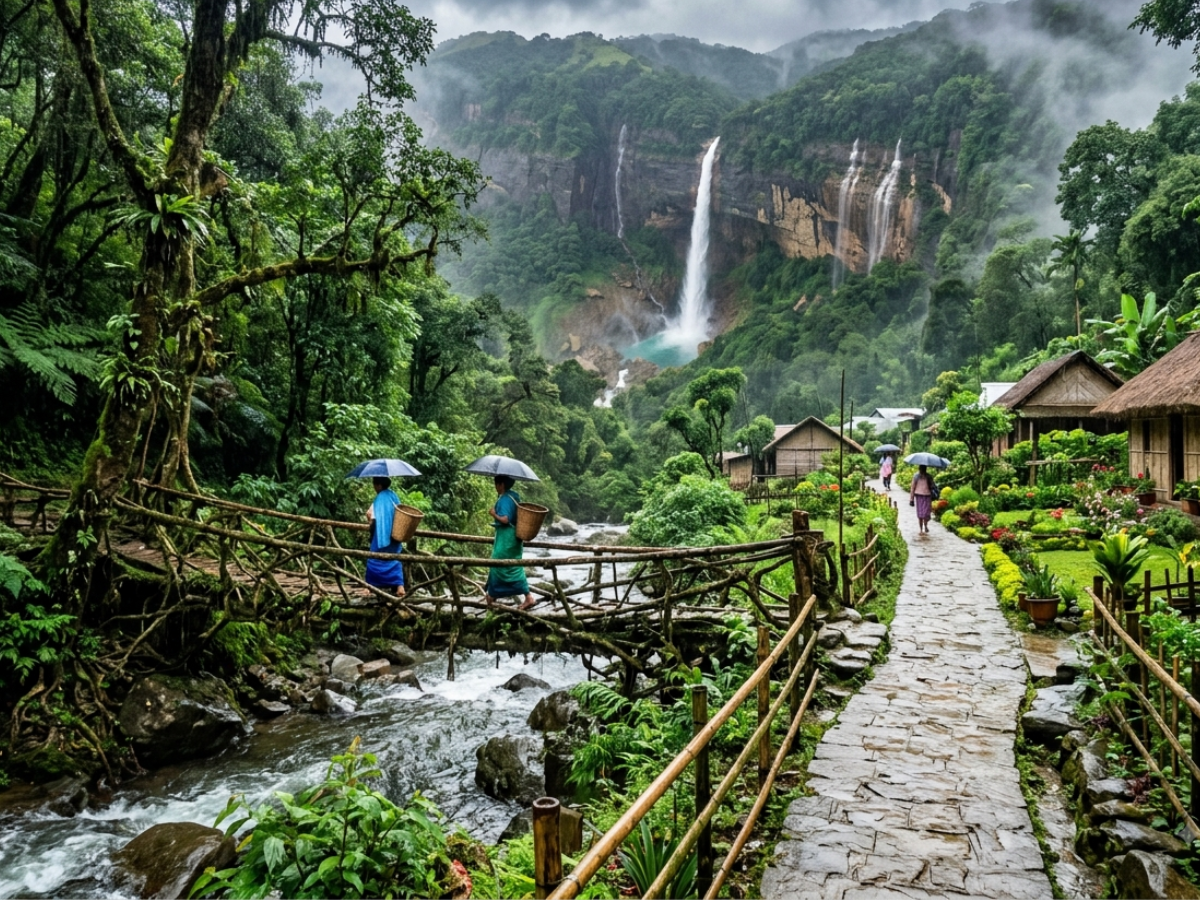





 Share
Share
{{cmnt.comment}}