The Best Indian Train Stations to Visit for Their Architecture and History

Anjali Jain September 17, 2024

India's railway stations are more than transportation hubs—they are architectural landmarks that reflect the country's rich colonial and regional heritage. Stations such as Chhatrapati Shivaji Maharaj Terminus in Mumbai, Howrah Station in Kolkata, Chennai Central, Charbagh Railway Station, and Royapuram Railway Station showcase a blend of Victorian Gothic, Romanesque, Awadhi, Rajasthani, and early colonial architectural styles. These historic stations offer visitors a unique opportunity to experience India's railway history, cultural heritage, and impressive design while still serving as active transport hubs. For travelers interested in architecture, photography, and history, these stations are destinations in their own right, proving that some of India's most remarkable landmarks can be found beyond the platform.

Most people treat a railway station as a means to an end, a place to get through quickly, find the right platform, and board. But scattered across India are stations that deserve a slower look. Built during periods of significant architectural ambition, several of these structures are landmarks in their own right, drawing visitors who have no train to catch at all. For travellers with an interest in heritage, history, or simply good design, these beautiful train stations India has to offer are worth building into an itinerary, not just passing through. Many of these stations are also part of some of the Most Famous Train Journeys in India, making the journey itself as memorable as the destination.

Why Indian Railway Stations Became Architectural Statements

The reasoning behind these grand structures was rarely just practical. Colonial-era railway stations functioned as nodes of utility and as emblems of imperial power and administrative power. Domes, arches, turrets and stained glass were not accidental design choices, but intentional declarations of permanence and authority.

It's the history that makes these buildings interesting today. Walking through one of these stations means walking through a piece of India's colonial and post-colonial story, told not in a museum but in a working transport hub still moving thousands of passengers daily. Historic railway stations India preserves today are a mix of this colonial-era grandeur and, in some cases, more recent additions that consciously echo or depart from that style. Several of these historic routes also connect travellers to some of the Must-Visit Indian Mountain Railways, where railway heritage and spectacular scenery come together.

5 Indian Train Stations Worth Visiting for Their Architecture

1. Chhatrapati Shivaji Maharaj Terminus, Mumbai

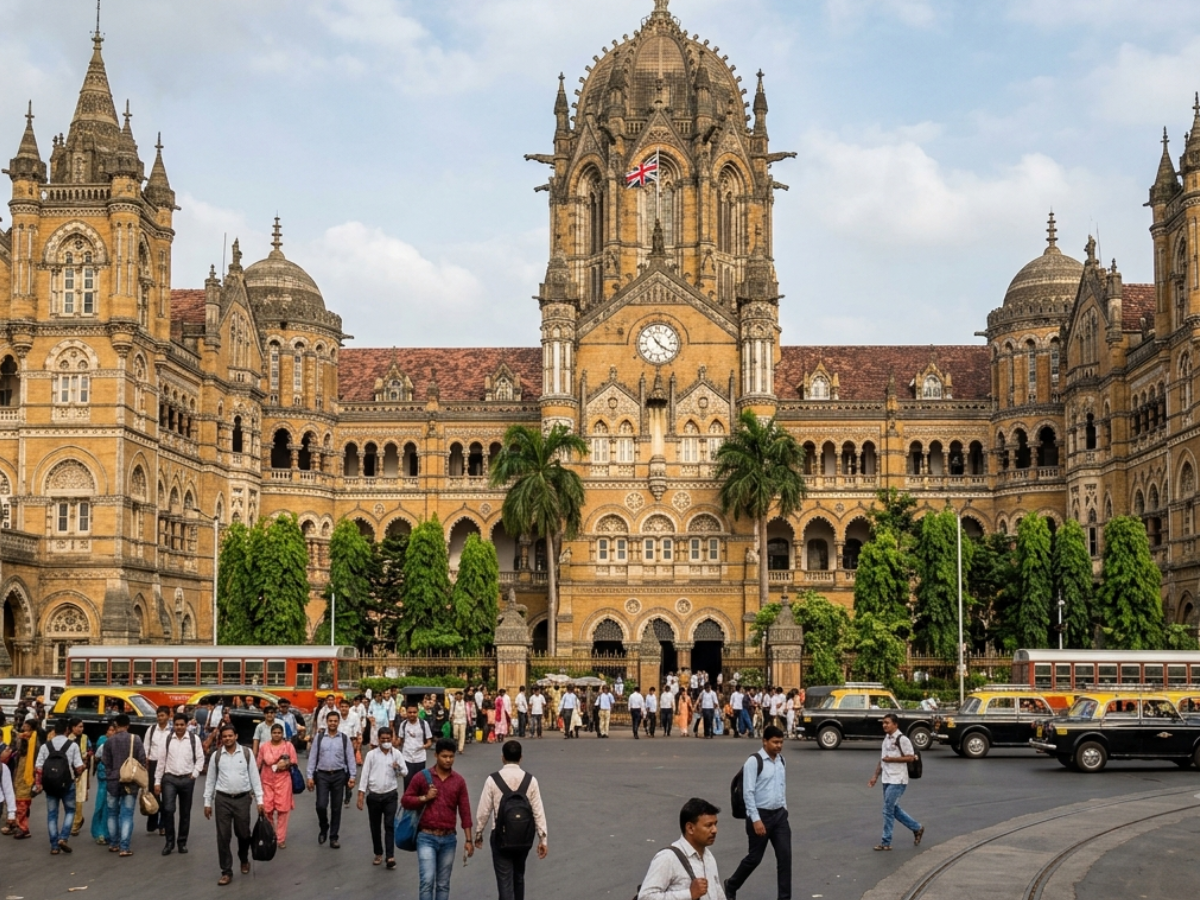
Chhatrapati Shivaji Maharaj Terminus, Mumbai

Formerly known as Victoria Terminus, Mumbai, this is arguably the single most photographed railway building in the country, and for good reason. Completed in 1887 and designed by Frederick William Stevens, the structure blends Victorian Gothic Revival architecture with Indian traditional elements, a combination that gives it a character unlike anything in Britain despite the obvious Gothic influences.

The exterior features turrets, pointed arches, and stained glass windows, while the interior has carved stone, ornamental ironwork, and a grand staircase that few stations anywhere in the world can match. It was declared a UNESCO World Heritage Site in 2004, recognising it as one of the finest examples of architectural train stations from the Victorian era anywhere in Asia.

Visiting is straightforward; the station remains fully operational, and the exterior can be appreciated from across the road without needing a platform ticket. Early morning, before the crowds build up, is the best time to take it in properly. Among beautiful train stations India can claim as world-renowned landmarks, this one remains the benchmark. Mumbai also serves as a gateway to several iconic rail routes featured among the Most Famous Train Journeys in India.

2. Howrah Junction, Kolkata

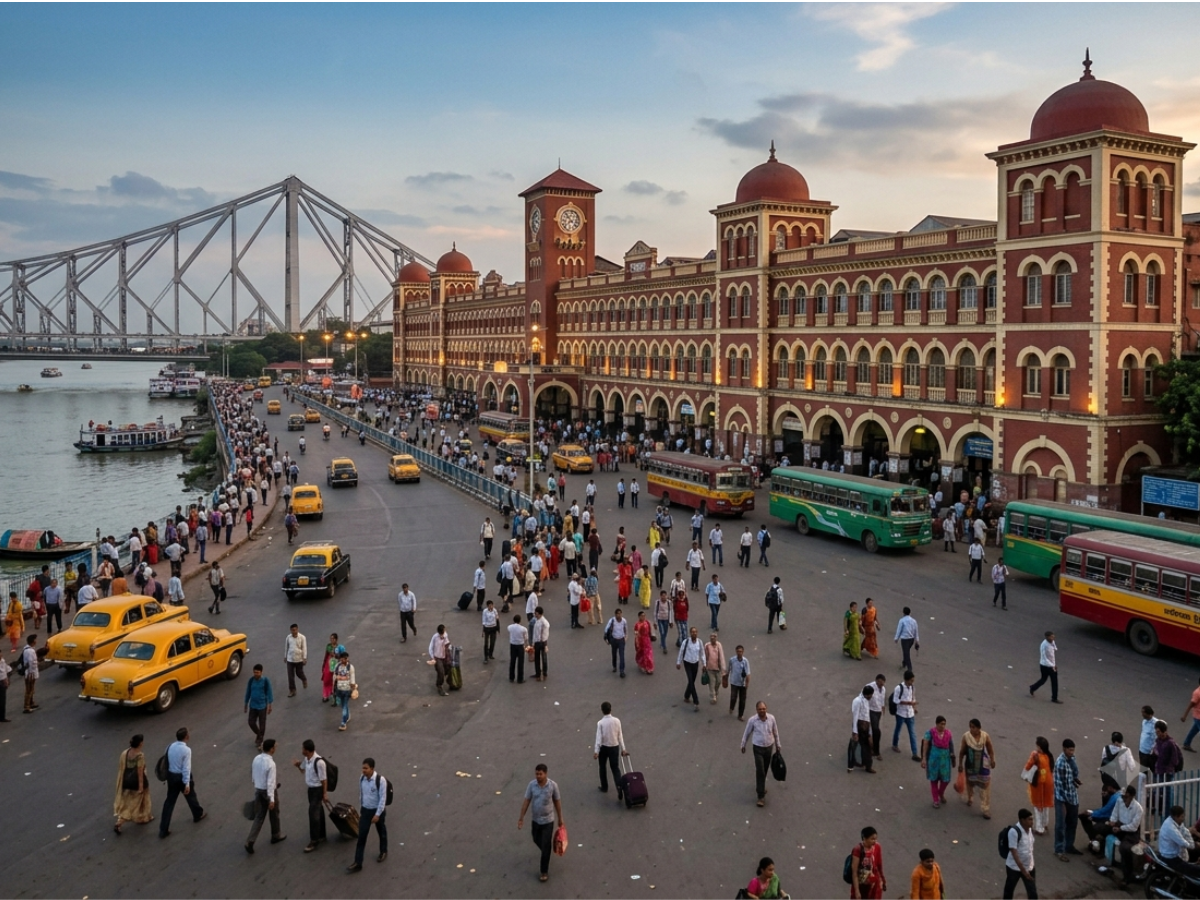
Howrah Station, Kolkata

Howrah Station, Kolkata, is less about a single architectural showpiece and more about scale and atmosphere. It is one of the busiest stations in India, and the sheer volume of human activity, like porters, vendors, and travellers from every part of eastern India, is itself part of the experience.

The station's main building, with its red-brick facade and large clock tower, sits on the banks of the Hooghly River, directly facing the iconic Howrah Bridge. The combination of station, bridge, and river creates one of the most recognisable urban views in eastern India. For travellers interested in train station architecture in India, Howrah is a reminder that not every notable station is about ornate detail; some are notable for how completely they shape the city around them. Eastern India also opens the door to several fascinating destinations highlighted in this guide to Unexplored Places in North-East India.

3. Chennai Egmore, Chennai

Central Railway Station, Chennai, also known as Chennai Central, is one of South India's most recognisable railway buildings. Built in the 1870s and expanded over subsequent decades, it combines Romanesque and Gothic influences with a distinctly South Indian sensibility in its detailing. The clock tower is the station's defining feature, visible from a considerable distance and a long-standing reference point for the surrounding area. Inside, the high ceilings and wide concourses reflect the scale needed to handle one of the busiest junctions in the south.

The reason to stop at Chennai Central is that it feels so integrated with the city around it. Unlike some heritage stations that feel preserved as showpieces, this one still functions as the working heart of Chennai's rail network, as it was designed to do. It is, by any measure, one of the most significant historic railway stations India has retained from the colonial period. Travellers arriving in Chennai often continue onward to some of the country's most scenic hill destinations featured among the Top Hill Stations in India to Visit This Year.

4.Charbagh Railway Station, Lucknow

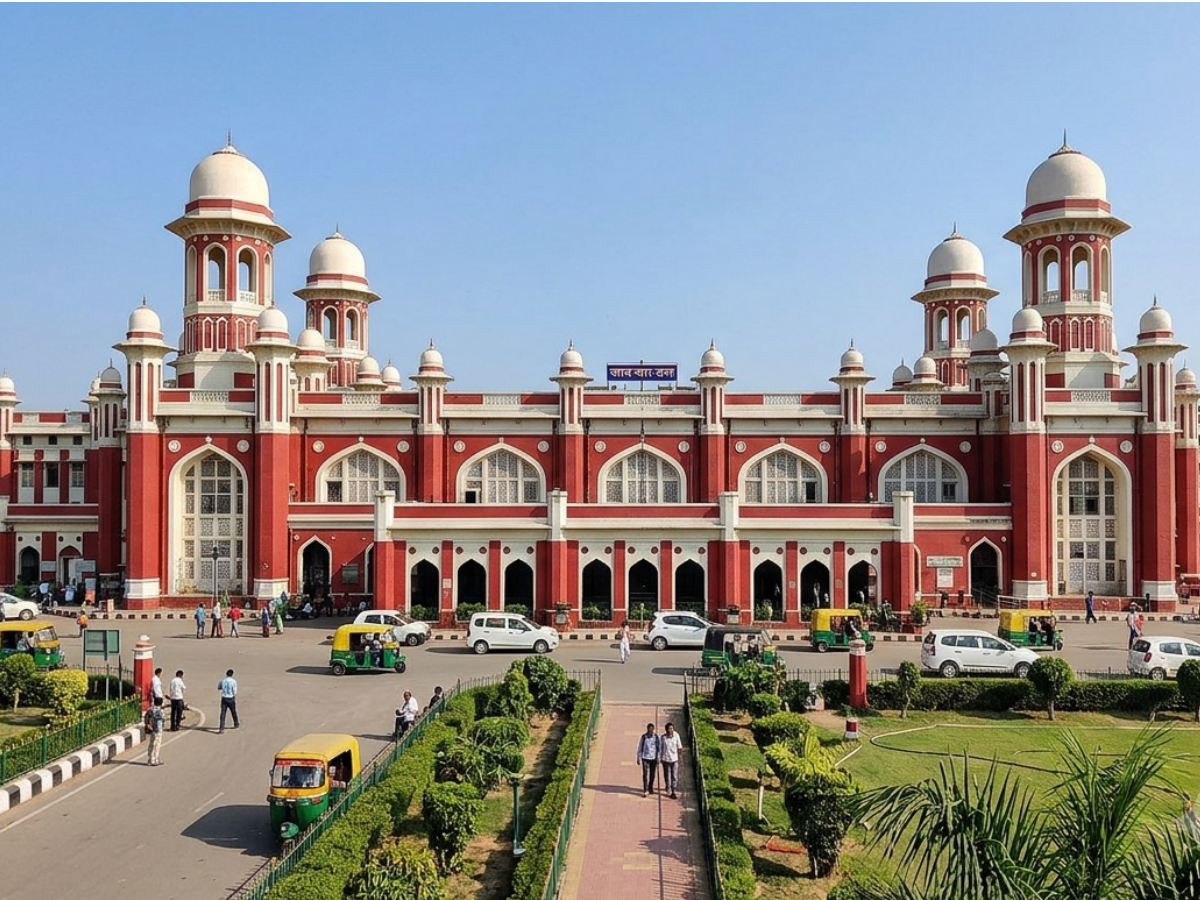
Charbagh Railway Station, Lucknow

Charbagh Station in Lucknow takes a noticeably different architectural direction from the Gothic Revival stations of Mumbai and Chennai. Completed in 1923, it draws on Awadhi and Rajasthani architectural traditions, with domes, chhatris, and minarets that give it a distinctly regional character rather than a colonial one.

The main building's domes are particularly striking when viewed from the gardens in front of the station, a layout that was deliberately designed to give arriving visitors a clear, unobstructed view of the building. Few stations in India have been designed with this kind of formal approach to first impressions.

For anyone exploring heritage train stations in India beyond the more commonly cited examples, Charbagh offers a genuinely different architectural language: one rooted in regional tradition rather than imported European styles. Its domes alone make it one of the most distinctive architectural train stations on this list. Lucknow's strategic location also makes it a convenient starting point for several Weekend Getaways by Bus from Major Indian Cities.

5. Royapuram Railway Station, Chennai

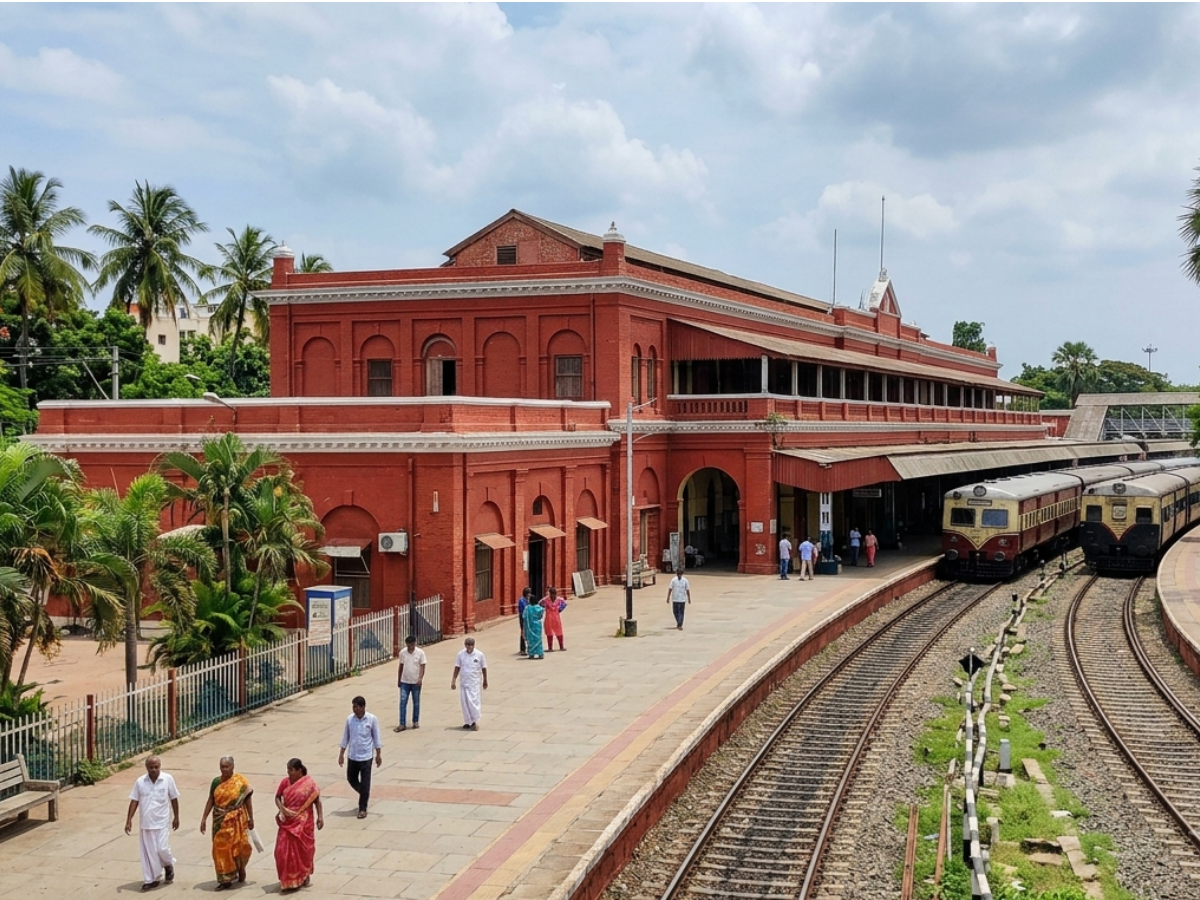
Royapuram Railway Station, Chennai

Not as visited as its more famous cousin in the other part of the city, Royapuram is one of the oldest railway stations in India, and parts of the structure date back to 1856. The building is rather simple compared to the magnificence of Chennai Central, but therein lies its charm: a glimpse of what early railway architecture in India actually looked like before the grander stations of the ensuing decades.

The wooden roof trusses and the simple symmetrical facade are reminiscent of early colonial railway construction, which was primarily functional and sparingly decorated. Royapuram is a quieter but historically significant stop for those interested in the earlier chapters of the railway story in India and a useful addition for anyone mapping out train station architecture in India beyond the headline names.

How EaseMyTrip Is Helping Travellers Explore India's Railway Heritage

Planning a trip around architectural landmarks like these often involves coordinating travel between cities that are not always directly connected, as well as accounting for the realities of visiting a working station without interfering with a real journey. EaseMyTrip's multi-modal search makes it easier to plan routes that pass through or end at these heritage stations, whether the purpose is a dedicated architecture tour or simply building in time to take in a station along the way. Travellers can compare and book railway tickets, regional Flights, accommodation, and local transport options through a single platform while planning heritage-focused journeys.

With travellers looking for experiences beyond the usual checklist of places, AI-enabled recommendation tools are increasingly being used to highlight lesser-known but important stops like Royapuram or Charbagh, in addition to the obvious. EaseMyTrip has been working on these capabilities on its platform, using AI to personalise suggestions by the interests of the travellers, not just the most searched-for destinations. It's a larger shift in the way OTA platforms work, and EaseMyTrip is shifting to it, building a platform that works with how people really want to explore.

FAQs

Q: Which is the most famous railway station in India for its architecture?
Chhatrapati Shivaji Maharaj Terminus, Mumbai, formerly Victoria Terminus, Mumbai, is an important railway station in India from an architectural point of view. Its Victorian Gothic Revival style with Indian architectural elements earned it a UNESCO World Heritage status in 2004. The station is still fully functional, and its exterior can be viewed and photographed from the surrounding area without a platform ticket.

Q: Are heritage train stations in India open for visitors who are not travelling?
Most heritage train stations India has to offer are still functional and open to non-travelling visitors, usually with a platform ticket at a nominal cost. Stations like Mumbai CST, Howrah and Chennai Central can be enjoyed from public spaces even without one, as the exteriors along with the surrounding areas are generally accessible. Security protocols have been tightened at big stations in recent years, so it's good to carry your ID.

Q: What architectural styles are most common among India's historic railway stations?
Many of India’s historic railway stations, built during colonial times, are in the Victorian Gothic Revival and Romanesque styles, including Mumbai CST and Chennai Central. But a handful of stations like Charbagh in Lucknow, drawing inspiration from Awadhi and Rajasthani architectural traditions with domes and chhatris, reject this altogether. This mixture of imported and indigenous styles is part of the diversity of India’s railway architecture.

Q: Is Howrah Station in Kolkata worth visiting for its architecture?
Less known for its ornate architectural detail than for its scale, atmosphere and setting by the Hooghly River and Howrah Bridge, Howrah Station, Kolkata, offers a different experience from the more decorative stations elsewhere. It is one of the busiest stations in India, and it is also about the energy and function of a major transport hub, not just visual grandeur.

Q: How can EaseMyTrip help plan a trip around India's architectural train stations?
Whether you’re planning a dedicated heritage tour or just want to add a stop on an existing trip, EaseMyTrip’s multi-modal search tools help you plan routes that connect cities to grand architectural train stations. The platform’s AI-driven recommendations also help surface lesser-known stations, such as Royapuram in Chennai, alongside more obvious choices like Mumbai CST, giving travellers a more complete picture of what’s out there along their route.

Like
Liked
Share
Comments ({{commentLength}})
  • {{cmnt.userId.substring(0,1)}} {{cmnt.userId}}

    {{cmnt.comment}}

Location Icon From
  • Flight

    {{fra.City}}

    {{fra.AirportName}}

    {{fra.Country}}
Location Icon To
  • Flight

    {{to.City}}

    {{to.AirportName}}

    {{to.Country}}

Departure Date

Travellers & class
1 Traveler
Location Icon Enter City name
  • Flight

    {{hca.name}}

Check-In

Check-Out

Guests & Room
{{hotelGuest}} Guests {{totalRoom}} Room
Location Icon From
Cities
Location Icon To
Cities

Pickup Date

Pickup Time

Location Icon Source City
Location Icon Destination City
Departure Date
Location Icon Source City
Location Icon Destination City
Departure Date
Location Icon Destination Name
  • {{ct.city}}