Everything You Need to Know About the Slowest Train Journey in India

Varsha September 6, 2024

There are train journeys that simply get passengers from one place to another, and then there are train journeys where the journey itself becomes the main attraction. The slowest train in India falls firmly into the second category.

In an age of semi-high-speed trains and ever-shorter travel times, it may seem strange that one of India's most celebrated railway experiences moves at a pace that would make most commuters impatient. Yet travellers from across the country and around the world continue to queue up for a seat.

The famous Metupalayam Ooty train, officially part of the Nilgiri Mountain Railway, takes its time climbing through forests, tunnels, tea plantations and mist-covered hills. Nobody boards it because they're in a hurry. They board it because slowing down is the entire point. In fact, this slower pace is one of the reasons train journeys continue to attract travellers who value comfort, scenery, and the experience of the journey itself. Discover why rail travel remains so popular in Top Reasons Why People Love Train Travel.

Which Train Is Considered the Slowest in India?

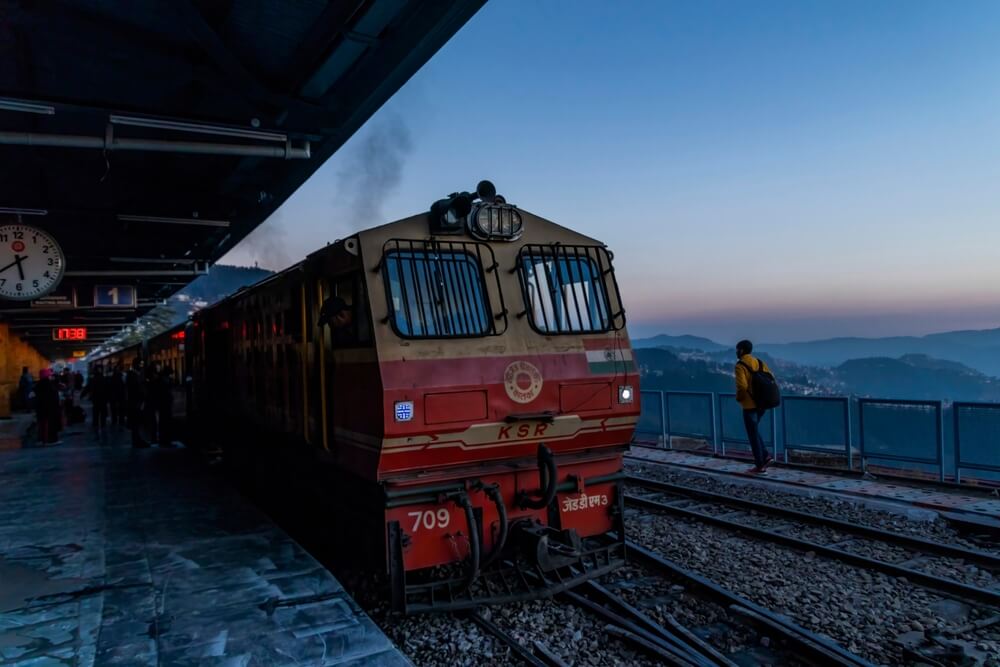
The Nilgiri Mountain Railway connecting Mettupalayam and Ooty is widely recognised as the slowest train in India. Covering a distance of roughly 46 kilometres, the journey takes around five hours.

That works out to an average speed of less than 10 km/h on certain stretches.

To put that into perspective, there are moments when hikers on nearby trails seem to be moving at almost the same pace.

The train climbs from the plains of Tamil Nadu into the Nilgiri Hills using a rack-and-pinion system, a specialised engineering method designed to help locomotives tackle steep gradients. The ascent is gradual, deliberate and surprisingly fascinating to watch.

Passengers often find themselves leaning out of open windows, cameras forgotten for a few moments as they simply stare at the landscape rolling past.

Why Is It So Slow?

The answer lies in the terrain.

The Nilgiri Hills are steep, winding and heavily forested. The railway has to navigate sharp curves, narrow bridges and significant elevation changes. Safety takes priority over speed.

The rack railway section between Mettupalayam and Coonoor is particularly demanding. Here, an additional rail positioned between the tracks helps the train climb slopes that ordinary railways would struggle to manage.

The result is a journey that feels almost old-fashioned. There is no rush, no blur of scenery flashing past the window. Every hill, waterfall and valley has time to reveal itself.

Ironically, what makes it the slowest train in India is also what makes it one of the country's most memorable rail experiences.

green

A Journey Through a UNESCO-Protected Railway

The Nilgiri Mountain Railway isn't merely a train route. It is part of the UNESCO-listed Mountain Railways of India.

Built during the British colonial era, the line opened in stages between the late nineteenth and early twentieth centuries. Much of its original character remains intact today.

Old stations painted in bright colours, heritage signboards and vintage-style coaches create the feeling of stepping into another era.

Travellers interested in heritage trains India often place the Nilgiri route near the top of their wish list. Unlike museum exhibits, this is living railway history still operating daily through challenging mountain terrain.

It's one thing to read about century-old engineering. It's another to hear the locomotive echoing through a tunnel built more than a hundred years ago.

greener

What Makes the Ride Special?

Many scenic train routes promise beautiful views. Few deliver them as consistently.

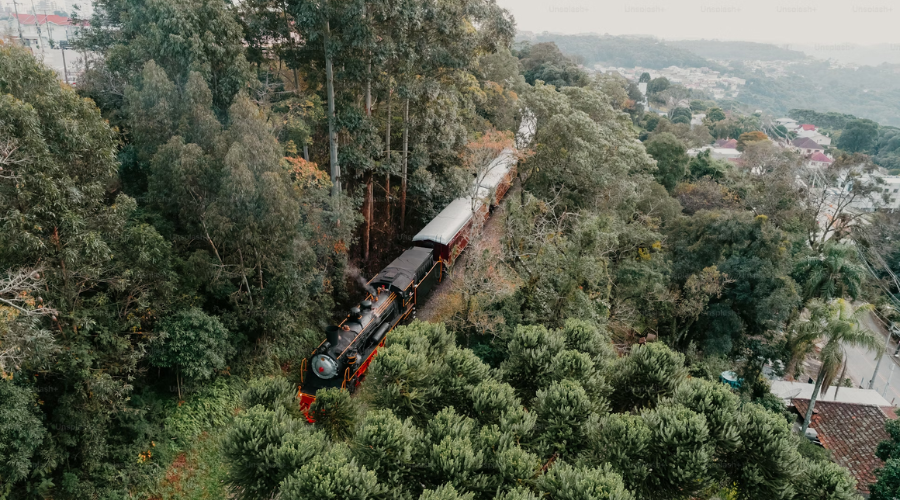
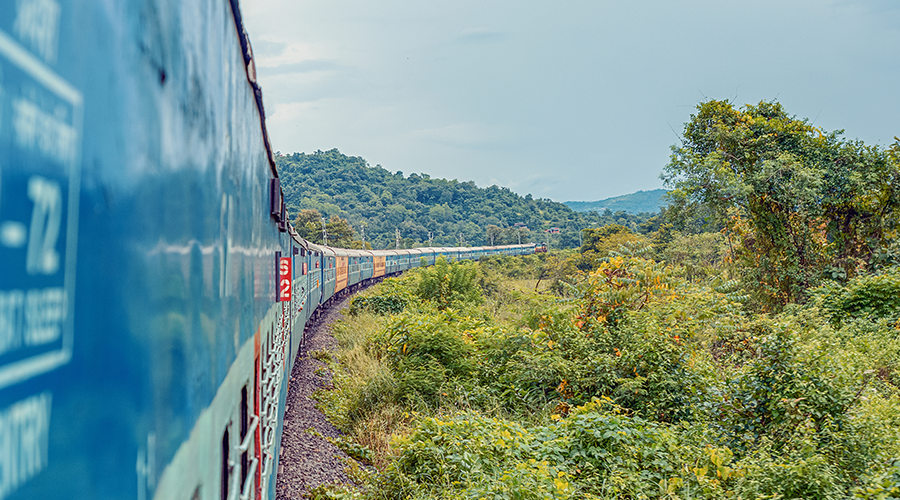
The Metupalayam Ooty train passes through dense forests where monkeys gather near stations, across bridges suspended above valleys and through tea estates that seem to stretch endlessly into the hills.

Morning departures are especially atmospheric.

Mist often hangs over the slopes, drifting between eucalyptus trees while sunlight slowly breaks through. On cooler days, passengers can watch clouds floating below the train rather than above it.

Unlike faster services where landscapes merge into a blur, this journey encourages observation. A small waterfall appears beside the tracks. Children wave from hillside villages. Workers move through tea gardens carrying baskets. Everything unfolds at a pace that allows passengers to actually notice it.

Among train journeys India scenic enough to justify travelling solely for the experience, this one consistently ranks among the best.

How Does It Compare With Other Slow Trains Around the World?

The Nilgiri route frequently appears in discussions about the slowest trains world travellers can still experience today.

That doesn't mean it is inefficient. Quite the opposite.

Many famous mountain railways across Switzerland, Japan and South America also operate at modest speeds because terrain demands it. Their appeal comes from the scenery rather than the timetable.

The Nilgiri Mountain Railway belongs in that company. While the Nilgiri Mountain Railway is celebrated for being one of India's slowest and most scenic routes, the country is also home to some remarkably long rail journeys that showcase its incredible geographical diversity. Explore India's epic rail adventures in Longest Train Route in India.

What separates it from many international counterparts is accessibility. Travellers don't need luxury budgets or complicated itineraries. A regular train ticket provides access to one of the world's most remarkable mountain railway experiences.

Planning the Journey

Tickets can be surprisingly difficult to secure, especially during weekends, school holidays and the summer season.

Many travellers visiting Ooty assume the train will have plenty of seats available. That's rarely the case. Advance booking is strongly recommended.

The route begins at Mettupalayam, which is well connected to Coimbatore by rail and road. Most visitors arrive in Coimbatore first and then continue to Mettupalayam early the following morning.

Window seats are highly sought after, and for good reason.

The scenery changes constantly throughout the climb. Sitting beside a window means uninterrupted views of valleys, forests and tea plantations.

Bringing a light jacket is also wise. Temperatures can change noticeably between the plains and the higher elevations near Ooty.

Is It Worth Spending Five Hours on a 46-Kilometre Journey?

For travellers focused purely on reaching Ooty, probably not. Road transport is significantly faster. But viewing the railway merely as transportation misses the point entirely.

The journey represents a rare opportunity to experience travel at a pace that has largely disappeared. There are no productivity hacks, no rush to arrive, no pressure to optimise every minute.

Instead, there is time to watch landscapes unfold, listen to the locomotive working its way uphill and enjoy one of the most distinctive mountain railway trains India has preserved.

That slower rhythm is precisely what many travellers remember long after the trip ends.

Final Thoughts

The slowest train in India is proof that speed isn't always the measure of a great journey.

The Nilgiri Mountain Railway transforms a relatively short distance into an experience rich with scenery, history and character. From the first climb out of Mettupalayam to the final arrival in Ooty, the route offers a glimpse into a style of travel that feels increasingly rare.

For railway enthusiasts, photographers and anyone who enjoys taking the scenic route, the Metupalayam Ooty train remains one of India's most rewarding journeys. Five hours may sound like a long time to cover 46 kilometres, but once the train begins winding through the Nilgiri Hills, most passengers stop looking at their watches altogether. 

Planning your own scenic railway adventure? Book convenient railway tickets for memorable train journeys across India, find comfortable hotels near your destination, or compare affordable flights if you're combining rail travel with a longer itinerary.

FAQs About the Slowest Train in India

  1. Which is the slowest train in India?

That title goes to the Nilgiri Mountain Railway toy train running between Mettupalayam and Ooty. It takes about five hours to cover just 46 kilometers, mostly because it’s chugging up incredibly steep mountain slopes using an old-school, heritage rack-and-pinion track system.

  1. How long does the Mettupalayam to Ooty train journey take?

You’re looking at roughly five hours to complete the climb up into the Nilgiri Hills. It can occasionally take a little longer depending on the mountain weather or track conditions on the day you travel.

  1. Why is the Nilgiri Mountain Railway so famous?

Beyond being a certified UNESCO World Heritage site, it’s famous because the views are absolutely incredible. The tracks cut right through dense forests, rolling tea gardens, old stone tunnels, and high bridges, making it one of the most beautiful train rides you can take in India.

  1. Can travellers book tickets for the Nilgiri Mountain Railway online?

Yes, you can book them directly through the IRCTC website or app. Just a heads-up: because it’s so iconic, seats fill up incredibly fast on weekends, holidays, and through the summer months, so you'll definitely want to lock yours in well ahead of time.

  1. Is the Nilgiri Mountain Railway worth taking if there are faster ways to reach Ooty?

If you actually want to see the mountains, absolutely. Going by road is much faster, but the train ride is a massive experience in itself rather than just a way to get from A to B. It’s built for slowing down and watching the Nilgiri Hills drift past your window.

Like
Liked
Share
Comments ({{commentLength}})
  • {{cmnt.userId.substring(0,1)}} {{cmnt.userId}}

    {{cmnt.comment}}

Location Icon From
  • Flight

    {{fra.City}}

    {{fra.AirportName}}

    {{fra.Country}}
Location Icon To
  • Flight

    {{to.City}}

    {{to.AirportName}}

    {{to.Country}}

Departure Date

Travellers & class
1 Traveler
Location Icon Enter City name
  • Flight

    {{hca.name}}

Check-In

Check-Out

Guests & Room
{{hotelGuest}} Guests {{totalRoom}} Room
Location Icon From
Cities
Location Icon To
Cities

Pickup Date

Pickup Time

Location Icon Source City
Location Icon Destination City
Departure Date
Location Icon Source City
Location Icon Destination City
Departure Date
Location Icon Destination Name
  • {{ct.city}}