Majuli, the world's largest river island in Assam, offers a unique blend of cultural heritage, serene landscapes, and authentic rural experiences. Reach the island by travelling to Jorhat via air, rail, or road, followed by a ferry from Nimati Ghat to Kamalabari Ghat. The best time to visit is from October to March, when the weather is pleasant, ferry services are reliable, and the famous Raas Mahotsav brings the island's centuries-old Vaishnavite traditions to life. Stay in locally run homestays around Kamalabari, Garamur, or Salmora for an immersive experience with Assamese hospitality, home-cooked meals, and easy access to the island's historic Sattras, cycling trails, wetlands, and pottery villages. Planning ahead, especially during the peak season, ensures a smooth and memorable journey to one of Northeast India's most captivating offbeat destinations.
There is a particular quality to arriving somewhere by ferry that no other mode of transport replicates. The engine noise, the wide brown water, and the opposite bank materialising slowly through the morning mist: Majuli announces itself before you step off the boat, and that arrival experience is as much part of the destination as anything that follows. This Majuli Island travel guide exists because the logistics of getting here, timing the visit correctly, and finding the right place to stay are where most trip planning for this destination goes wrong, sometimes before the journey even begins. Majuli is one of the country's most rewarding offbeat destinations, making it a perfect addition to this collection of hidden gems every traveller should visit in India.
Majuli is a river island in the Brahmaputra in Assam, accessible only by ferry, home to a tradition of Vaishnavite monasteries that has persisted for five centuries, and slowly shrinking; erosion from the Brahmaputra has taken significant landmass over the decades. None of this is secret, but it remains one of the most genuinely off-the-mainstream-circuit destinations in northeast India, and it rewards the traveller who approaches it with realistic expectations and proper preparation.
Why Majuli Is Worth the Effort
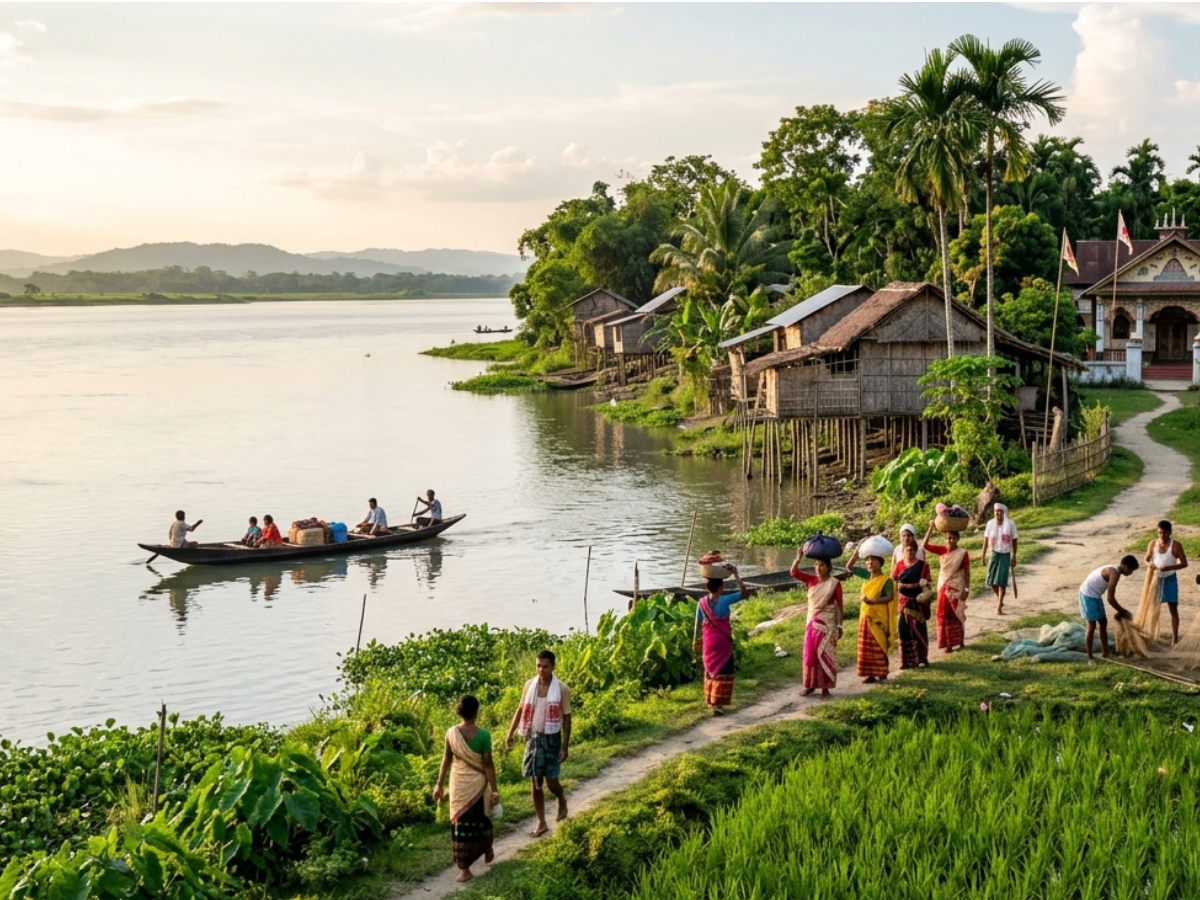
The honest version of this Majuli island travel guide starts with what the island is not. It is not a destination with polished tourist infrastructure. The roads are unpaved in places. Electricity can be unreliable. The pace is set by the Brahmaputra, by the monastery schedules, and by the agricultural rhythms of the Mising and Deori communities who have lived here for generations. That is precisely what makes it worthwhile.
The Sattra culture, the Vaishnavite monastery tradition established by the 15th-century saint-philosopher Srimanta Sankardeva, is the island's defining characteristic. The major Sattras, including Kamalabari, Auniati, and Dakhinpat, preserve classical Assamese music, dance, mask-making, and manuscript traditions that are not replicated anywhere outside this island. Visiting them is not a museum experience; the monks and novices maintain active practice, and arriving at a Sattra during morning prayer or mask-making sessions is an encounter with a living tradition rather than a preserved one. Its rich cultural heritage and untouched landscapes also make Majuli one of the finest hidden gems of India for travellers seeking authentic experiences beyond the usual tourist circuit.
Majuli, Assam: How to Reach
Majuli, Assam: How to reach it from most Indian cities involves two legs: getting to Jorhat and then crossing the Brahmaputra by ferry.
By air: Jorhat Airport (Rowriah) is the most practical entry point, with daily connections to Guwahati and onwards connections to Kolkata and Delhi. Flight from Delhi to Jorhat with a connection run approximately four to five hours. The airport is around 14 kilometres from Nimati Ghat, where the ferry departs.
By rail: Jorhat Town Railway Station connects to the broader Northeast railway network. Overnight trains from Guwahati to Jorhat train take approximately eight hours on the faster services, making it a practical option for travellers already in Assam.
By road: The drive from Guwahati to Jorhat takes approximately five to six hours on NH-37, which is a reasonable option for travellers who want to stop at points along the way. The road condition is generally good by Northeast Indian standards.
The Jorhat to Majuli Ferry
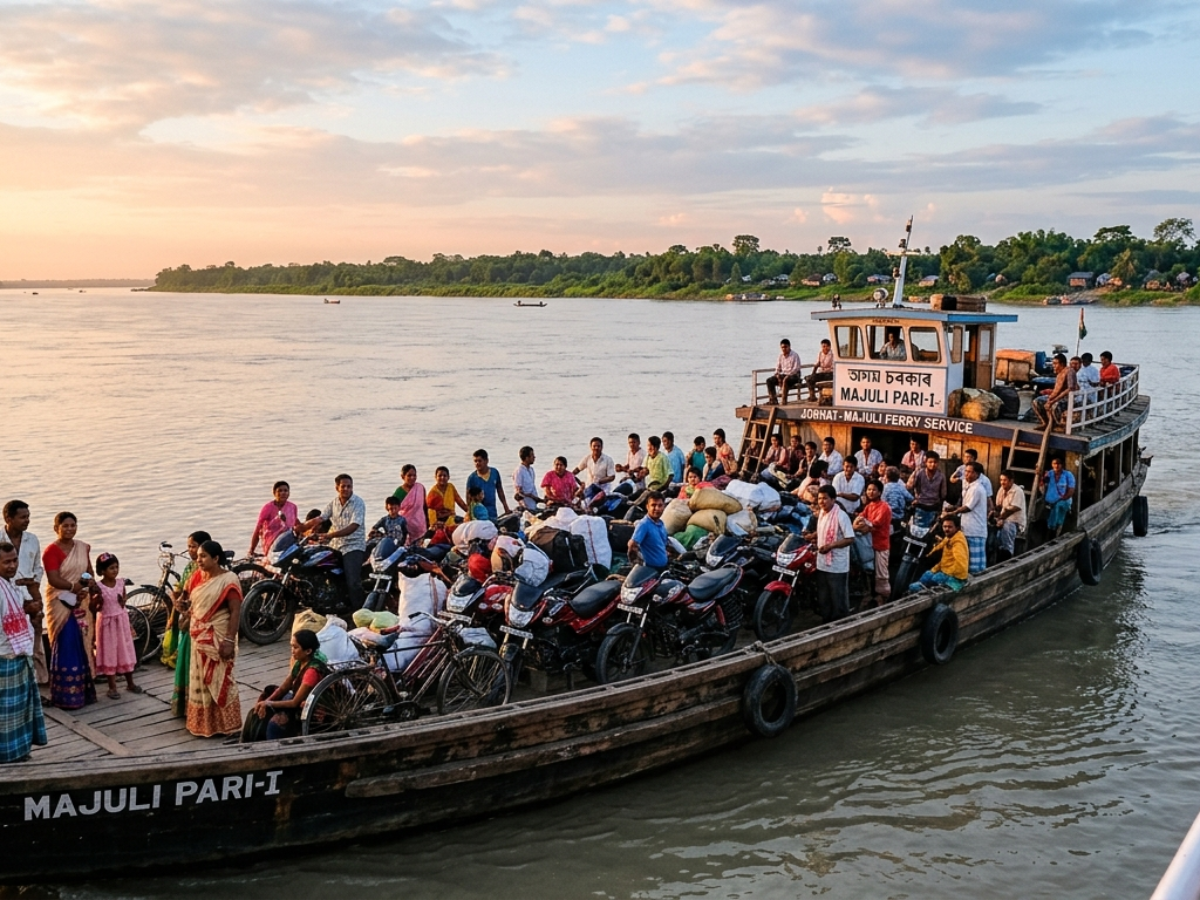
The Jorhat to Majuli ferry departs from Nimati Ghat, approximately 14 kilometres from Jorhat town, and arrives at Kamalabari Ghat on the island. The crossing takes between one and three hours depending on river conditions and the specific vessel. Larger ferries are slower; smaller country boats move more quickly in good conditions.
Ferry timings vary by season and are not fixed in the way urban transport schedules are. The first departures are typically in the early morning, with services running through until mid-afternoon on most days. Confirming the current schedule locally at the ghat itself or through accommodation is more reliable than pre-trip research, as the Brahmaputra's behaviour and seasonal flooding affect both frequency and timing.
The crossing is free for passengers. Vehicles, if brought across, pay a nominal charge. Most travellers leave private vehicles in Jorhat and hire bicycles or motorcycles on the island, which is the more practical and considerably more enjoyable approach.
Important: the Jorhat to Majuli ferry does not run in severe flood conditions, which occur periodically during the monsoon months. This is a real planning consideration rather than a theoretical risk.
Best Time to Visit Majuli
The best time to visit Majuli is October to March, when the Brahmaputra has receded from its monsoon peak, the island is dry and navigable, and the Sattra cultural calendar is most active. October and November are particularly good months; the post-monsoon landscape is green, migratory birds have begun arriving at the wetlands, and the Raas Mahotsav festival, held on the full moon night of Kartik transforms the island with music, mask dance performances, and a concentration of devotional energy that the rest of the year does not replicate.
December and January are the coolest months; temperatures drop to around 8 to 10 degrees at night, which requires a proper layer but makes daytime cycling and walking through the Sattras very comfortable. February and March warm gradually and remain excellent for wildlife spotting at the wetlands along the island's edge.
The monsoon window, June to September, is when the Brahmaputra is at its most powerful and most unpredictable. Parts of the island flood annually, ferry services are disrupted, and several of the Sattras move their activities to higher ground. Travel during this window is possible but requires flexibility and acceptance of conditions that are fundamentally different from the dry-season experience. If you're planning a longer regional itinerary, explore more unexplored places in North East India to discover remote valleys, tribal villages, and breathtaking landscapes beyond Majuli.
Where to Stay: Majuli Homestays and Accommodation
Majuli homestays are the primary and most rewarding accommodation option on the island. The concept is well-established here; local Mising and Assamese families have been hosting travellers for years, and the better homestays provide meals, bicycle hire, and guided introductions to nearby sattras that no hotel can replicate. Kamalabari, the main settlement near the principal ferry ghat, has the highest concentration of homestays and is the most practical base. Gararmur and Salmora are quieter alternatives that suit travellers who want more distance from the arrival point and the small commercial strip near the ghat.
Booking Majuli homestays in advance is strongly advised for October, November, and the peak December–January window. The total room count across the island is genuinely limited, and the better-regarded homestays fill weeks ahead during the Raas Mahotsav period. Arriving without a reservation in October or November is a specific risk rather than a general one. To avoid last-minute availability issues during the peak season, it's a good idea to book hotels and homestays well in advance.
A few points on what to expect: rooms in most homestays are simple, clean, functional, and not air-conditioned, which is not required in the cooler months anyway. Meals are typically Assamese home cooking: rice, dal, fish from the river, and seasonal vegetables and are one of the more underappreciated aspects of staying here rather than passing through on a day trip.
What to Do on the Island
The major Sattras, Kamalabari, Auniati, Dakhinpat, and Bengenaati are the primary destinations for most visitors, and each has a distinct character. Auniati is known for its collection of antiques gifted to the monastery over centuries, Dakhinpat for its scholarship tradition, Kamalabari for its performing arts, and Bengenaati for its mask-making. Cycling between Sattras on the island's relatively flat interior roads is the most practical and enjoyable way to cover them. Bicycle hire is available from Kamalabari Ghat for modest daily rates, and the 20 to 30-kilometre loops between the main Sattras are manageable even for casual cyclists in a half-day.
The wetlands along the island's northern and eastern edges are worth a morning for bird watchers between November and February, when migratory species supplement the resident population of river terns, adjutant storks, and Brahmaputra-specific species.
The island's pottery village at Salmora, where a tradition of clay work distinct from mainland Assamese pottery has been maintained, is a worthwhile detour for travellers with an additional half-day. With its peaceful atmosphere and unique cultural experiences, Majuli also makes an excellent choice among the best Independence Day long weekend getaways in India for travellers looking to escape the crowds.
How EaseMyTrip Supports Travel to Places Like Majuli
Reaching Majuli requires coordinating a flight into Jorhat, ground transfer to Nimati Ghat, and the ferry crossing: three distinct logistics stages that most standard booking interfaces handle poorly because they treat each element separately rather than as a connected route. EaseMyTrip's multi-modal search and AI-powered itinerary tools surface the most practical flight options into Jorhat alongside transfer connections, reducing the planning friction that often makes destinations like Majuli feel more complicated than they actually are.
For travellers combining Majuli with a broader northeast India circuit, Kaziranga, Shillong, or Ziro, the platform's connected routing tools help build the full itinerary across what can otherwise be a complex multi-state, multi-mode trip. As AI becomes more capable of surfacing genuinely off-the-mainstream options alongside the obvious choices, EaseMyTrip is developing towards a platform that makes a Majuli Island travel guide itinerary as bookable as a Goa trip. For a destination that rewards the traveller willing to plan properly, that kind of intelligent, joined-up booking support changes what is actually achievable within a fixed number of days.
|
For a hassle-free transfer between Jorhat Airport, Nimati Ghat, and other nearby destinations, you can conveniently book cabs before your journey.Travellers exploring Assam beyond Majuli can also book bus tickets for convenient travel between major towns and nearby attractions.If you're arriving via Assam's rail network, you can book train tickets to Jorhat and continue onward to Majuli by road and ferry.
|
FAQs
Q: What is the best time to visit Majuli for first-time travellers?
The best time to visit Majuli for a first trip is October to February, when ferry services run reliably, the Sattras are in full activity, and the island's landscape is at its most accessible. October and November are the most culturally rich months, with the Raas Mahotsav festival drawing performances from across the Sattra network. December and January are cooler and quieter but provide excellent conditions for cycling the island roads and visiting the wetlands for migratory birds. Avoiding the monsoon months of June to September is strongly advised for a first visit.
Q: How do travellers get from Jorhat to Majuli by ferry?
The Jorhat to Majuli ferry departs from Nimati Ghat, 14 kilometres from Jorhat town, and arrives at Kamalabari Ghat on the island. The crossing takes between one and three hours depending on river conditions and the vessel type. Ferry timings vary seasonally and should be confirmed locally rather than relying on pre-trip schedules. The service does not run during severe flood conditions in the monsoon. Most travellers hire an auto-rickshaw or taxi from Jorhat town to Nimati Ghat and arrange bicycle or motorcycle hire on arrival at the island.
Q: What are the best Majuli homestays for first-time visitors?
The best Majuli homestays for first-time visitors are concentrated around Kamalabari, the main settlement near the primary ferry ghat. The better-regarded homestays provide Assamese home-cooked meals, bicycle hire, and informal guidance to nearby Sattras, a combination that a standard guesthouse cannot replicate. Booking in advance is essential for October through January, when the limited room count fills quickly. Gararmur and Salmora offer quieter alternatives for travellers who want more distance from the main ghat area.
Q: Is this Majuli Island travel guide relevant for solo travellers?
This Majuli Island travel guide applies equally to solo travellers, who typically find the island one of the more comfortable solo destinations in Northeast India. The homestay culture creates natural social interaction with hosts and other travellers without requiring structured group activities. The cycling routes between Sattras are safe and clearly navigable without a guide. The ferry crossing is a communal experience regardless of whether you are travelling alone or in a group. Solo travellers should book accommodation in advance and carry cash, as ATM access on the island is limited.
Q: How can EaseMyTrip help plan a trip using this Majuli Island travel guide?
EaseMyTrip's platform helps travellers following this Majuli Island travel guide by surfacing flight options into Jorhat, the primary gateway, alongside transfer availability to Nimati Ghat and accommodation options on the island. For travellers combining Majuli with Kaziranga National Park or other Northeast India destinations, the platform's AI-powered multi-modal search builds connected routes across what can otherwise be a complex series of separate bookings. Fare alerts on the Guwahati–Jorhat flight route are particularly useful, as the limited daily capacity on this connection means prices shift more sharply with demand than on higher-frequency domestic routes.






 July 7, 2026
 Share
Share
 Download as PDF
  From
From 
 Departure Date
 Travellers & class
 Rent For
 Departure Date






 Share
Share
{{cmnt.comment}}