A practical monsoon travel guide comparing Dudhsagar and Athirapally waterfalls, covering the best time to visit, access routes, permits, trek and jeep safari details, safety tips, and travel logistics from Goa, Bengaluru, Kochi, and Thrissur. The guide also explains how travellers can use EaseMyTrip to coordinate flights, hotels, and local transport for a smoother waterfall adventure.
There are waterfalls in India that are worth visiting in any season, and then there are waterfalls that exist, in their fullest and most honest form, only during the monsoon. Dudhsagar and Athirapally are both of the second kind. Photographs of these falls taken in February show what remains when the volume has receded impressively enough but fundamentally different from the thing that the monsoon produces. Between June and September, both falls are operating at a scale that makes the effort of reaching them feel proportional to the experience rather than optimistic.
This guide covers the Dudhsagar waterfall trek monsoon logistics and the Athirapally visit in specific, practical terms: what access currently looks like, what the permit situation is, what the journey involves on the ground, and what both falls actually deliver against the expectation. If you want to explore more spectacular cascades beyond these two, this guide to waterfalls in India you must visit offers additional destinations worth adding to a monsoon itinerary.
Dudhsagar: What the Name Promises and What the Monsoon Delivers
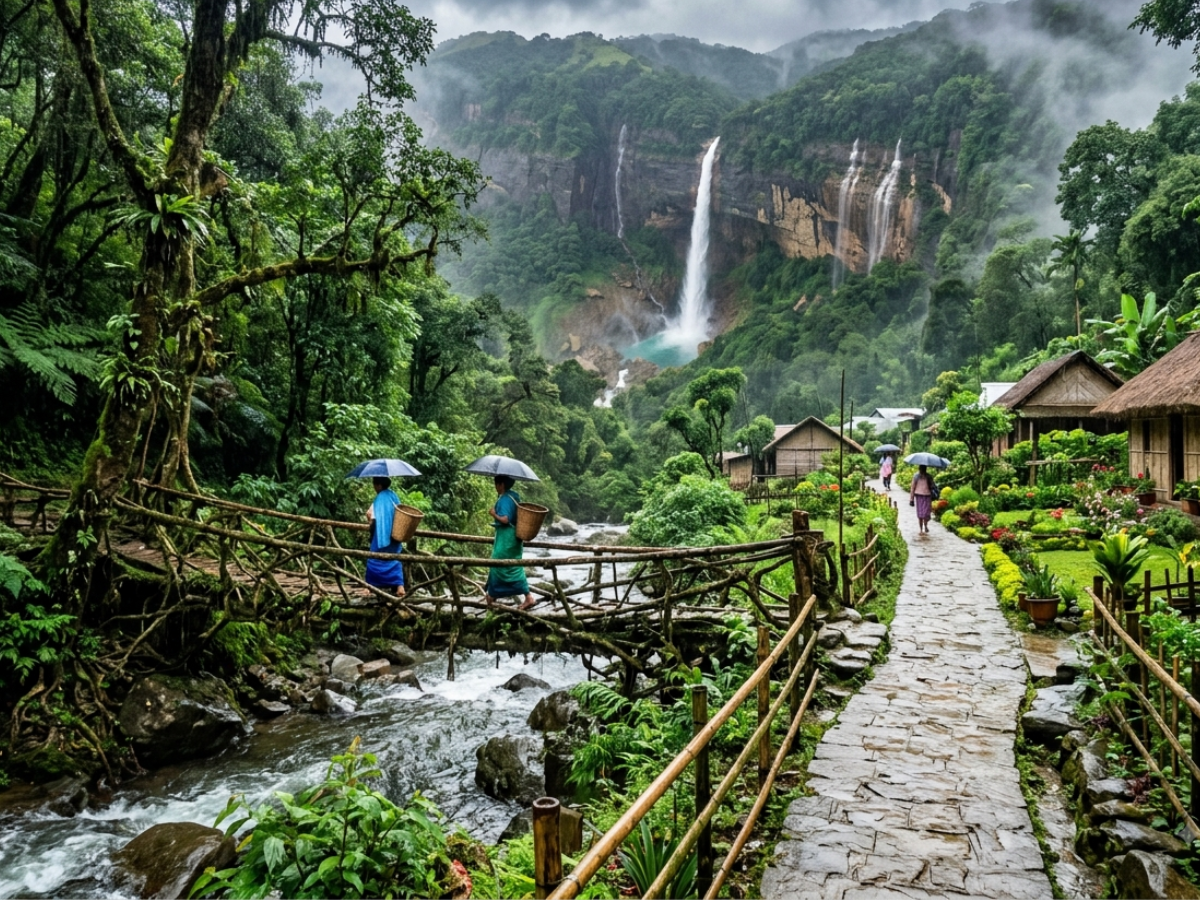
Dudhsagar means "sea of milk" in Konkani, and the name comes from the white foam of the falls rather than the water's colour. At full monsoon volume, the peak weeks of July and August, the Mandovi River drops approximately 310 metres over four cascades on the Goa-Karnataka border in a wall of white water that is one of the more dramatic natural spectacles in peninsular India.
The railway line of the South Western Railway passes directly in front of the falls, and the famous photograph of a train crossing the viaduct with the falls behind it comes from this specific geometry. What most photographs do not convey is the sound; the volume of water at peak monsoon is audible before the falls become visible, and the spray reaches the viewing area on the ground. Dudhsagar is one of the country's most dramatic seasonal cascades, but these top waterfalls in India offer more options for travellers building a wider waterfall-focused itinerary.
Dudhsagar Falls Entry Permit and Access
The Dudhsagar Falls entry permit situation is important to understand before planning the trip, because the access route has changed several times in recent years, and the current permitted route is not the one that most older travel guides describe.
The trek from the Castle Rock railway station side, used by independent trekkers for years, has been subject to periodic closures by the Goa Forest Department. The primary permitted access as of recent years is through the Goa Forest Department's jeep safari service from Collem (also known as Kulem), approximately 46 kilometres from Margao. This involves hiring a jeep from the Bhagwan Mahavir Wildlife Sanctuary at Mollem or Collem, which takes visitors to a point from which the falls are reached on foot.
The Dudhsagar Falls entry permit is issued at the forest department checkpost at Collem, where an entry fee applies for both individuals and vehicles. The jeep service is managed by the forest department and is not a self-drive option. This is worth knowing before arriving at Collem expecting to drive to the falls independently.
The alternative access via the railway track from Castle Rock is periodically permitted and periodically restricted, and the current status should be confirmed directly with the Goa Forest Department or at Collem before planning the journey via this route. Arriving at Castle Rock with trekking gear only to discover the route is closed is a specific frustration that advance confirmation prevents.
The Dudhsagar Waterfall Trek Monsoon Experience
The Dudhsagar waterfall trek monsoon jeep safari route from Collem takes approximately 40 minutes to the drop-off point, followed by a 20- to 30-minute walk on a trail that crosses a railway bridge and follows the track before descending to the falls viewpoint and the natural pool at the base. The trail is rocky and wet in the monsoon; closed footwear with grip is necessary rather than sandals, and the slippery sections of the descent require attention rather than speed.
The pool at the base of the falls is the draw for most visitors, deep enough to stand in and cold from the falls themselves; it is one of the more unusual swimming experiences available anywhere in India. Swimming is permitted but requires caution; the current is significant during peak monsoon weeks, and the flow from the falls creates turbulence in the pool that is more powerful than it appears from the bank.
The Goa waterfall trek monsoon timing matters specifically for Dudhsagar. The peak volume is July and August. June is the onset period when the falls are building, but the approach roads through the wildlife sanctuary can be temporarily closed by the forest department after heavy rain makes the tracks impassable for jeeps. September sees the volume beginning to ease. The sweet spot is mid-July to mid-August; the falls are at maximum volume, the forest department operations are running consistently, and the approach is predictable.
The forest department typically suspends jeep operations during particularly heavy rain events and on days when the sanctuary entry is restricted. Confirming operational status on the morning of the planned visit, rather than assuming it matches the general schedule, prevents an unnecessary journey.
Getting to Dudhsagar from Goa and Bengaluru
From Goa, Collem is approximately 46 kilometres from Margao via Ponda. The drive takes approximately one and a half hours. Several operators in Margao and Panaji run day tours to Dudhsagar that handle the jeep booking and sanctuary entry, which removes the organisational friction for first-time visitors unfamiliar with the Collem checkpoint process.
From Bengaluru, the most direct approach is by train to Castle Rock on the Konkan Railway. From Castle Rock, the trekking route to the falls (subject to current access permissions) is approximately eight kilometres. Alternatively, a train to Londa and then a road to Collem provides the jeep route access from the Karnataka side. For travellers choosing road transport instead of a private transfer, book bus tickets to the nearest practical base city and continue the final stretch locally.
Athirapally: Kerala's Widest Waterfall at Its Most Powerful
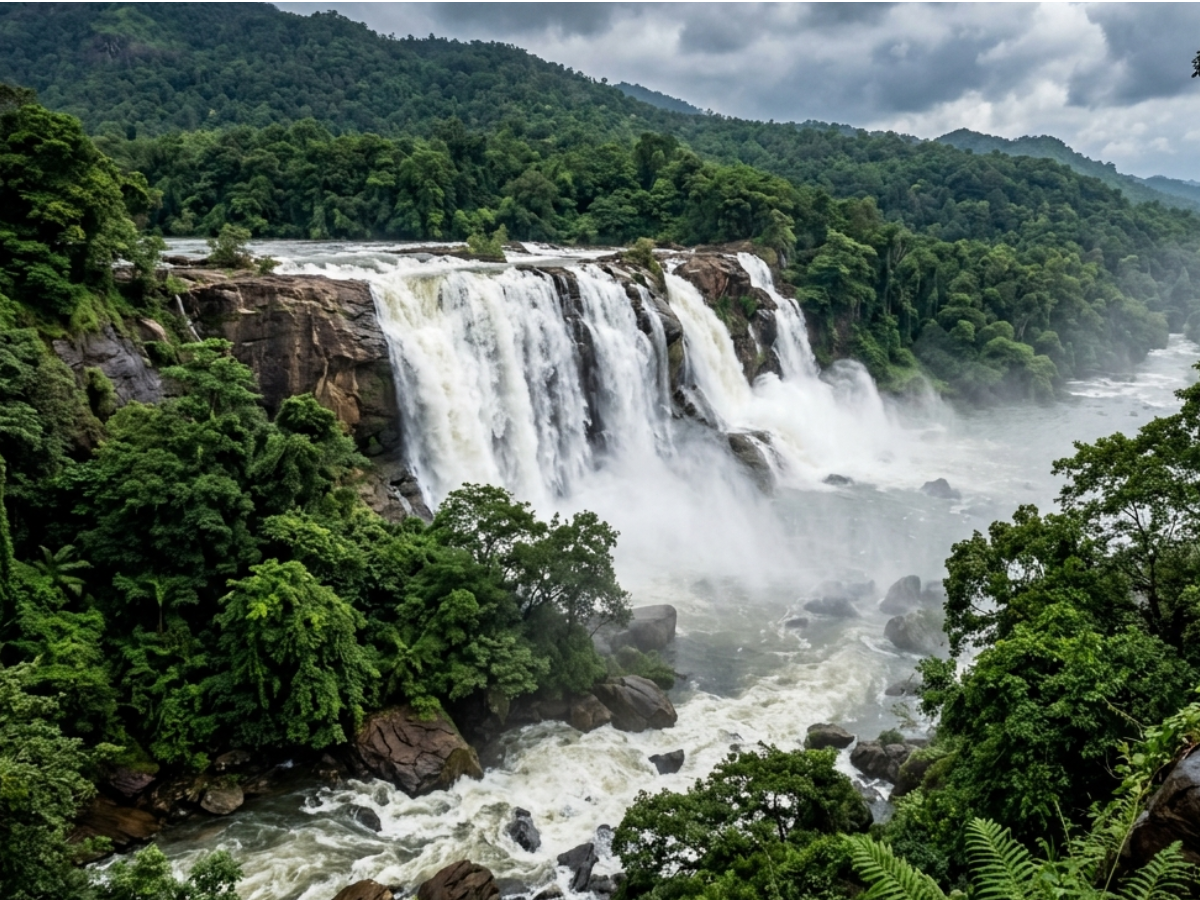
Athirapally Falls on the Chalakudy River in the Thrissur district of Kerala is the largest waterfall in Kerala and one of the most photographed in South India. At peak monsoon, the falls spread across approximately 30 metres of width before dropping 80 metres into the river gorge below. The combination of width, height, and the forest setting of the Sholayar range produces a visual scale that is more horizontal than the vertical drama of Dudhsagar.
Athirapally Waterfall Best Time
The Athirapally Waterfall's best time for the full-volume experience is July and August, which aligns with the peak southwest monsoon reaching the Western Ghats in Kerala. The Chalakudy River system carries significant rainfall from the Sholayar catchment, and by mid-July the falls are running at a width that their September equivalents do not replicate.
The approach to Athirapally from the Chalakudy base involves a drive through the Vazhachal Forest Reserve on a road managed by the Kerala Forest Department. Entry to the falls involves a permit available at the checkpost near the Vazhachal waterfalls, which is a short distance from Athirapally on the same route. Both falls are typically visited in sequence, with Vazhachal being the smaller but still impressive cascade that precedes the main Athirapally viewpoint.
The viewpoint at Athirapally is a developed platform with railing access; visitors stand above the gorge looking across at the falls rather than at the base. The base of the falls is not accessible to visitors, which means the swimming pool experience of Dudhsagar is not available here. The trade-off is that the viewpoint provides a more complete visual of the falls' full width than a base-level position would allow.
The Practical Athirapally Visit
At the Athirapally Waterfall, the best time to arrive is early morning. The falls face west, which means afternoon light produces haze and direct glare on the water. Morning visits in the monsoon produce the best combination of cloud-diffused light, full water volume, and manageable crowds.
The road from Chalakudy to Athirapally is approximately 30 kilometres and takes around 45 minutes. From Thrissur, the drive is approximately 60 kilometres. The falls are accessible from Kochi via a two-hour road journey, making them a practical day trip from the city for visitors based there. For the final journey from Kochi, Thrissur, or Chalakudy, travellers can book a cab for a more convenient transfer to Athirapally and Vazhachal.
The forest reserve between Vazhachal and Athirapally has occasional elephant movement, and the road section through the reserve should be driven with awareness; rather than at speed, wildlife crossings are not uncommon in the morning and evening hours.
How EaseMyTrip Supports Waterfall Trek Planning
Planning the Dudhsagar waterfall trek in the monsoon or the Athirapally visit as part of a broader Goa or Kerala trip involves coordinating flights, accommodation near the trailhead or in the base city, and the local transport and permit logistics that are specific to each site. EaseMyTrip's platform surfaces flight options into Goa (for Dudhsagar) and Kochi or Thrissur (for Athirapally) alongside accommodation near Collem, Margao, Chalakudy, and Thrissur in a single search. Once the route is decided, travellers can book hotels near the waterfalls in Collem, Margao, Chalakudy, or Thrissur to keep the journey practical during the monsoon.
For the Goa waterfall trek monsoon planning specifically, where the jeep availability from Collem is limited on peak monsoon weekends and books out quickly, the platform's AI-powered availability tools help identify accommodation and transport combinations that align with the forest department's operational schedule rather than leaving the logistics to be assembled separately on the day. As AI becomes more capable of integrating real-time permit availability, forest department operational status, and weather condition data into the booking interface, EaseMyTrip is building towards a platform that makes a Dudhsagar or Athirapally visit as straightforwardly bookable as a city hotel. For a trek where the logistical details permit, jeep, timing, and footwear determine whether the waterfall is reached at all; that kind of joined-up, condition-aware planning support is what converts a monsoon travel aspiration into a confirmed and completed experience.
FAQs
Q: When is the best time for the Dudhsagar waterfall trek during the monsoon?
The best window for the Dudhsagar waterfall trek in the monsoon is mid-July to mid-August, when the falls are at peak volume and the forest department jeep operations from Collem are running consistently. June is the onset period when operations can be disrupted by particularly heavy rain, making the sanctuary tracks impassable. September sees the volume beginning to ease. Confirming the jeep service is operational on the morning of the planned visit rather than assuming it matches the general schedule is the single most practical planning step for avoiding a wasted journey to Collem.
Q: How does the Dudhsagar Falls entry permit work, and where is it obtained?
The Dudhsagar Falls entry permit is issued at the forest department checkpost at Collem (Kulem), where an entry fee applies for individuals and vehicles. The primary access is via the forest department's managed jeep safari service; self-drive to the falls is not permitted. The permit and jeep booking are handled at the Collem checkpoint rather than online in advance. The alternative trekking route from Castle Rock on the railway side is subject to periodic closure and should be confirmed as currently open before planning the journey via that route.
Q: What is the Athirapally Waterfall best time to visit for the full monsoon experience?
Athirapally Waterfall's best time for the full-volume experience is July and August, when the southwest monsoon reaches the Western Ghats in Kerala at peak intensity and the Chalakudy River is running at its widest and most powerful. Morning visits produce the best light conditions; the falls face west, so afternoon visits involve direct glare and haze on the water. The permit and entry are managed at the Vazhachal checkpost on the same route, and the combined Vazhachal-Athirapally visit typically takes two to three hours, including the drive through the forest reserve.
Q: What should trekkers carry for the Goa waterfall trek in monsoon conditions?
The Goa waterfall trek monsoon kit for Dudhsagar should include closed-toe footwear with grip. The trail crosses a railway bridge and descends wet rocky sections where sandals are genuinely inadequate. A waterproof bag for electronics and documents, a change of clothes if planning to enter the pool at the base, a water bottle, and sunscreen for the viewpoint area (which has direct exposure despite the forest setting) cover the main practical requirements. The jeep journey from Collem is open-sided, and the trail is wet. Assuming everything will be damp rather than trying to stay dry is the mindset that makes the visit comfortable rather than stressful.
Q: How can EaseMyTrip help plan a Dudhsagar or Athirapally monsoon waterfall visit?
EaseMyTrip's platform helps travellers planning the Dudhsagar waterfall trek in the monsoon or the Athirapally visit by surfacing flight options into Goa and Kochi alongside accommodation near Collem, Margao, Chalakudy, and Thrissur in a single search. AI-powered availability tools help identify the accommodation and transport combinations that align with the forest department's operational timing, particularly for peak monsoon weekends when jeep availability at Collem is limited. For travellers combining either a waterfall with a broader Goa or Kerala circuit, the platform's multi-modal search sequences the waterfall day trip within the full itinerary without requiring it to be managed as a separate logistics exercise.






 August 21, 2026
 Share
Share
 Download as PDF
  From
From 
 Departure Date
 Travellers & class
 Rent For
 Departure Date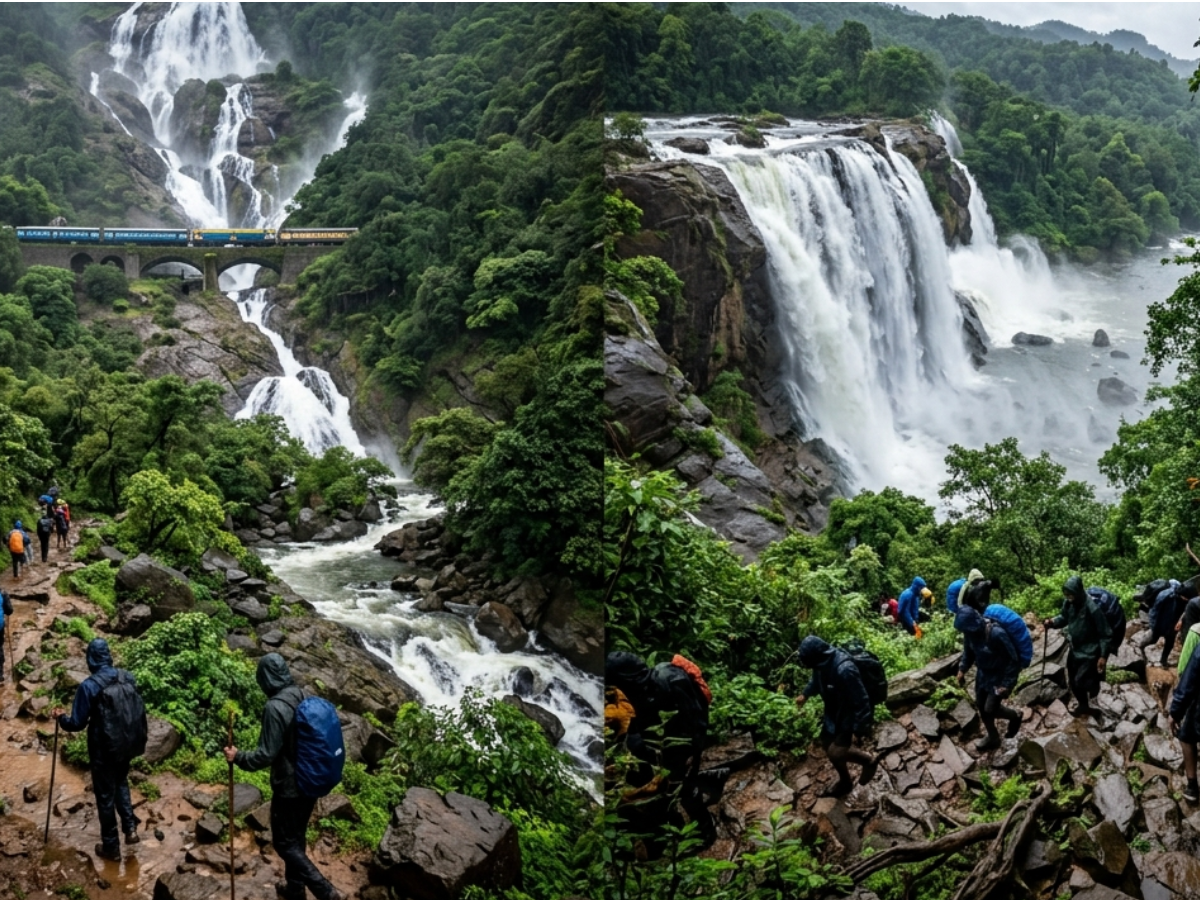



 Share
Share
{{cmnt.comment}}