Mumbai is a city that never really stops moving, except, oddly enough, the moment you step through the gates of one of its temples. Somewhere between the honking taxis, the crowded local trains, and the never-ending hustle, the city has quietly held on to dozens of shrines that are centuries old, deeply loved by locals, and genuinely worth a detour on your trip. If you're planning a spiritual round of the city, here's a practical, on-the-ground guide to the 10 temples you shouldn't skip
10 Famous Temples in Mumbai You Must Visit
Mumbai has some truly beautiful temples, each with its own story and charm. From ancient shrines hidden in busy markets to peaceful spots by the sea, there's something here for everyone. Here's a list of 10 popular temples in mumbai you should visit.
| Temples |
Location |
Dedicated to |
| Siddhivinayak Temple |
S.K. Bole Marg, Prabhadevi, Mumbai |
Lord Ganesha |
| Mahalakshmi Temple |
Bhulabhai Desai Road, Mahalaxmi, Mumbai |
Goddess Mahalakshmi, Mahakali & Mahasaraswati |
| ISKCON Temple (Sri Sri Radha Rasabihari Mandir) |
Hare Krishna Land, Juhu, Mumbai |
Radha & Krishna |
| Mumbadevi Temple |
Mumbadevi Road, Zaveri Bazar, Bhuleshwar, Mumbai |
Goddess Mumbadevi |
| Babulnath Temple |
Babulnath Road, near Chowpatty, Malabar Hill, Mumbai |
Lord Shiva |
| Walkeshwar Temple |
Banganga Cross Lane, Teen Batti, Malabar Hill, Mumbai |
Lord Shiva |
| Shri Prabhadevi Temple |
Murari Ghag Marg, Century Bazaar, Prabhadevi, Mumbai |
Goddess Prabhadevi |
| Sri Sri Radha Gopinath Temple (ISKCON Chowpatty) |
K.M. Munshi Marg, Girgaon Chowpatty, Mumbai |
Radha & Krishna |
| Gaondevi Mandir |
Gamdevi Road, Grant Road, Mumbai |
Goddess Gaondevi |
| Gol Deval Temple |
Sardar Vallabhbhai Patel Road, Khetwadi, Bhuleshwar, Mumbai |
Lord Shiva |
1. Siddhivinayak Temple
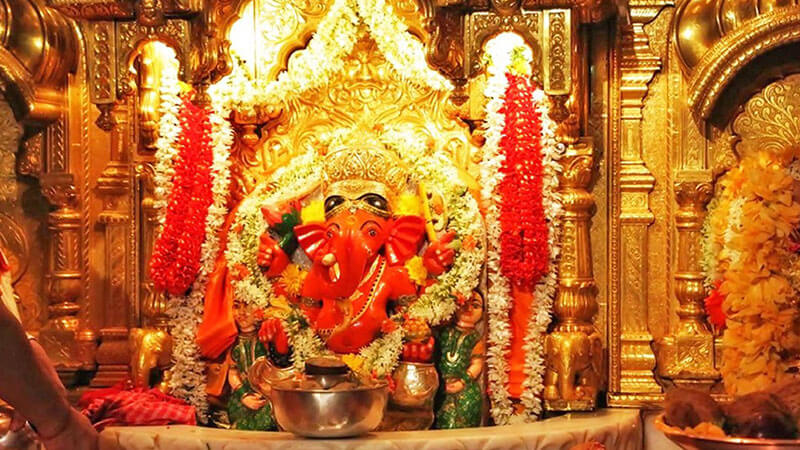
Start your temple trail here. Almost everyone in Mumbai does. Siddhivinayak is the city's most famous Ganesh temple, and the belief that whispering your wish into the deity's ear will get it heard has made this one of the most visited shrines in the country. The idol itself is carved from a single black stone, with a diamond embedded in its forehead, and the temple's gold-plated dome catches the light beautifully in the late afternoon.
The temple was built in 1801 by a local contractor, Laxman Vithu Patil, and funded by a wealthy woman named Deubai Patil, who had no children of her own and prayed that Ganesh would bless childless women who came to worship here. That's part of why the temple's full name, Siddhivinayak, or "Ganesh who grants wishes," carries such weight for devotees even today. Ganesh himself, remover of obstacles and god of new beginnings, is worshipped before any important undertaking in Hindu tradition, which is exactly why so many people passing through Mumbai make it a point to stop here first, whether they're starting a business, a film, or simply a new chapter of life. This idea of visiting a deity before a fresh start isn't unique to Mumbai either, you'll find the same tradition echoed across the country's most revered sites, as this guide to famous temples in India shows.
- Location: S.K. Bole Marg, Prabhadevi, Mumbai, Maharashtra
- Timings:
- Darshan: 5:30 am to 9:50 pm from Wednesday to Monday; on Tuesdays the temple opens as early as 3:15 am
- Aarti: Kakad Aarti 5:30–6:00 am, Evening Dhoop Aarti around 7:00–7:10 pm, and the main Evening Aarti 7:30–8:00 pm
- How to reach: The nearest railway station is Dadar, about 2 km away, take a taxi or auto from there. Well connected by BEST buses and taxis from anywhere in the city.
- Travel tip: Tuesdays are extremely crowded since it's the most auspicious day for Ganesh worship. You can pay INR 50 for a paid darshan line that cuts the wait from a few hours down to 20–45 minutes. If you're short on time, aim for right after the morning aarti window instead.
2. Mahalakshmi Temple
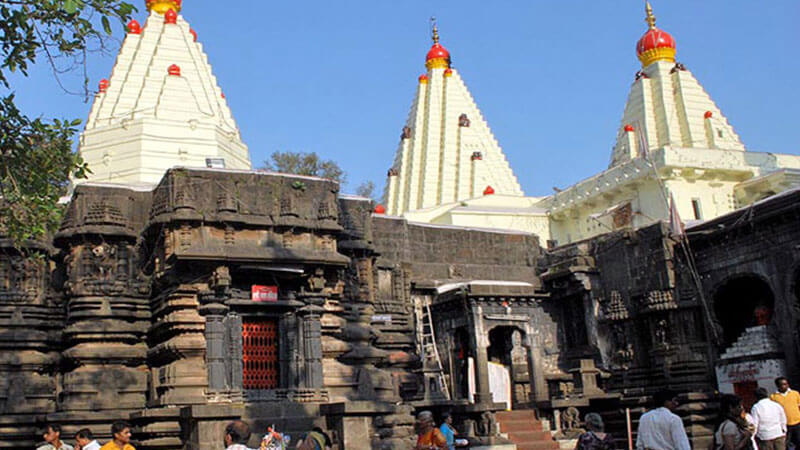
Perched right on the edge of the Arabian Sea, Mahalakshmi Temple is one of Mumbai's oldest shrines and one of its prettiest settings. You get the sound of waves along with your prayers. It's dedicated to the goddess Mahalakshmi, along with Mahakali and Mahasaraswati, whose idols sit side by side in the sanctum, and getting there involves climbing a flight of steps lined with flower sellers and vendors selling coconuts, sindoor, and prasad. It's part of the experience, honestly.
Local legend ties the temple's origins to the British engineer Ramji Shivji, who was struggling to build a causeway connecting Worli to Mahalakshmi in the 1780s. The sea kept breaking through and destroying the work. As the story goes, the goddess appeared to him in a dream and told him where her idols lay submerged in the sea; once he recovered and enshrined them, the causeway held. Whether or not you take the legend literally, it explains why the temple feels so tied to the sea itself, and why devotees still consider Mahalakshmi the guardian of the waters right at Mumbai's doorstep.
- Location: Bhulabhai Desai Road, Mahalaxmi, Mumbai
- Timings:
- Darshan: 6:00 am to 10:00 pm daily
- Aarti: Temple closes briefly for Morning Aarti (6:45–7:30 am), Naivedya (11:45 am–12:20 pm), Evening Dhoop Aarti (6:15–6:40 pm), and Evening Aarti (7:20–7:45 pm)
- How to reach: Nearest station is Mahalaxmi on the Western Line; auto-rickshaws and taxis run from there directly to the temple steps.
- Travel tip: Weekday mornings, either 6:00–6:45 am or after 7:30 am, give you the shortest queues, avoid Tuesdays and Fridays if you want a quieter visit. Pick up a coconut or flowers from the vendors lining the steps up to the temple, it's part of the ritual, not just a souvenir stop.
3. ISKCON Temple (Sri Sri Radha Rasabihari Mandir, Juhu)
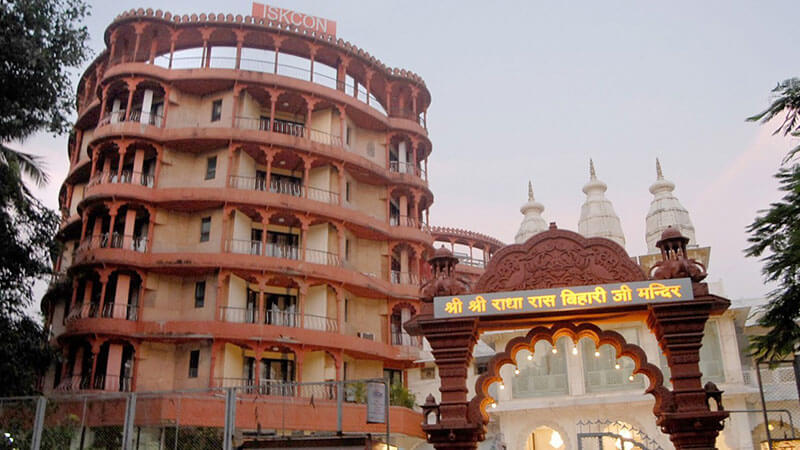
If you want a completely different temple experience, less crowd-rush, more calm devotion, head to Juhu's ISKCON temple. Built by the International Society for Krishna Consciousness, it's dedicated to Radha-Krishna and is known for its intricately carved marble interiors and genuinely peaceful atmosphere, even with visitors from all over the world walking through. Evening aarti here, accompanied by live kirtan, is worth timing your visit around.
The temple's story is really the story of Radha and Krishna themselves, a divine love that Hindu tradition treats as the purest expression of devotion, with Radha representing the soul's longing and Krishna the divine it yearns for. This particular temple was consecrated in 1978 under the guidance of Srila Prabhupada, the founder of the Hare Krishna movement, who wanted a space in Mumbai where that devotion could be experienced through music, philosophy, and community rather than ritual alone. That founding spirit is exactly why the temple still feels less like a tourist stop and more like a living, breathing spiritual campus.
- Location: Hare Krishna Land, Juhu Church Road, Juhu, opposite Juhu Beach
- Timings:
- Darshan: 4:30 am to 1:00 pm and again 4:30 pm to 9:00 pm daily
- Aarti: Mangala Aarti at 4:30 am, followed by aartis at 7:45 am and 12:30 pm, with evening aartis around 8:15 and 8:45 pm
- How to reach: Andheri station, about 3.4 km away on the western and harbour line, is the nearest local station, with cabs and autos readily available from there.
- Travel tip: Time your visit for the evening aarti with live kirtan, and stay back for the Govinda's restaurant thali afterward. It's known for its Sunday feast prasad, a genuine local favourite, not just a tourist add-on. Since you're already by the shore for this one, it's worth knowing Juhu is just one face of the city's coastline — these offbeat beaches in Mumbai reveal quieter stretches of sand well away from the usual tourist crowds.
4. Mumbadevi Temple
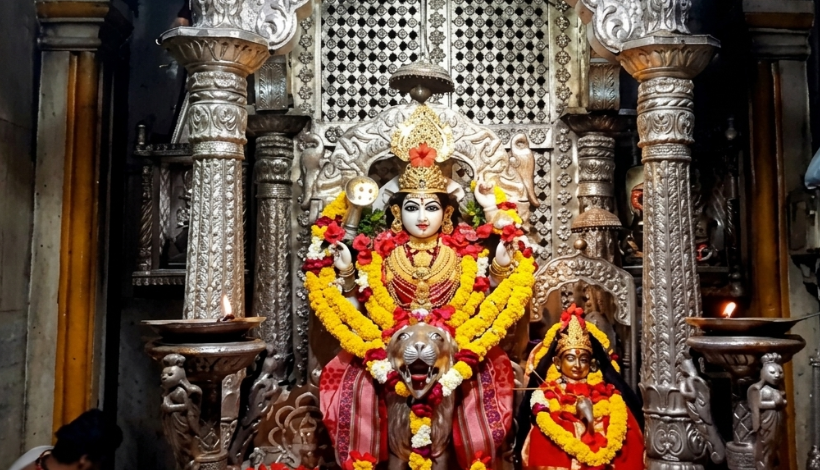
This is the temple the city is actually named after. Mumbai comes from "Mumba" (the goddess) and "Aai" (mother, in Marathi). The original shrine stood where Chhatrapati Shivaji Maharaj Terminus is today, but after it was damaged, it was rebuilt in the 1700s at its current spot in Bhuleshwar, right in the middle of Mumbai's bustling jewellery and cloth markets. It's not an architecturally grand temple, but that's kind of the point. It feels like the real, working heart of old Mumbai, with the smell of incense mixing with the noise of the market outside.
The goddess Mumbadevi is believed to be a form of the fisherfolk community's protector deity, worshipped by the Koli fisherfolk long before Mumbai became the city it is today. According to local belief, she once helped the Kolis defeat a demon named Mumbarka who was terrorising the coastal villages, and in gratitude they built a shrine in her honour, a shrine that, quite literally, the entire city eventually grew up around and was named after. It's this deep, almost founding-myth connection that makes Mumbadevi feel less like just another stop and more like the spiritual root of the city itself.
- Location: Mumbadevi Road, Zaveri Bazar, Bhuleshwar, Mumbai
- Timings:
- Darshan: 6:00 am to 10:45 pm daily
- Aarti: Morning aarti at 7:00 am and evening aarti at 7:00 pm
- How to reach: Charni Road and Masjid Bunder are the closest railway stations, each about a ten-minute walk from the temple.
- Travel tip: Since it sits inside the working jewellery market of Zaveri Bazar, go early morning before the market gets busy. You'll get a calmer darshan and can wander the old bazaar lanes right afterward without the crowds.
5. Babulnath Temple
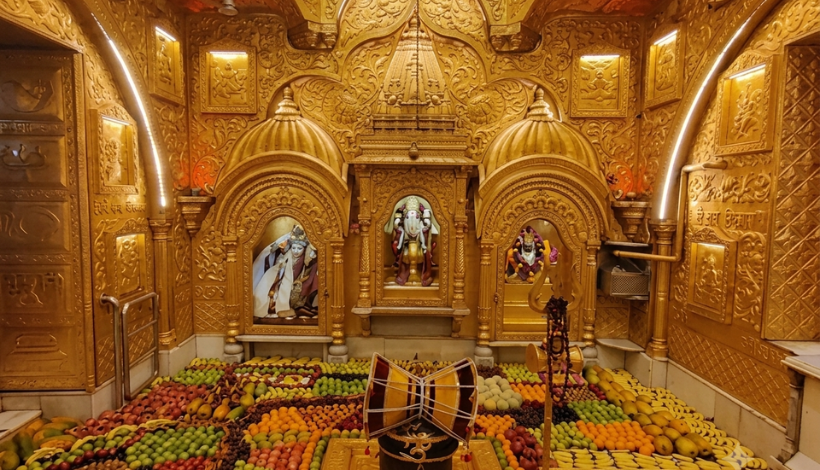
Dedicated to Lord Shiva, Babulnath sits on a small hill near Chowpatty and gets its name from a babul (acacia) tree that once stood on the site. Since the temple is elevated, you get a lovely view over the city as you climb up, or you can take the small lift if you'd rather skip the stairs. Mondays are particularly busy here, since it's considered an auspicious day for Shiva devotees.
The story behind the temple dates back to 1780, when a cow is said to have stopped at this spot every day and poured out her milk over a buried stone, a classic motif in Shiva folklore, since milk offerings to a lingam are considered deeply sacred. When locals dug at the site, they found a Shiva lingam beneath the babul tree, and the temple was built right there to enshrine it. That connection to Shiva as the ascetic, meditative god who dwells on hills and in wild, quiet places is part of why the climb up to Babulnath still feels like a small pilgrimage of its own.
- Location: Babulnath Road, near Chowpatty, Malabar Hill, Mumbai
- Timings:
- Darshan: 6:00 am to 9:00 pm daily, with special darshan windows 5:45–7:00 am, 11:00 am to 12:00 pm, and 4:45–6:00 pm
- Aarti: Morning 5:30–6:30 am, afternoon 11:30 am–12:30 pm, evening 5:30–6:30 pm, and night 8:00–8:30 pm
- How to reach: Charni Road is the nearest railway station, just 1.5 km away and about a 5-minute ride from there.
- Travel tip: There are 108 steps up to the shrine, but a lift is available, Use it if you're visiting with elderly family. Mondays get genuinely packed with Shiva devotees, so go early if you want to avoid the crush.
6. Walkeshwar Temple
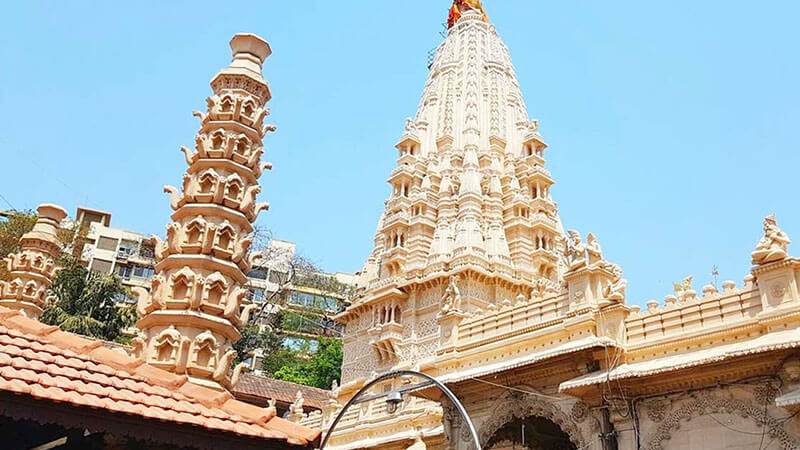
One of Mumbai's oldest surviving temples, Walkeshwar traces its roots back to around the 12th century, when it was built by a minister of the Silhara dynasty. Right next to the temple is the Banganga Tank, a serene stepped water tank that's genuinely one of the most photogenic, peaceful corners of South Mumbai, especially early in the morning.
According to legend, Lord Rama passed through this spot while searching for his abducted wife, Sita, and paused to perform his daily prayers. Unable to find a Shiva lingam to worship, he is said to have fashioned one out of sand himself, which is where the temple gets its name, from "Valuka" (sand) and "Ishwar" (Shiva). The Banganga Tank next door has its own piece of the story: Rama, thirsty after his prayers, is said to have shot an arrow into the ground, and a stream of the Ganga rose up to meet him, which is why the tank is still considered to hold sacred, purifying water even today.
- Location: Banganga Cross Lane, Teen Batti, Malabar Hill, Mumbai
- Timings:
- Darshan: 6:00 am to 7:00 pm daily
- Aarti: 7:00–7:30 am, 7:00–7:30 pm, and a late evening aarti at 9:00–9:30 pm
- How to reach: Mumbai Central and Charni Road on the Western Line are the nearest stations, followed by a short taxi or auto ride to Walkeshwar.
- Travel tip: Go early morning, the Banganga Tank is at its most photogenic and peaceful then, before the heat and crowds set in. Combine it with a slow walk around the tank itself; it's one of the few genuinely quiet corners left in South Mumbai. If it's that kind of quiet, unhurried devotion you're after, a few famous temples around Mumbai offer the same calm, just a short drive outside the city.
7. Shri Prabhadevi Temple
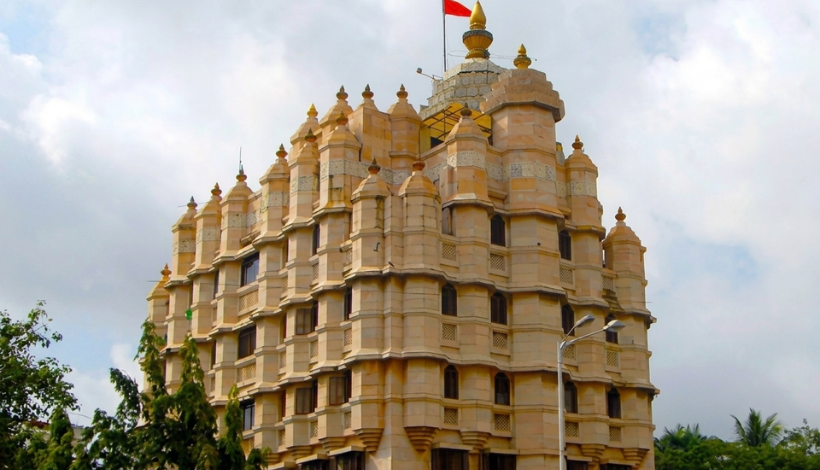
Don't confuse this one with Siddhivinayak, even though they're practically neighbours. Prabhadevi Temple (also called Prabhavati Devi Temple) is dedicated to the goddess Prabhadevi and is actually older than its far more famous neighbour. The idol is believed to date back centuries, though the current structure was built in the early 1700s by the Pathare Prabhu community. It's a quieter, more low-key temple, which makes it a nice stop if you want a moment of calm before or after the Siddhivinayak crowds.
The goddess here is closely linked to the Pathare Prabhus, one of Mumbai's oldest settled communities, who regard her as a guardian deity of the area. In fact, the neighbourhood of Prabhadevi takes its name directly from her. Unlike the more elaborate mythologies attached to bigger deities, Prabhadevi's story is really a community story: a goddess adopted and protected by the people who first called this stretch of the city home, long before Bombay became a metropolis.
- Location: Murari Ghag Marg, Century Bazaar, Prabhadevi, near Dadar, Mumbai
- Timings:
- Darshan: Open through the day; no fixed evening closure widely publicized
- Aarti: No strict public aarti schedule, it's best treated as a walk-in, quieter shrine rather than one to time around rituals
- How to reach: Best reached via Dadar or Prabhadevi railway stations on the Western Line, followed by a short walk or auto ride into Century Bazaar.
- Travel tip: Pair this with your Siddhivinayak visit since they're practically neighbours. Go here first for a calm, uncrowded start before heading into the bigger crowds nearby.
8. Sri Sri Radha Gopinath Temple (ISKCON Chowpatty)
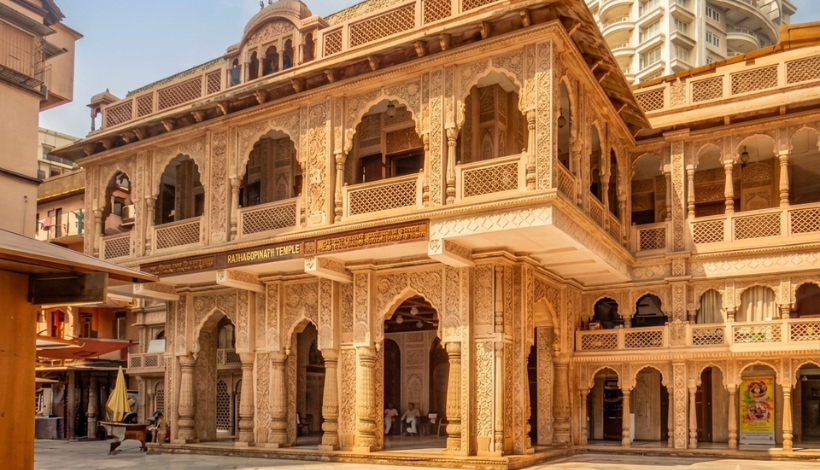
Not to be confused with the Juhu ISKCON temple, this one sits right at Girgaon Chowpatty and has its own devoted following. The temple hall, done up in Italian marble and Burmese teak, is one of the more elegant interiors among Mumbai's temples, and it also functions as a full spiritual campus with regular classes and community programs.
The deities here were installed in 1988, but the story goes back further. Srila Prabhupada, the founder of the Hare Krishna movement, is said to have stood on the steps of the building directly opposite this site decades earlier and pointed to it, saying a temple would one day stand there. When it finally did, devotees saw it as the fulfilment of that vision. As with the Juhu temple, the underlying devotion is to Radha and Krishna's divine love, but this particular shrine carries the added weight of being, quite literally, a promise kept.
- Location: 7, K.M. Munshi Marg, Girgaon Chowpatty, Mumbai
- Timings:
- Darshan: Morning 5:00 am to 1:00 pm and evening 4:30–9:00 pm, with the temple closed 1:00–4:30 pm
- Aarti: Mangal Aarti 5:00–5:25 am, Raj Bhog Aarti 12:30–1:00 pm, Gaura Aarti 7:00–7:30 pm, and Shayana Darshan with kirtan 8:50–9:05 pm
- How to reach: Take a local train to Grant Road station on the western line, exit from the western side, and hire a cab, or simply walk, it takes about 10–15 minutes.
- Travel tip: It sits barely 100 metres from Babulnath Temple, so club the two together, a Shiva shrine and a Krishna temple within a five minute walk of each other.
9. Gaondevi Mandir
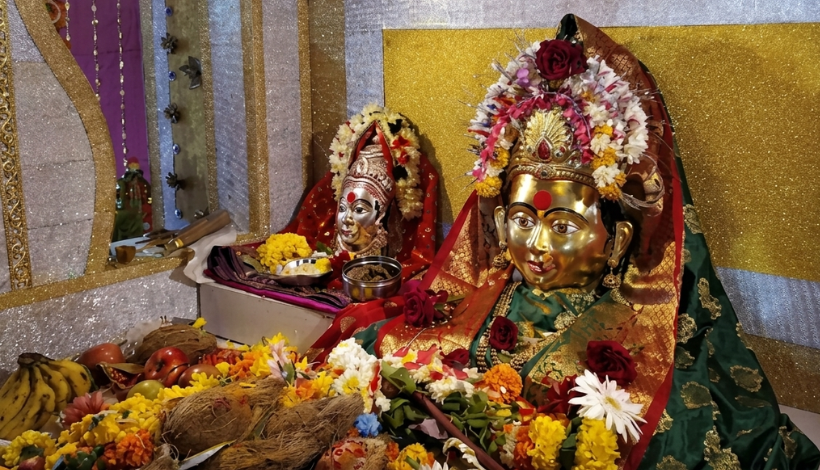
Tucked into the Gamdevi neighbourhood near Grant Road, which actually takes its name from this temple, Gaondevi Mandir is dedicated to the local village goddess (Gaondevi literally means "goddess of the village"). It's a good stop if you want to see how devotion works at a hyperlocal, community level rather than the big-ticket, high-footfall shrines.
Long before Mumbai was a cluster of high-rises and railway lines, it was a set of seven separate islands dotted with small fishing and farming villages, each of which typically had its own guardian goddess watching over it, a Gaondevi. This temple is one of the last visible traces of that older, village-based Mumbai, and it's quietly held its place in the neighbourhood for generations, with locals still treating the goddess as a protector of the immediate community rather than the city at large.
- Location: Gamdevi Road, Grant Road, Mumbai (the Gamdevi neighbourhood itself is named after this temple)
- Timings:
- Darshan: Generally open mornings and evenings; exact hours vary
- Aarti: No widely published fixed schedule, it's worth calling ahead or checking with locals if you're planning around a specific time
- How to reach: Nearest stations are Grant Road or Charni Road on the Western Line, a short walk or auto ride from the temple.
- Travel tip: This is the most local, least touristy stop on the trail. Don't expect grandeur, go for the feel of an old village shrine tucked into a modern neighbourhood, and take a moment to notice how the area itself carries the goddess's name.
10. Gol Deval Temple
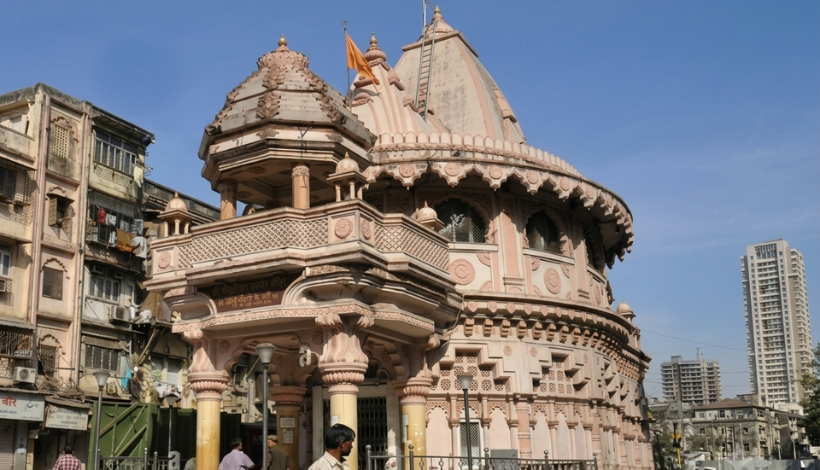
Finish your temple trail with one of Mumbai's quirkiest landmarks: a circular Shiva temple sitting literally in the middle of a busy road in Bhuleshwar. "Gol Deval" translates to "round temple," and that's exactly what it is. Traffic splits around it on both sides, which somehow makes it feel even more remarkable that it's survived here for well over a century.
Local legend has it that the shivling enshrined here was recovered from the sea during land reclamation work in the area, at a time when much of Bhuleshwar was still being built up out of reclaimed land. Rather than move the lingam elsewhere, the community built a small round shrine directly around it, and as the roads grew up around that shrine over the following decades, the temple simply stayed put, refusing to be relocated, which is exactly why it now sits so improbably in the middle of traffic.
- Location: Sardar Vallabhbhai Patel Road, Khetwadi, Bhuleshwar, Mumbai
- Timings:
- Darshan: Open daily through the day, generally unrestricted since it's a small, walk-in roadside shrine
- Aarti: No fixed public schedule, it functions more as a continuous darshan spot than a ritual-timed temple
- How to reach: Charni Road railway station is the nearest, about 2 km away, with taxis, autos, and buses running from there.
- Travel tip: Save this one for last, literally in the middle of traffic. Stand back and take it in from across the road first, since it's the visual you'll remember most from the whole trail, then cross carefully to visit.
More Things to Explore In Mumbai
Explore More Famous Temples Across India
Popular Tourist Destinations from Mumbai






 April 17, 2024
 Share
Share
 Download as PDF
  From
From 
 Departure Date
 Travellers & class
 Rent For
 Departure Date




 Share
Share 

{{cmnt.comment}}