Every state in India seems to have its own temple story. A shrine tucked into a hillside, a golden sanctum reflected in a still tank of water, a cave that stays buried under snow for half the year and only opens when the stars say so. If you're looking for spiritual places in India that go beyond the usual tourist checklist, these are some of the most famous temples in India, chosen for how often they're visited and talked about across the country. This guide is built for anyone planning pilgrimage destinations in India, whether that means a focused religious trip or just weaving a couple of temples to visit in India into a bigger holiday.
One quick note before you dive in. Temple timings shift around festivals, weather, and local decisions, so treat everything below as a solid starting point, and check the temple's official website a day or two before you travel, just to be safe.
20 Famous Temples in India You Must Visit in 2026
India's temple calendar runs on its own rhythm, tied to rivers, mountains, and festivals rather than the regular tourist season. Here, we've listed 20 temples that are among the most popular temples in India, known for their strong positive energy, their age, and the sheer number of people who travel across states just to stand in front of the deity for a few seconds. These are places people return to year after year, not out of habit, but because of genuine faith, the belief that a visit here, a prayer said with the right intention, can actually change things. Ask anyone in the queue why they came, and most will tell you some version of the same thing, a wish that came true, a hard time that passed, a trust in the temple that's stayed with their family for generations. That's really what this list is about, not just monuments to look at, but places that keep pulling people back. Here's a quick look at each of the temple
| Temple |
City / State |
Deity |
| Kashi Vishwanath |
Varanasi, Uttar Pradesh |
Lord Shiva |
| Tirumala Venkateswara |
Tirupati, Andhra Pradesh |
Lord Vishnu |
| Golden Temple |
Amritsar, Punjab |
Sri Guru Granth Sahib |
| Meenakshi Amman |
Madurai, Tamil Nadu |
Goddess Meenakshi and Shiva |
| Jagannath Temple |
Puri, Odisha |
Lord Jagannath (Vishnu) |
| Somnath Temple |
Veraval, Gujarat |
Lord Shiva |
| Vaishno Devi |
Katra, Jammu and Kashmir |
Goddess Vaishno Devi |
| Siddhivinayak Temple |
Mumbai, Maharashtra |
Lord Ganesh |
| Akshardham Temple |
New Delhi |
Lord Swaminarayan |
| Amarnath Cave |
Pahalgam route, J&K |
Lord Shiva (ice lingam) |
| Badrinath Temple |
Chamoli, Uttarakhand |
Lord Vishnu |
| Kedarnath Temple |
Rudraprayag, Uttarakhand |
Lord Shiva |
| Ramanathaswamy Temple |
Rameswaram, Tamil Nadu |
Lord Shiva |
| Konark Sun Temple |
Konark, Odisha |
Sun God (Surya) |
| Brihadeeswarar Temple |
Thanjavur, Tamil Nadu |
Lord Shiva |
| Shirdi Sai Baba Temple |
Shirdi, Maharashtra |
Sai Baba |
| Padmanabhaswamy Temple |
Thiruvananthapuram, Kerala |
Lord Vishnu |
| Mahakaleshwar Temple |
Ujjain, Madhya Pradesh |
Lord Shiva |
| Dwarkadhish Temple |
Dwarka, Gujarat |
Lord Krishna |
| Kamakhya Temple |
Guwahati, Assam |
Goddess Kamakhya |
1. Kashi Vishwanath Temple, Varanasi, Uttar Pradesh
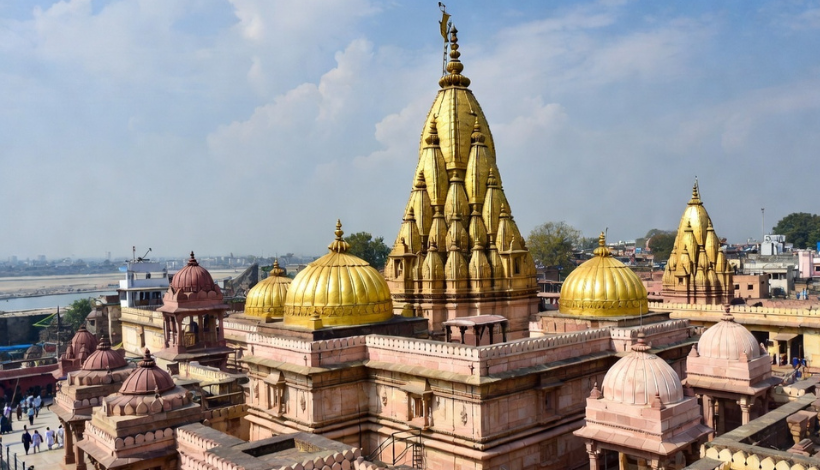
Kashi Vishwanath sits on the western bank of the Ganga in the middle of Varanasi's old city, its main spire covered in close to 800 kg of gold, added by Maharaja Ranjit Singh in the 1800s. The current structure was built in 1780 by Ahilyabai Holkar after earlier versions were destroyed, and it's a modest sized temple by Indian standards, more about atmosphere than scale. Since 2021, the Kashi Vishwanath Corridor has linked it directly to the Ganga ghats through a wide stone plaza, so the walk from the sanctum to the riverbank now takes just a few minutes.
Locals call Varanasi the one place Shiva never left. The story goes that he loved this city so much after leaving Mount Kailash that he made a vow never to abandon it, no matter what happens to the rest of the world. Ask any boatman or tea seller in Varanasi why the city feels different, and you'll likely get some version of the same answer, that Shiva is still here, quietly watching over everyone who comes for darshan.
Timings:
- Open 4:00 AM to 11:00 PM
- Mangala Aarti: 3:00 to 4:00 AM (book ahead, this slot fills up fast)
- Bhog Aarti: 11:15 AM to 12:20 PM
- Evening aartis: 7:00 PM onward, last one ends around 11:00 PM
- Gets busy on Mondays, through Shravan month, and around Maha Shivratri
Significance:
- One of the 12 Jyotirlingas of Lord Shiva, and the only one in Uttar Pradesh
- Widely regarded as the holiest Shiva temple in India
How to reach:
- By Air: Varanasi Airport (VNS) is about 25 km from the temple. A taxi or cab takes 45 minutes to an hour depending on traffic
- By Train: Varanasi Junction (Cantt) is the main station, 4 to 6 km away, about 20 minutes by auto rickshaw. Vehicles can't get right up to the temple, you'll be dropped at Godowlia Chowk and walk the last 5 to 10 minutes through the market lanes
- By Road: Varanasi connects to Delhi, Lucknow, and Prayagraj via NH19 and other highways, with regular state bus services. If driving in, park at Godowlia or Dashashwamedh Road since there's no parking near the temple itself
Tip:
- Book your Mangala Aarti pass online a few days early through the official temple website, walk in spots almost never open up
- Phones and bags aren't allowed inside, use the paid locker counters near the entrance rather than carrying them
2. Tirumala Venkateswara Temple, Tirupati, Andhra Pradesh
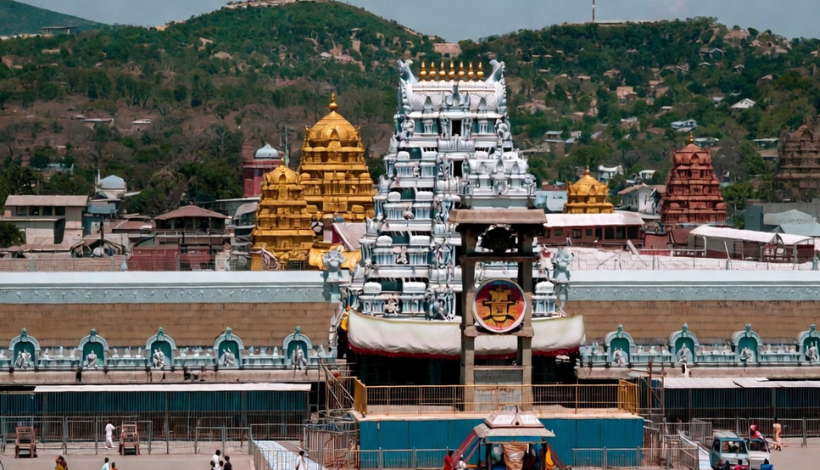
The temple sits on Venkatadri, the seventh of the seven hills that make up the Tirumala range, about 900 metres above Tirupati town. It's one of the busiest pilgrimage sites on Earth, with tens of thousands of devotees passing through the queue lines on an average day, and the deity is dressed and decorated fresh each morning before the first darshan. The temple trust also runs one of the largest philanthropic operations in the country, funding hospitals, schools, and free meal programs well beyond Andhra Pradesh.
Devotees believe the idol inside wasn't carved by anyone. It's said to be swayambhu, self manifested, which is why pilgrims shave their heads as an offering before joining the queue for a few seconds in front of the deity. Even the prasad has its own following here. The temple's laddu is protected under a geographical indication tag, similar to how Champagne is legally tied to a specific region in France.
Timings:
- Open roughly 2:30 AM to 1:00 AM the next day
- Suprabhatam (wake up ritual): 2:30 to 3:30 AM
- Sarva Darshan (general queue): runs most of the day, though wait times often stretch past 5 hours without a booked slot
- Special entry darshan (paid): shorter queue, needs advance booking
Significance:
- One of the richest and most visited temples in the world
- Believed to house a self manifested idol of Lord Vishnu
How to reach:
- By Air: Tirupati Airport, in Renigunta, is about 15 to 16 km from Tirupati town and roughly 35 to 40 km from the temple on the hill. Taxis are available right outside
- By Train: Tirupati Railway Station is the main stop, about 20 to 22 km from the temple. From here, APSRTC buses, taxis, and the traditional Srivari Mettu foot trail (about 9 km) all lead up the hill
- By Road: The final stretch is a 20 km ghat road with 18 hairpin bends, well served by state buses running every couple of minutes. Private vehicles need a permit to drive up
Tip:
- Book Sarva Darshan or Special Entry slots online through the TTD website well in advance, walk in queues can run five hours or more
- If you're up for it, the Srivari Mettu trek from the base is a quieter, more traditional way to arrive, just budget 3 to 4 hours for it
3. Golden Temple (Sri Harmandir Sahib), Amritsar, Punjab
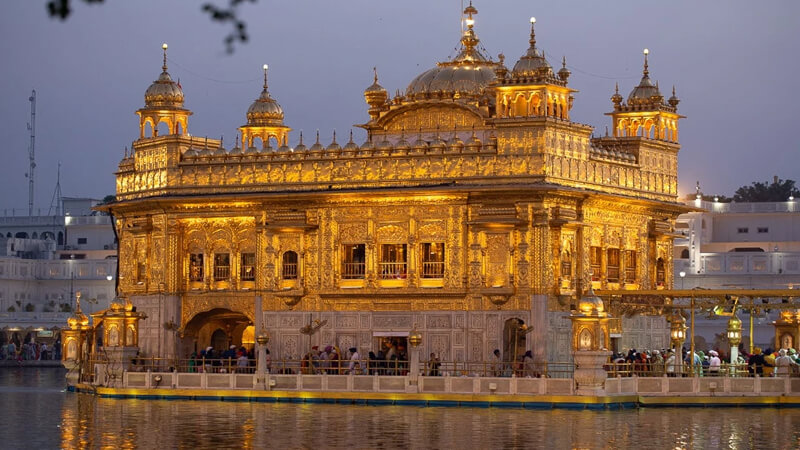
The Golden Temple sits in the middle of a large square pool called the Amrit Sarovar, built by the fourth Sikh Guru, Guru Ram Das, in 1577. Guru Arjan, the fifth Guru, completed the shrine in 1604 and installed the first copy of the Adi Granth inside it. The gold plating that gives the temple its name was added much later, in 1830, by Maharaja Ranjit Singh, and the structure has been rebuilt more than once after being destroyed during Mughal and Afghan invasions.
What makes this place stay with people isn't just the reflection of gold on water. It's the fact that the temple's kitchen, the langar, has been feeding anyone who walks in, for free, regardless of religion or background, every single day since the Guru's time. Sit on the floor with strangers and share a meal, and you start to understand why so many visitors call this the most moving place they've been in India.
Timings:
- Open 24 hours, every day
- Palki Sahib ceremony (the holy book is carried in): around 3:00 to 4:00 AM
- Rehras Sahib: at sunset
- Sukhasan (closing ceremony): around 9:30 to 10:30 PM
- Langar runs all day and night, no fixed hours
Significance:
- Holiest shrine in Sikhism
- A living symbol of equality, since the free community kitchen serves everyone without exception
How to reach:
- By Air: Sri Guru Ram Dass Jee International Airport is about 12 to 13 km from the temple, roughly 20 to 30 minutes by cab
- By Train: Amritsar Junction is just 2 km away, a short auto rickshaw ride, and a free SGPC shuttle bus also runs between the station and the temple
- By Road: Amritsar connects to Delhi via NH1 (about 450 km, 8 to 9 hours by car) and to Jammu and Chandigarh through good highway links
Tip:
- Cover your head before entering, scarves are available for free at the entrance if you don't have one
- Eat at least one meal at the langar hall, it's one of the best ways to understand what the temple is really about
4. Meenakshi Amman Temple, Madurai, Tamil Nadu
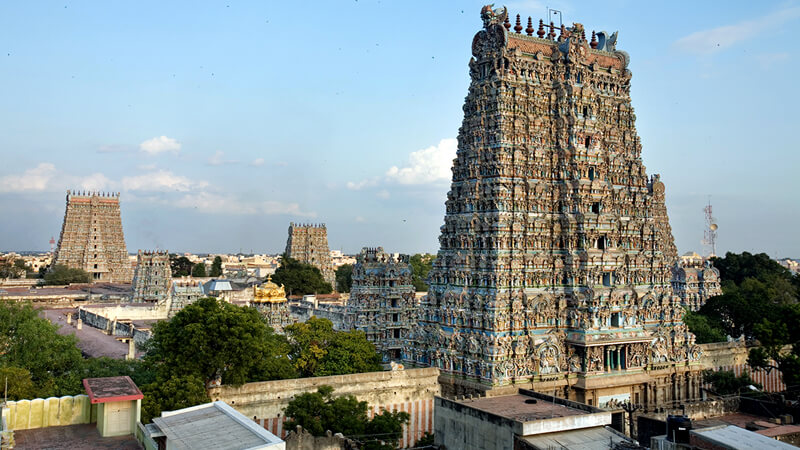
Fourteen towers rise over the temple complex, each one covered in thousands of painted figures of gods, demons, and animals in colours that get repainted every 12 years to stay bright. The current structure was largely rebuilt in the 1600s by the Nayaka kings after an earlier version was destroyed, and inside, the Hall of a Thousand Pillars still stands, with a few columns that genuinely ring out different musical notes when tapped.
According to legend, the goddess Meenakshi was born to a Pandya king after years of prayer, but with three breasts instead of two, and a prophecy that the extra one would vanish the day she met her true match. She grew into a warrior queen who conquered kingdom after kingdom, until she came face to face with Shiva himself, and the third breast disappeared the instant she saw him. Madurai still throws a citywide festival every year to mark their wedding.
Timings:
- Open 5:00 AM to 12:30 PM and 4:00 PM to 9:30 PM, closed midday
- Special darshan tickets are available for those who'd rather skip the general queue
Significance:
- A rare major temple where the goddess, not the god, is worshipped as the primary deity
- One of the largest and most elaborately carved temple complexes in South India
How to reach:
- By Air: Madurai Airport is about 12 km from the temple, roughly 25 to 35 minutes by taxi
- By Train: Madurai Junction is the closest station, about 2 km away, a 10 minute auto or cab ride
- By Road: Madurai connects well to Chennai, Bengaluru, and Kochi via national highways, with the Mattuthavani bus stand about 20 minutes from the temple
Tip:
- Visit at dusk when the gopurams are lit up, it's one of the better sights in South India
- Cameras and phones aren't allowed inside, leave them at your hotel or use the paid locker facility
5. Jagannath Temple, Puri, Odisha
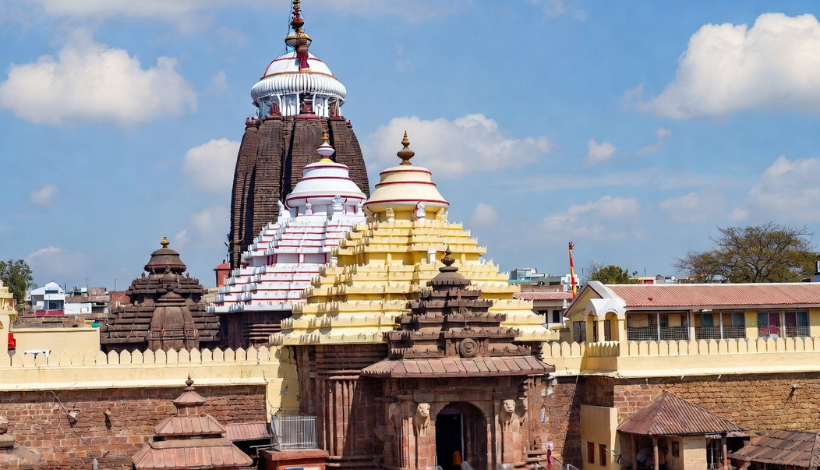
Look closely at the deity here and something feels different right away. The eyes are large and simple, almost unfinished, nothing like the polished stone idols found elsewhere in India. According to legend, the divine sculptor Vishwakarma agreed to carve the idols only if left completely undisturbed, and when an impatient King Indradyumna opened the door too early, the work stopped forever, leaving the wooden idols in their rough, unfinished form. Once a year, that same deity is pulled through Puri's streets on a chariot so massive that many trace the English word juggernaut back to it, a claim that's popular though not fully settled among language historians.
Even on an ordinary day, the temple's kitchen is worth knowing about, food cooked in stacked earthen pots over open wood fire, prepared for tens of thousands of people daily.
Timings:
- Open roughly 5:00 AM to 10:00 or 11:00 PM
- Short midday closure for bhog (food offering) rituals
Significance:
- One of the four Char Dham sites in Hinduism
- Its temple kitchen is among the largest in the world, feeding well over 100,000 people on festival days
How to reach:
- By Air: Bhubaneswar's Biju Patnaik International Airport is the nearest, about 60 km from Puri, roughly an hour by taxi
- By Train: Puri Railway Station is the closest, just 2 to 3 km from the temple, a 10 minute auto ride
- By Road: NH16 connects Puri to Bhubaneswar (about 60 km) and onward to Konark (30 km), making it easy to combine all three in one trip
Tip:
- Non Hindus can't enter the sanctum, but can view the temple from the Raghunandan Library rooftop directly across the street
- Try to time your visit around a weekday if you want to avoid the heaviest crowds, weekends and festival days get packed fast
6. Somnath Temple, Veraval, Gujarat
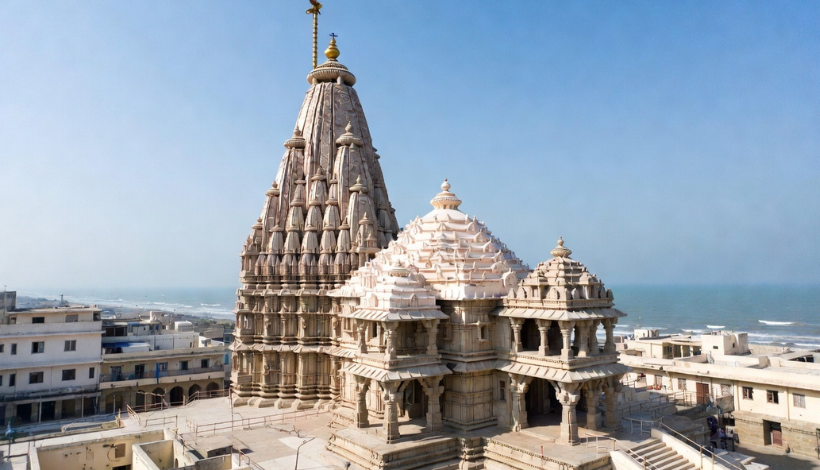
Somnath stands right on the Arabian Sea coast, and the story often told here is that there's nothing but open ocean between this shoreline and Antarctica along a straight line south, a popular claim among guides though not one that's easy to verify precisely. What's better documented is the temple's history of survival. It's been destroyed and rebuilt more times than almost any other temple in the country, most recently reconstructed in the 1950s under the guidance of Sardar Vallabhbhai Patel, and that resilience is really what the nightly light and sound show is about, the sea crashing behind it as it tells that story.
Timings:
- Open 6:00 AM to 9:00 or 10:00 PM
- Aarti: 7:00 AM, 12:00 noon, and 7:00 PM
- Light and sound show: 8:00 to 9:00 PM, except during monsoon
Significance:
- First among the 12 Jyotirlingas of Lord Shiva
- Sits directly on the Arabian Sea, one of the very few Jyotirlingas located on a coastline
How to reach:
- By Air: Diu Airport is the closest, about 65 km away, followed by Rajkot Airport at around 195 km. Both need a taxi for the onward drive
- By Train: Veraval Junction is the nearest station, about 6 to 7 km from the temple, a short auto or taxi ride, with direct trains from Ahmedabad and Mumbai
- By Road: Somnath is about 400 km from Ahmedabad (7 to 8 hours by road) and roughly 190 km from Rajkot
Tip:
- Phones and cameras aren't allowed inside the temple, just be present for the aarti rather than trying to film it
- Combine your visit with nearby Dwarka, about 230 km away, if you're planning a Gujarat temple circuit
7. Vaishno Devi Temple, Katra, Jammu and Kashmir
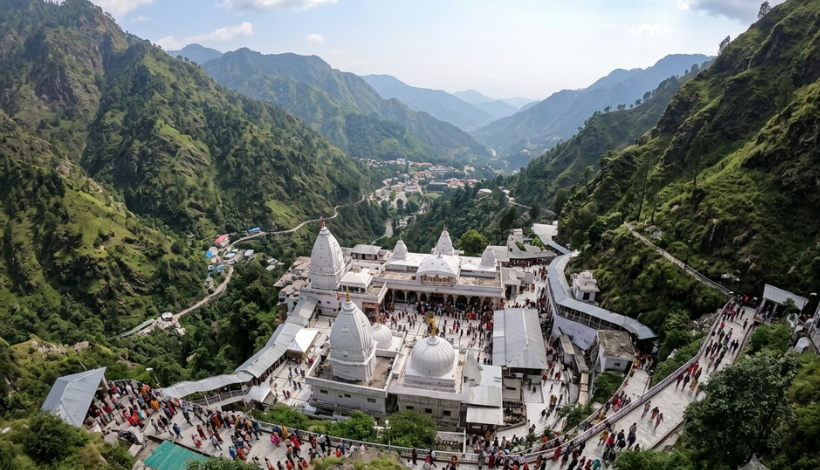
You don't drive up to this one, you earn it. From Katra, the base town, it's a 13 to 14 km trail on foot, pony, palanquin, or battery car, climbing steadily through the Trikuta hills to a narrow cave shrine. Inside, the goddess isn't represented by a carved statue at all, but by three natural rock formations, worshipped together as her combined Shakti. Many pilgrims deliberately trek through the night, timing it so they reach the cave right as the sky starts to lighten.
Timings:
- Cave shrine open 24 hours, every day
- Aarti: around 6:20 to 8:00 AM and 7:20 to 8:30 PM, with darshan pausing briefly during these
Significance:
- One of India's most visited shrines
- The goddess is worshipped here in her combined Shakti form, represented by three natural rock formations rather than an idol
How to reach:
- By Air: Jammu Airport is the nearest, about 50 km from Katra, roughly an hour by taxi
- By Train: Shri Mata Vaishno Devi Katra Railway Station is right in Katra itself, just 2 to 3 km from where the trek begins
- By Road: Katra is about 50 km from Jammu city by road, and around 650 km from Delhi if you're driving the whole way
Tip:
- Register for the yatra permit (yatra parchi) at the base camp before starting, it's free and mandatory
- If trekking isn't for you, helicopter service runs from Katra to Sanjichhat, just 2.5 km from the shrine, cutting the journey down to an 8 minute flight
8. Siddhivinayak Temple, Mumbai, Maharashtra
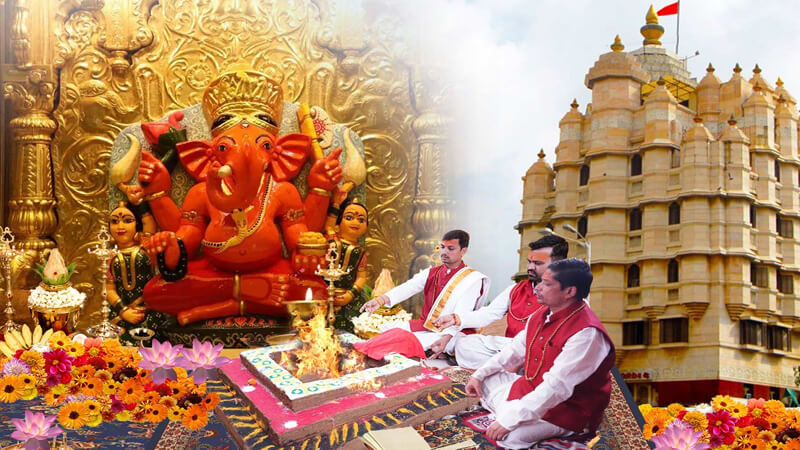
This started out as a small neighbourhood shrine built in 1801 and has since grown into one of the most visited Ganesh temples in india, drawing everyone from daily commuters to Bollywood stars before a big release. Look closely at the idol and you'll notice the detail that made it famous, the trunk curves to the right rather than the left, a rarer form in Ganesh iconography that's believed to make wishes come true with real force. Locals call it Navasacha Ganapati, roughly translated as the Ganesh who actually delivers.
Timings:
- Wednesday to Monday: 5:30 AM to 9:50 PM
- Tuesday: 3:15 AM to midnight (busiest day of the week)
- Aarti: Kakad around 5:30 AM, evening around 7:30 to 8:00 PM
Significance:
- One of India's wealthiest temple trusts, funding hospitals, schools, and disaster relief across Maharashtra
- Known for the rare right facing trunk of its idol, considered especially auspicious
How to reach:
- By Air: Chhatrapati Shivaji Maharaj International Airport is about 15 km away, 30 to 45 minutes by cab depending on Mumbai traffic
- By Train: Dadar and Prabhadevi are the nearest local train stations, each about 1 to 2 km from the temple, a short auto or walk away
- By Road: Well connected by Mumbai's local roads and the Western and Eastern Express Highways
Tip:
- Go before 7 AM on a weekday to skip the worst of the queues
- Avoid visiting on a Tuesday unless you don't mind long lines, that's when the temple is at its busiest
9. Akshardham Temple, New Delhi
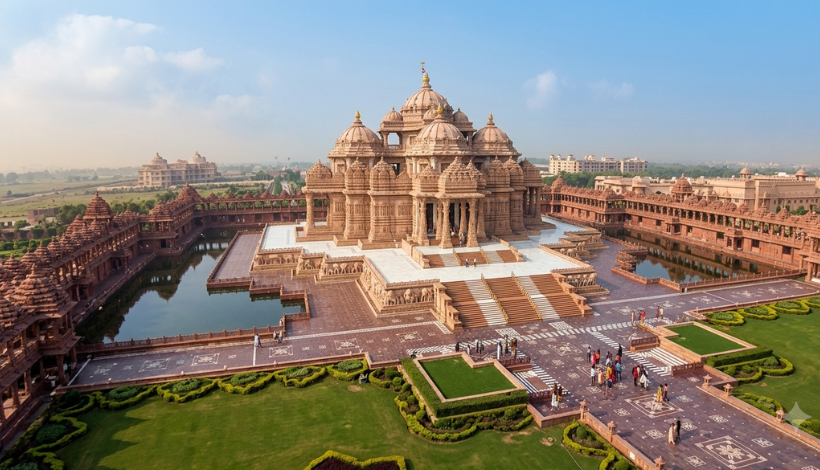
Built between 2000 and 2005, this is a temple designed to leave you speechless from every angle. Sandstone and pink stone carved into thousands of figures, a central monument nearly 43 metres tall, and an evening water show with fire, lasers, and music that closes out the visit. Thousands of volunteers and craftsmen worked on it without using a single piece of structural steel, which is part of why the carving here feels so different, hand done, unhurried, and enormous in scale.
Timings:
- Tuesday to Sunday, 9:30 AM to 6:30 PM (closed Mondays)
- Exhibitions: 10 AM to 6 PM
- Water show: after sunset, roughly 7:15 to 7:30 PM depending on the season
Significance:
- Recognized by Guinness World Records as the world's largest comprehensive Hindu temple complex
- Built entirely through volunteer labour and donations, without government funding
How to reach:
- By Air: Indira Gandhi International Airport is about 25 to 30 km away, 45 minutes to an hour by cab depending on traffic
- By Train: The Akshardham metro station, on the Blue Line, sits right next to the complex
- By Road: Located near the Delhi-Noida border, easily reached via NH24 and well connected to all parts of Delhi NCR
Tip:
- Phones, cameras, and bags aren't allowed inside, use the free lockers at the entrance and factor that extra time in
- Plan to spend most of the day here, between the main monument, exhibitions, and the evening show, it adds up quickly
10. Amarnath Cave Temple, Jammu and Kashmir
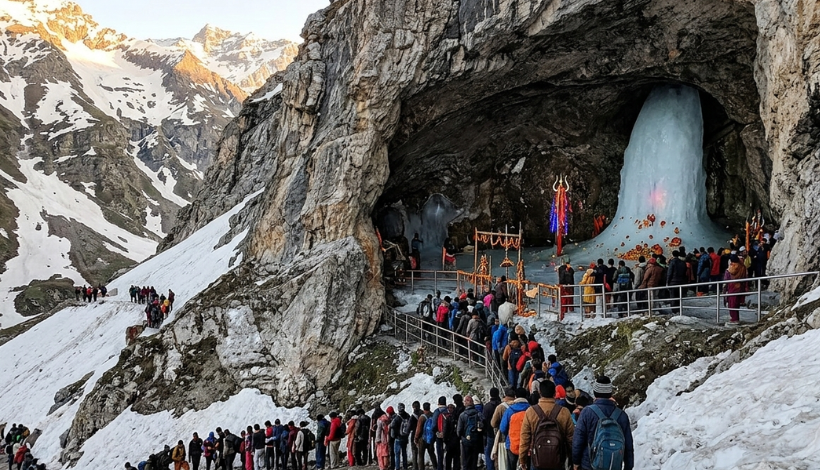
There's no gold dome here, no carved idol, just a wall of ice deep inside a Himalayan cave at nearly 3,900 metres, believed by pilgrims to be Shiva himself in the form of a naturally forming ice lingam. It grows and shrinks with the seasons, and reaching it means several days of trekking through genuinely dramatic mountain terrain. According to legend, this is the spot where Shiva revealed the secret of immortality to Parvati, and a pair of doves that overheard it are said to still nest near the cave, immortal by accident.
Timings:
- No fixed daily hours, the shrine is only accessible during the official yatra window, typically late June or July through August, weather permitting
Significance:
- One of Hinduism's most physically demanding pilgrimages
- Centred on a naturally forming ice lingam rather than a built idol
How to reach:
- By Air: Fly into Srinagar or Jammu, then travel by road to the yatra base camps at Pahalgam or Baltal
- By Train: Jammu Tawi is the nearest major railhead, followed by a road journey to Pahalgam or Baltal
- By Road: The trek itself begins at Pahalgam (a longer, gentler route) or Baltal (shorter, steeper), both reached by road from Srinagar
Tip:
- Registration and a valid medical fitness certificate are compulsory, this is a high altitude trek, not a casual visit
- Book your yatra slot through the official Shri Amarnathji Shrine Board website well in advance, as numbers are capped each day
11. Badrinath Temple, Chamoli, Uttarakhand
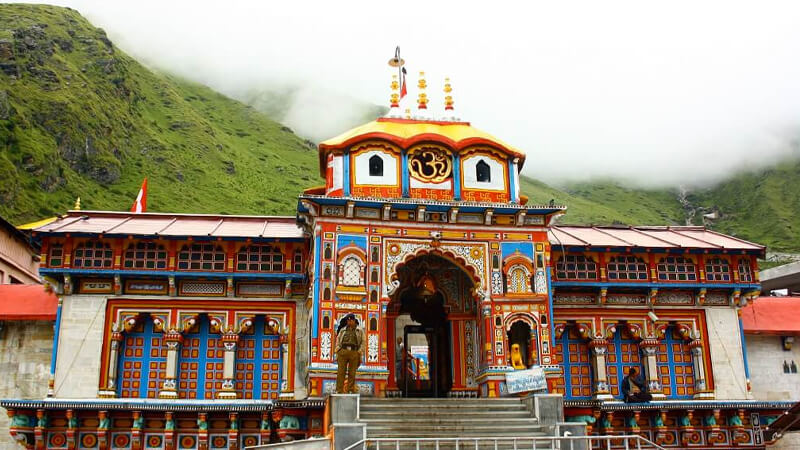
Wedged between two mountain ranges on the banks of the Alaknanda river, this temple only exists for half the year. Snow buries the valley the rest of the time, and the exact opening day is decided each year through astrological calculation rather than a fixed date. When the doors do open, priests trained since childhood in Kerala, called Rawals, perform the rituals in a tradition that dates back centuries, a striking contrast against these Himalayan peaks.
Timings (open season, late April to mid November):
- 4:30 AM to 1:00 PM and 4:00 PM to 9:00 PM
- Maha Abhishek: 4:30 to 6:30 AM
- Shayan Aarti: around 8:30 to 9:00 PM
Significance:
- Part of both the Char Dham and Chota Char Dham pilgrimage circuits
- One of India's most sacred Vishnu shrines, and among the highest altitude major temples in India
How to reach:
- By Air: Jolly Grant Airport in Dehradun is the nearest, followed by a long road journey through the hills
- By Train: Rishikesh is the nearest railhead, then a road trip of around 8 to 10 hours to Badrinath
- By Road: The final stretch runs through Joshimath on winding mountain roads, best done in daylight
Tip:
- Combine your visit with nearby Mana village, considered India's last village before the Tibet border, just a few kilometres away
- Carry warm clothing even in the open season, temperatures drop fast once the sun sets
12. Kedarnath Temple, Rudraprayag, Uttarakhand
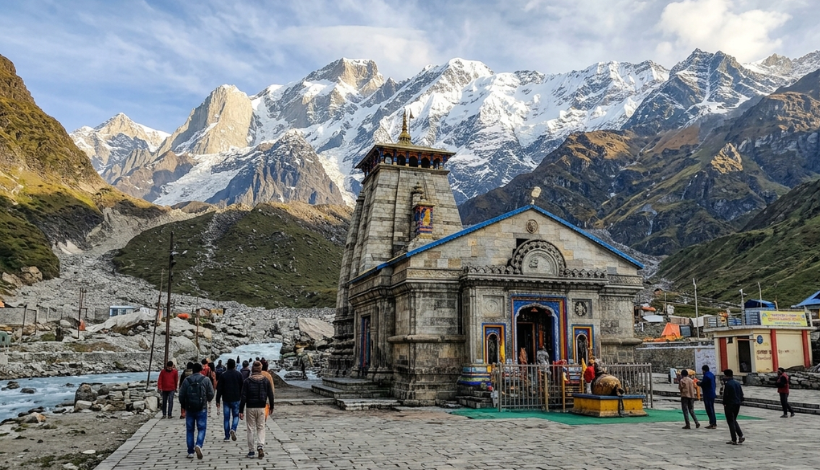
When catastrophic floods tore through this valley in 2013 and killed thousands, the centuries old stone temple came out of it almost entirely untouched. A large boulder is said to have lodged itself directly behind the structure, splitting the floodwater around it while everything nearby was swept away. That story gives the place real weight the moment you arrive, out of breath from the trek, snow peaks all around, and reaching it at dawn for the Shringar Aarti is something most pilgrims describe as one of the most powerful moments of the whole journey.
Timings (open season, roughly May to early November):
- 6:00 AM to 8:00 PM, closed around 3:00 to 5:00 PM
- Maha Abhishek: from 4:00 AM
- Shringar and Sandhya Aarti: around 6:00 PM
Significance:
- One of the 12 Jyotirlingas of Lord Shiva
- Survived the catastrophic 2013 Himalayan floods almost entirely intact
How to reach:
- By Air: Jolly Grant Airport in Dehradun is the nearest, followed by a road trip to Sonprayag or a direct helicopter connection in season
- By Train: Rishikesh is the nearest railhead, then road travel to Sonprayag
- By Road: From Sonprayag, it's a 16 to 18 km trek on foot, pony, or palanquin, or a short helicopter ride, since no road goes all the way to the temple
Tip:
- Book helicopter tickets weeks ahead in peak season if you'd rather not trek, seats fill up fast
- Acclimatise for a day in Guptkashi or Sonprayag before starting the trek, the altitude gain is significant
13. Ramanathaswamy Temple, Rameswaram, Tamil Nadu
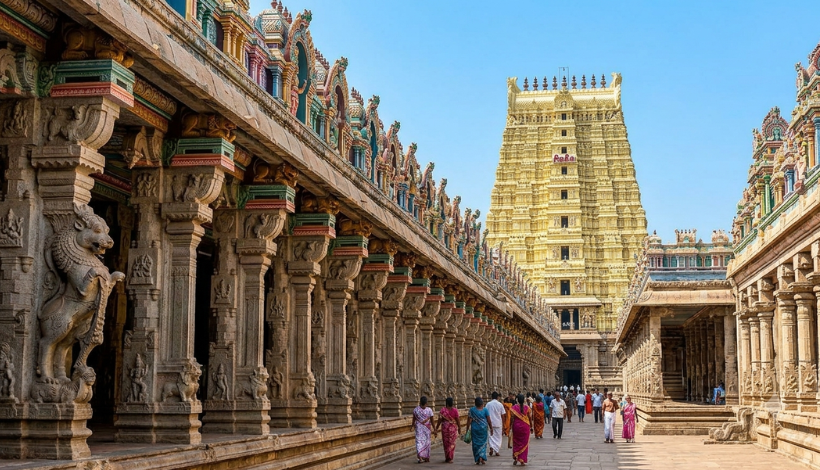
Walk through this temple's corridor and you'll lose count of the pillars, over 4,000 of them, making it the longest temple corridor in the world. But the experience most pilgrims remember here is the 22 sacred wells inside the complex, where temple attendants pour water over you one well at a time, each one believed to wash away a different kind of sin. According to legend, Rama himself stopped here to seek forgiveness after his war with Ravana, which is part of why this is one of the few temples equally sacred to both Shiva and Vishnu devotees.
Timings:
- 5:00 AM to 1:00 PM and 3:00 PM to 9:00 PM, closed 1 PM to 3 PM
Significance:
- One of the 12 Jyotirlingas and a Char Dham site
- Sacred to both Shaivites and Vaishnavites, a rare crossover in Hindu temple worship
How to reach:
- By Air: Madurai Airport is the nearest, about 170 km away, followed by a road journey
- By Train: Rameswaram Railway Station is right in town, connected by rail via the Pamban Bridge
- By Road: The Pamban Bridge connects Rameswaram island to the mainland, offering a scenic drive across the sea
Tip:
- Carry a change of dry clothes for after the 22 wells ritual, you will get soaked
- Combine with Madurai on the same trip, since the two cities are well connected by both road and rail
14. Konark Sun Temple, Konark, Odisha
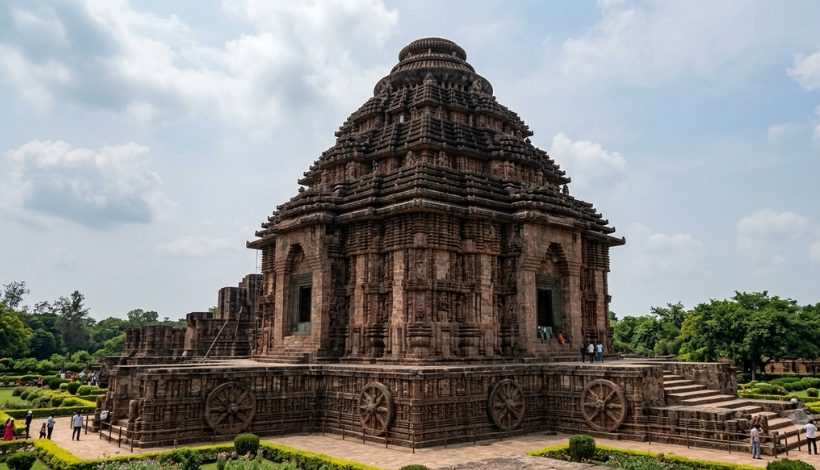
This is the one temple on the list you can't actually pray at anymore, which somehow makes it more interesting rather than less. The whole structure is carved to resemble a colossal stone chariot mid gallop, pulled by seven horses across 24 wheels, and those wheels aren't just decoration, they're precise enough to function as sundials, telling time from the angle of their shadow. Built in the 13th century under King Narasimhadeva I, much of the temple's upper structure has collapsed over the centuries, but what remains is still considered one of the finest examples of Kalinga architecture anywhere.
Timings:
- Open 6:00 AM to 8:00 PM daily
- Light and sound show: 7:00 to 8:00 PM
- Museum: 10 AM to 5 PM, closed Fridays
Significance:
- A UNESCO World Heritage Site
- Among the finest surviving examples of Kalinga temple architecture, though no longer used for active worship
How to reach:
- By Air: Bhubaneswar's Biju Patnaik International Airport is the nearest, about 65 km away
- By Train: Puri Railway Station is closer at around 35 km, or Bhubaneswar station at about 65 km, both followed by a road trip
- By Road: Konark sits between Puri (35 km) and Bhubaneswar (65 km), making it easy to combine with both on the same day
Tip:
- Visit early morning or at sunrise, when the light hits the carvings sideways and the wheels and horses stand out best
- Try to time your trip with the Konark Dance Festival in early December, when classical dance is performed against the temple as a backdrop
15. Brihadeeswarar Temple, Thanjavur, Tamil Nadu
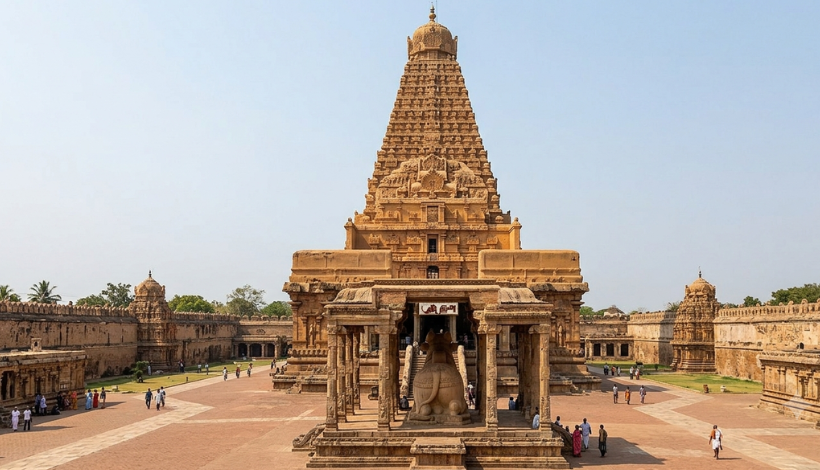
Built by the Chola king Rajaraja I around 1010 CE, this temple's tower rises about 66 metres, making it one of the tallest structures of its time anywhere in the world, raised using nothing but stone, rope, and considerable engineering skill. Guides in Thanjavur will point out that at exactly noon, the tower casts almost no shadow on the ground, a detail visitors are usually shown in person rather than just told about. At the entrance stands a single block granite Nandi, one of the largest of its kind in the country.
Timings:
- 6:00 AM to 12:30 PM and 4:00 PM to 8:30 PM, closed 12:30 to 4:00 PM
Significance:
- A UNESCO World Heritage Site
- One of the largest and tallest temple towers built by the Chola dynasty
How to reach:
- By Air: Tiruchirappalli (Trichy) Airport is the nearest, about 60 km away
- By Train: Thanjavur Junction is right in town, a short ride from the temple
- By Road: Thanjavur is about 350 km from Chennai and well connected to Trichy and Madurai by highway
Tip:
- Ask a guide to show you the no shadow phenomenon at noon, it's one of the more talked about pieces of ancient engineering here
- Visit early morning to avoid both the heat and the crowds, the temple grounds get warm quickly under the midday sun
16. Shirdi Sai Baba Temple, Shirdi, Maharashtra
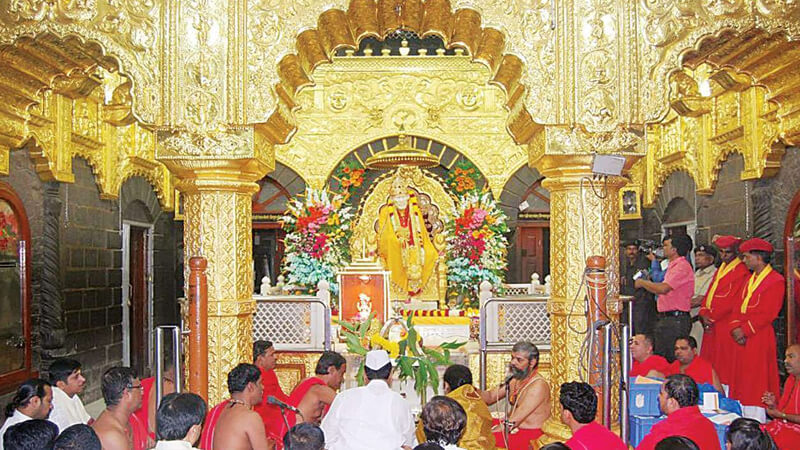
Nobody, not even his closest followers, ever fully established where Sai Baba came from or which religion he was born into, and that mystery became part of his teaching, one God for everyone, no exceptions. He lived simply in Shirdi for decades, shared what little he had with the poor, and never asked anyone to convert. That openness is exactly what you feel walking into the temple today, people from every background standing shoulder to shoulder for the same darshan.
Timings:
- Open roughly 4:00 AM to 11:30 PM
- Aarti: Kakad around 4:15 to 5:15 AM, Madhyan at 12:00 PM, Dhoop at sunset, Shej around 10:30 PM
Significance:
- Shrine to Sai Baba, whose teaching of unity across religions still draws devotees of every faith
- One of the most visited pilgrimage sites in Maharashtra, regardless of religious background
How to reach:
- By Air: Shirdi has its own airport, well connected to Mumbai and a few other major cities
- By Train: Sainagar Shirdi Railway Station is right in town, a short ride from the temple
- By Road: Well connected by road from Mumbai, Pune, and Nashik, with regular state and private bus services
Tip:
- Use the temple's official token or queue system on arrival rather than joining the general line, it saves considerable waiting time
- Book your darshan slot online in advance if you're visiting on a weekend or during a festival
17. Padmanabhaswamy Temple, Thiruvananthapuram, Kerala
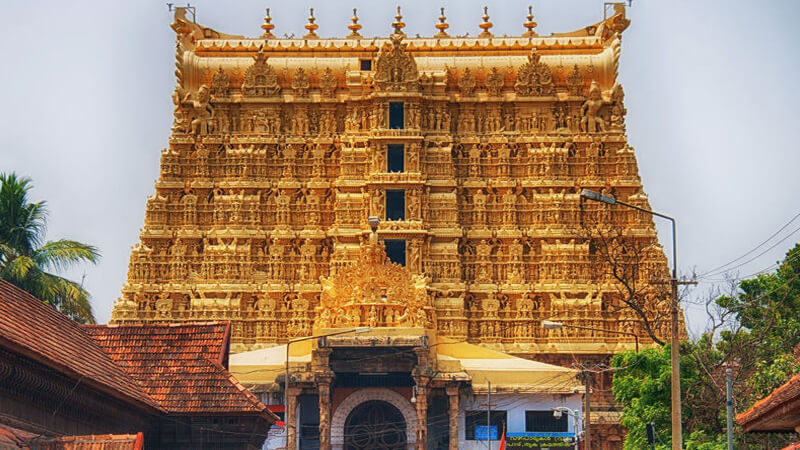
This temple made international headlines when its underground vaults were opened for inventory and turned out to hold an extraordinary amount of treasure, gold statues, gemstones, and ancient coins, with at least one vault still not fully catalogued. The total value has never been officially confirmed, so treat claims about it being the wealthiest religious institution on Earth as a widely repeated estimate rather than a settled fact. Walk inside, though, and none of that spectacle is visible. It's quiet and deeply traditional, and the deity, an enormous reclining Vishnu, is large enough that you pass three separate doorways just to see him in full.
Timings:
- Roughly 3:15 AM to 12:00 PM across multiple slots, and 5:00 PM to 7:20 PM
Significance:
- Believed to hold one of the largest documented temple treasures in the world, following a landmark court ordered vault inventory
- Entry is restricted to Hindus, with a strict traditional dress code
How to reach:
- By Air: Thiruvananthapuram International Airport is close by, about 4 to 5 km from the temple
- By Train: Thiruvananthapuram Central Railway Station is about 2 km away, a short auto or cab ride
- By Road: Well connected within the city and to the rest of Kerala via NH66 and NH744
Tip:
- Dress code is strictly enforced, dhoti for men, no stitched clothing, so check requirements before you arrive rather than at the entrance
- Entry is for Hindus only, non Hindu visitors can still view the temple's exterior architecture from outside
18. Mahakaleshwar Temple, Ujjain, Madhya Pradesh
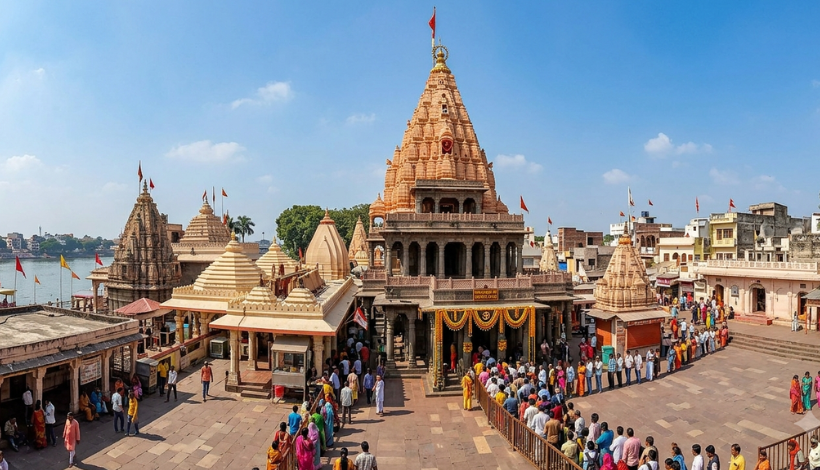
Arrive before sunrise here and you'll see a ritual found nowhere else among the 12 Jyotirlingas, priests applying sacred ash to the lingam in near total darkness during the Bhasma Aarti, a reminder that everything eventually returns to dust. Mahakaleshwar is the only Jyotirlinga facing south, a direction traditionally linked to death in Hindu belief, which gives the temple a heavier, more intense atmosphere than most Shiva shrines. Pilgrims book their spot for this single ritual weeks in advance.
Timings:
- Open roughly 4:00 AM to 11:00 PM
- Bhasma Aarti: 4:00 to 6:00 AM, advance booking essential
Significance:
- One of the 12 Jyotirlingas of Lord Shiva
- The only Jyotirlinga facing south, associated with intense tantric worship traditions
How to reach:
- By Air: Indore Airport is the nearest, about 55 km away
- By Train: Ujjain Junction is right in town, a short ride from the temple
- By Road: Well connected to Indore, Bhopal, and other major Madhya Pradesh cities by highway
Tip:
- Book the Bhasma Aarti online well ahead through the official temple website, slots fill up days in advance
- Arrive at least 30 minutes before your booked slot, security checks take time given the sensitivity of the ritual
19. Dwarkadhish Temple, Dwarka, Gujarat
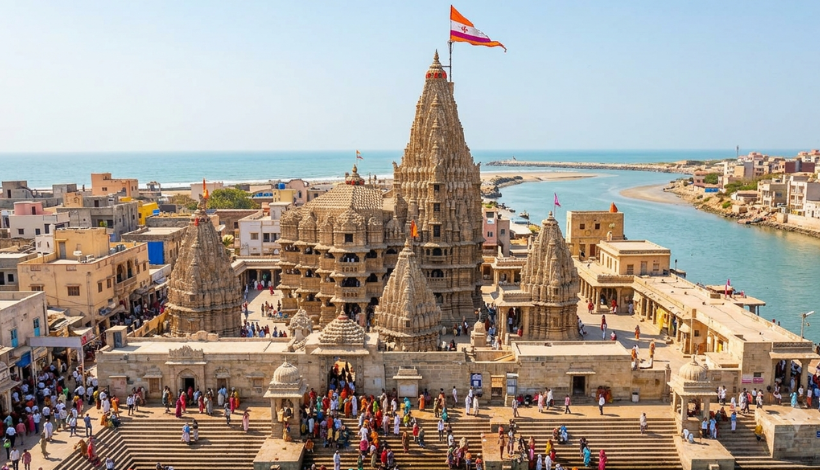
This is where Krishna is said to have built his kingdom after leaving Mathura, and marine archaeologists have spent years exploring the coastline nearby, believing parts of an older city may lie submerged offshore, though this remains an area of ongoing research rather than confirmed fact. Inside the temple, Krishna isn't shown as the flute playing cowherd seen in most shrines. Here he's worshipped as Dwarkadhish, King of Dwarka, in his most regal form. The temple's spire rises high enough that sailors along this coast have reportedly used it as a landmark for generations.
Timings:
- 6:30 or 7:00 AM to 1:00 PM and 5:00 PM to 9:30 PM, closed roughly 1 to 5 PM
- Mangala Aarti: 6:30 AM
- Shayan Aarti: around 8:30 PM
Significance:
- One of the Char Dham sites in Hinduism
- Marks the legendary kingdom Krishna is said to have established after leaving Mathura
How to reach:
- By Air: Dwarka has its own small airport, otherwise Jamnagar Airport is a common alternative, about 145 km away
- By Train: Dwarka Railway Station is right in town, connected to Ahmedabad and other major Gujarat cities
- By Road: About 400 km from Ahmedabad by road, and roughly 230 km from Somnath if combining both on a Gujarat circuit
Tip:
- Combine your visit with nearby Bet Dwarka (accessible by boat) and the Nageshwar Jyotirlinga, both a short drive away
- Non Hindus can generally view the temple but should check current entry rules with the temple trust before visiting
20. Kamakhya Temple, Guwahati, Assam
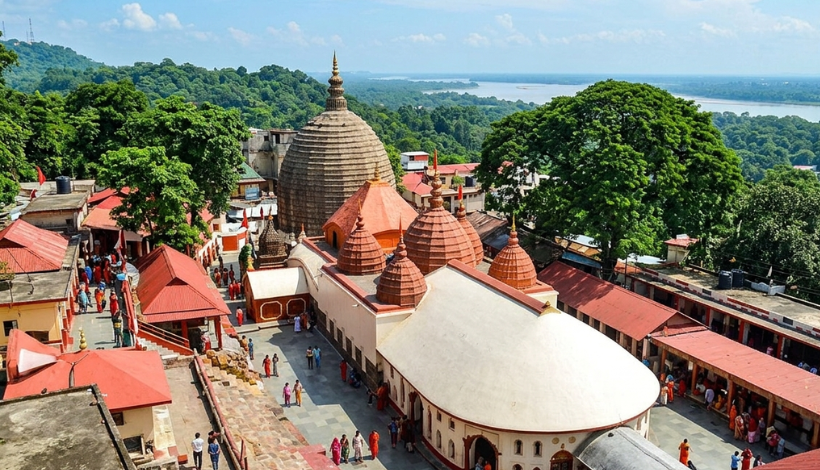
There's no idol to look at inside this temple, just a natural rock fissure kept permanently damp by an underground spring, worshipped as the living body of the goddess herself. According to legend, this is where a fragment of the goddess Sati fell to earth, making Kamakhya one of the most significant Shakti sites in the country and a long standing centre for tantric practitioners from across India. Once a year, during Ambubachi Mela, the temple doors close completely for three days, and when they reopen, the crowds that arrive are some of the most intense at any Indian temple.
Timings:
- Roughly 5:30 AM to 1:00 PM and 2:30 PM to 5:30 or 6:00 PM
- Closed for 3 days each June for Ambubachi Mela
Significance:
- One of the most powerful of the 51 Shakti Peethas
- A major centre of Tantric worship, unusual for not housing a carved idol
How to reach:
- By Air: Guwahati's Lokpriya Gopinath Bordoloi International Airport is about 20 km from the temple
- By Train: Guwahati Railway Station is the nearest, about 8 km away, a short cab ride up Nilachal Hill
- By Road: Well connected within Guwahati city, with the temple sitting atop Nilachal Hill overlooking the Brahmaputra
Tip:
- Visit right after the midday closure for good light over the Brahmaputra from the hilltop
- Avoid the three day closure window in June unless you're specifically visiting for the Ambubachi Mela festival
Whether you're planning a Char Dham Yatra, a Jyotirlinga pilgrimage, or simply exploring India's spiritual heritage, these popular temples in India offer unforgettable experiences for every traveller.
Explore Temples by Destination
Popular Places to Visit in Indian Destinations






 January 19, 2022
 Share
Share
 Download as PDF
  From
From 
 Departure Date
 Travellers & class
 Rent For
 Departure Date







 Share
Share
{{cmnt.comment}}