South Korea’s autumn foliage transforms the country into vibrant shades of red, orange, and yellow from late September to mid-November. This guide covers the best time and places to see the colours, including Seoraksan, Naejangsan, Gyeongju, Seoul, and Jirisan, along with practical tips on weather, crowds, accommodation, and transport. It also explains how travellers from India can plan flights, KTX connections, and stays to match the peak foliage season.
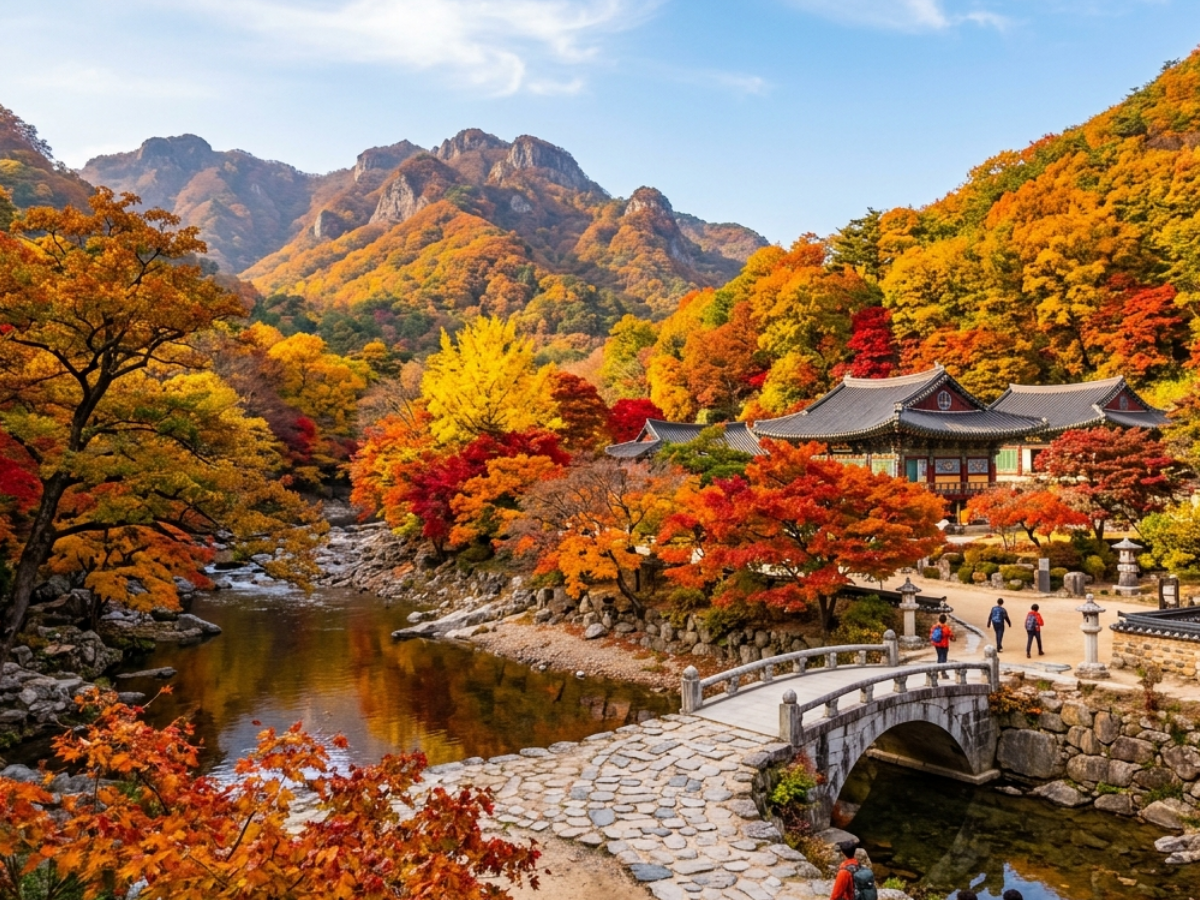
Korean autumn foliage is one of those travel experiences that works because the landscape delivers precisely what the season promises. The mountain ranges that run through the Korean peninsula, the Taebaek spine in the east, the Sobaek range in the south, and the peaks of Seoraksan and Jirisan, turn through a sequence of yellow, orange, and red between late September and mid-November that is not subtle or gradual. It is a full transformation, happening quickly enough that the timing matters, spread across enough terrain and enough days that a well-planned trip can catch the peak without arriving a week early or a week late.
This guide covers when the foliage peaks, where to see it, how to plan the Korea autumn trip practically, and what the October and November travel experience in Korea actually involves beyond the photographs. For a broader overview of planning a trip to South Korea, including destinations, practical tips, and itinerary ideas, read our ultimate South Korea travel guide before finalising your autumn foliage route.
Understanding Korea Autumn Foliage: Timing and Pattern
How the Colour Front Moves
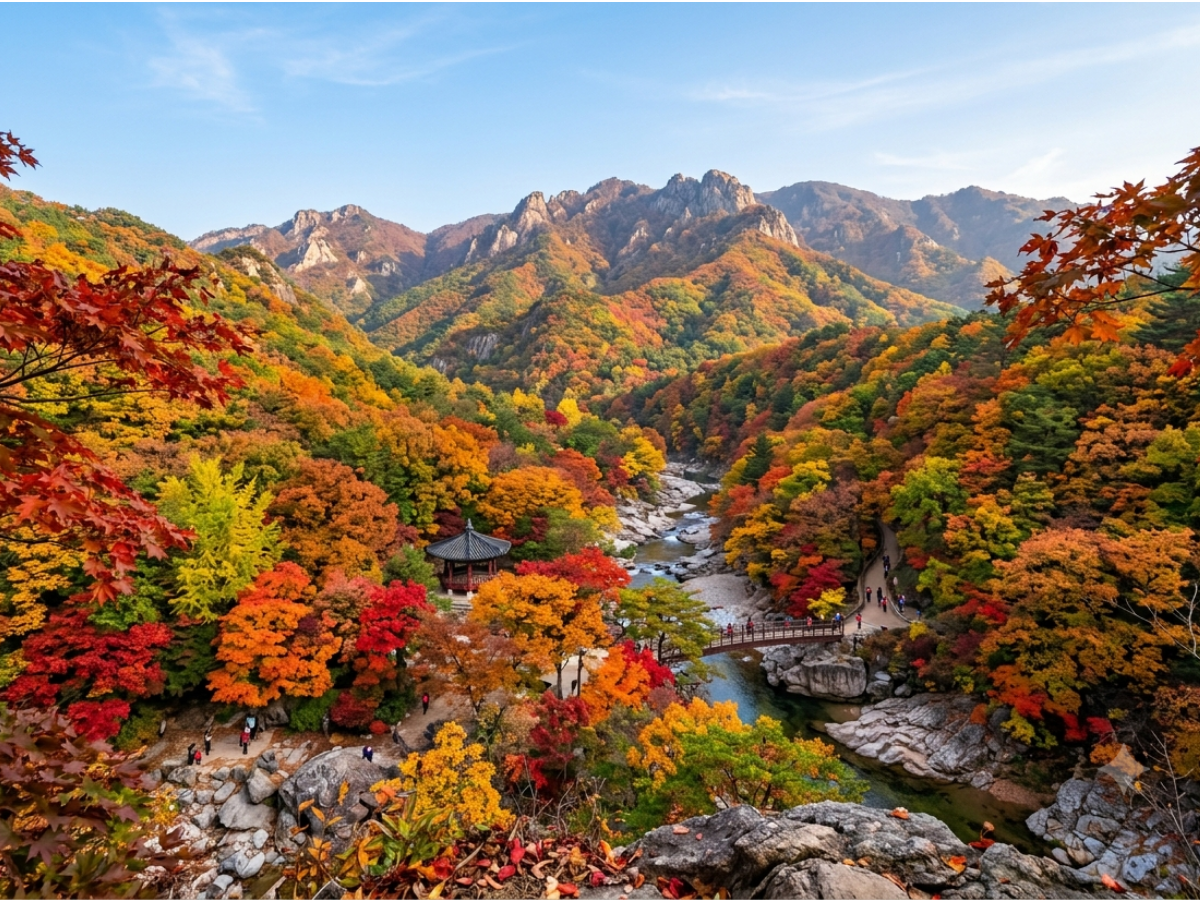
Korea's autumn foliage follows an elevation and latitude pattern that is consistent enough to plan around with reasonable confidence. The colour change begins in the high mountain areas of the northeast, Seoraksan National Park in Gangwon Province, typically in the last week of September. It then moves progressively south and down in elevation through October, reaching Seoul and the central regions in mid-to-late October and the southern regions of Jirisan and the Gyeongju area in late October to early November.
The best time to explore Korea foliage is not a single date but a geographic sequence. A traveller who starts in the northeast in the first week of October and moves southward through the month can follow the colour front rather than arriving at a fixed destination and hoping the timing aligns. Travellers looking for another mountain destination with dramatic seasonal scenery can also consider Almaty, where mountain landscapes and outdoor experiences make it an interesting alternative for an autumn escape.
The foliage peak at any specific location typically lasts seven to ten days before the leaves begin dropping. This is shorter than the extended autumn windows of countries like Japan, where the climate moderates the transition. Korea's autumn is faster and more intense; the colours are vivid rather than gradual, and the window for catching them is real.
Where to See Korea Autumn Foliage
1. Seoraksan National Park, Gangwon Province
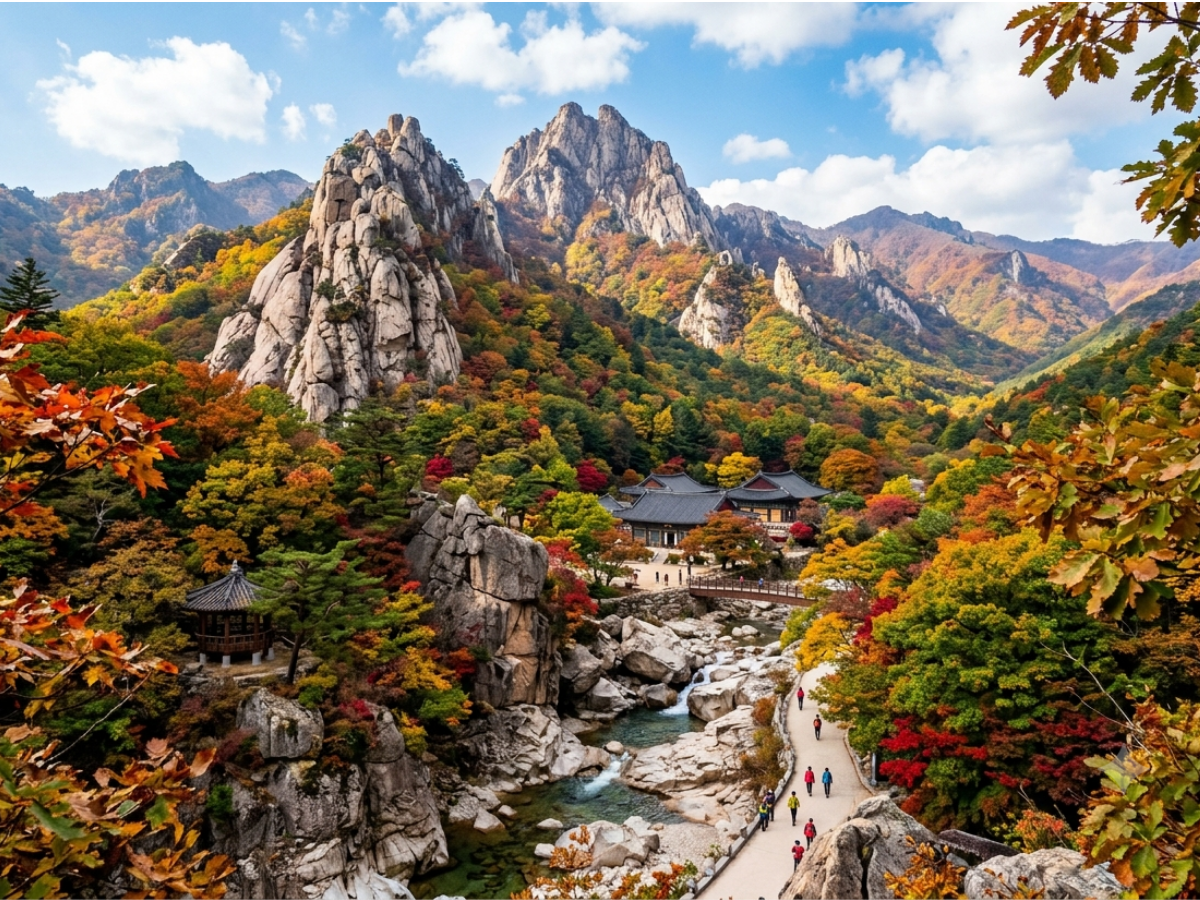
Seoraksan is the most consistently cited Korea autumn foliage destination among Korean travellers themselves, and the reputation is accurate. If national parks are a major part of your travel plans, you can also explore our guide to the must-see national parks across the USA, Asia and Europe for more nature-focused destinations. The park's rocky granite peaks, including Daecheongbong at 1,708 metres, are the highest points and provide an unusual backdrop for the colour change; the orange and yellow of the deciduous trees set against bare grey rock. The Cheonbuldong Valley trail, the Ulsanbawi Rock circuit, and the Biseondae Trail are the primary foliage routes.
The park sees very high visitor numbers in peak foliage week. Koreans take autumn foliage seriously, and the trails on a clear weekend day in early October can be crowded in a way that requires early morning starts to manage. Arriving at the park entrance before 7am on weekdays provides the most manageable experience.
Cable car access to the upper Seorak area (Sogongwon zone) provides an alternative to the full trail for those who want the elevated view without the full ascent.
2. Naejangsan National Park, Jeollabuk-do
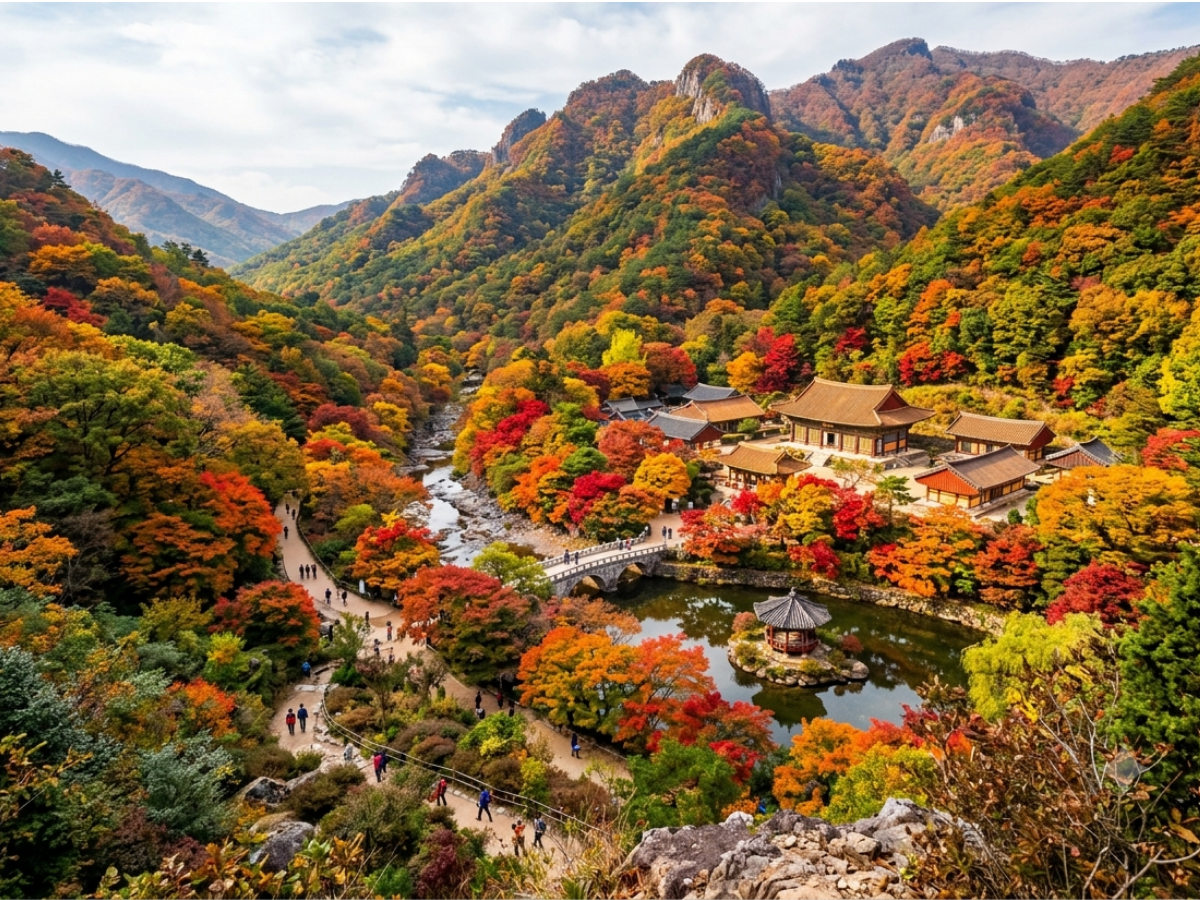
Naejangsan is arguably the single best location for Korea autumn foliage viewing in terms of colour intensity. The park is famous specifically for its maple trees, different species from those at Seoraksan, which turn a particularly deep red that the mountain parks further north do not reliably produce. The main valley trail from the entrance to the crater ridge is lined with these maples, and in late October the archway of red canopy over the path is the image that most Naejangsan photographs attempt to capture.
Peak foliage at Naejangsan typically runs from late October to the first week of November, later than the northern parks. Korea travel October itineraries that include Naejangsan at the end of the month are timing this correctly; arriving in early October means the colours have not yet turned.
The park is approximately three hours from Seoul by direct coach or KTX to Jeongeup station, followed by a local bus, accessible as a day trip from Seoul but more satisfying as an overnight stay in the nearby Jeongeup area. For travellers who enjoy making the journey part of the experience, explore our guide to scenic train journeys during the monsoon for more rail-based travel inspiration.
3. Gyeongju, North Gyeongsang Province
Gyeongju's Korea autumn foliage is experienced differently from the national parks; this is not dense mountain forest but the more open landscape of the Silla Kingdom heritage sites. The tumuli (royal burial mounds) in the city centre, the Anapji Pond, the forested approach to Bulguksa Temple, and the Namsan Mountain trails all provide autumn colour within a heritage context that is unlike any of the mountain park alternatives.
The ginkgo trees in particular lining the approaches to several of the major sites and along the Bomun Lake area turn a vivid yellow in late October that is visually distinct from the maple and oak colours of the mountain parks. For travellers combining heritage and foliage, Gyeongju in late October is one of the most cohesive single destinations in Korea.
4. Autumn in Seoul: Urban Foliage Worth Seeking
Autumn in Seoul is underappreciated as a foliage destination because the city's scale and urban density can make it feel like a place to pass through on the way to national parks. In practice, Seoul has significant green space within the city limits that turns dramatically in October.
Bukhansan National Park, within the city boundary, provides mountain foliage accessible by subway; the Ui-Sinseol Light Rail and Subway Line 3 reach the park's southern entrances, and the ridge trails provide elevated views over the autumn city below. The colour on the Bukhansan ridgeline typically peaks in the third week of October.
Changdeokgung Palace's Secret Garden, the 300-year-old rear garden of the Joseon-era palace, is open by guided tour and in autumn provides one of the most formally beautiful foliage settings in Seoul. Tour slots book significantly ahead during the peak foliage weeks and should be reserved before arrival.
Namsan Mountain above Itaewon, Seocho's Yangjae Citizen's Forest, and the walking paths along Cheonggyecheon Stream all provide autumn in Seoul foliage experiences within the urban fabric.
5. Jirisan National Park, South Gyeongsang and Jeollabuk-do
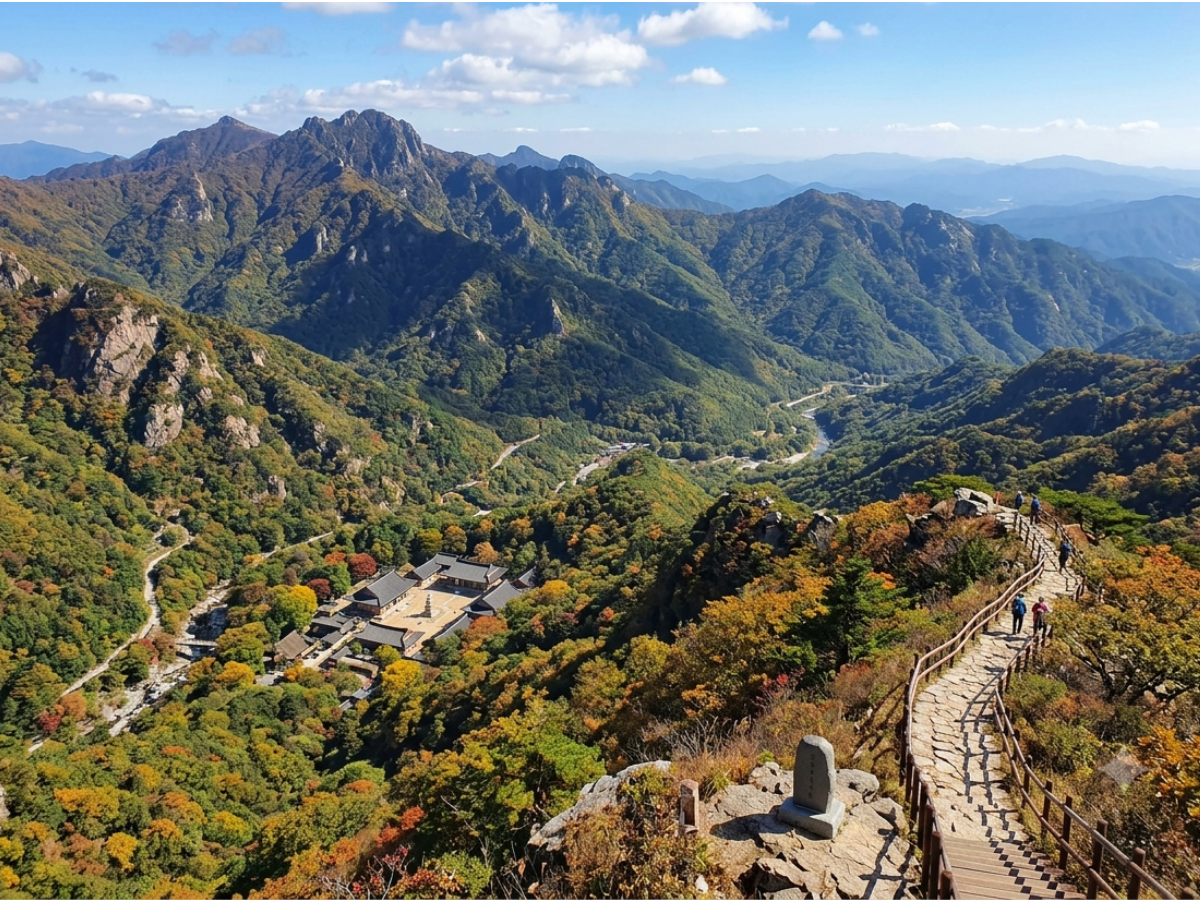
Jirisan is South Korea's largest national park, and its autumn foliage peaks latest, typically in the first two weeks of November. The park's scale means that the trails are less concentrated with visitors than Seoraksan or Naejangsan during peak week, which is a practical advantage for travellers who find the busiest mountain park weekends uncomfortable.
The Ssanggyesa Temple section of the park, where the approach road passes through a maple tunnel similar in concept to Naejangsan's valley trail, is one of the more celebrated autumn scenes in the entire Korean foliage calendar. The Haedong Valley and the Baemsagol Valley trails provide sustained colour over longer route distances.
Korea Travel in October: Practical Considerations
Weather
Korean travel in October delivers some of the best weather of the Korean year: clear skies, dry air, and temperatures between 10 and 20 degrees across most of the country. This is the weather that makes the foliage photography so consistently good: bright direct light in the mornings and a blue sky background that the summer haze and the winter grey both obscure. Evenings in October drop to 5 to 10 degrees in northern areas and require a proper jacket even if the daytime is comfortable in a light layer.
November extends the foliage season at southern locations but brings noticeably colder temperatures and the first signals of the Korean winter that arrives sharply in December.
Crowds and Accommodation
Korean travel in October coincides with the Korean Chuseok holidays (which can fall in September or October depending on the lunar calendar) and the foliage-peak visitor surge, both domestic and international. Accommodation near Seoraksan, Naejangsan, and Gyeongju books out for the peak foliage weekends weeks in advance. Mid-week stays at these destinations are noticeably more available and quieter than the weekends when Korean domestic travellers fill the parks.
How EaseMyTrip Supports Korea Autumn Foliage Planning
Korea autumn foliage travel from India involves international flight routing typically through Incheon International Airport via Singapore, Hong Kong, or a direct connection from Delhi or Mumbai alongside internal KTX rail connections to Gyeongju, Jeongeup (for Naejangsan), and Sokcho (for Seoraksan). EaseMyTrip's international flight search surfaces the most practical routing options alongside fare calendar tools that identify the most cost-effective October departure windows.
For the best time to explore Korea foliage, planning specifically where the arrival date relative to the foliage peak at the chosen destination determines much of the trip's success, the platform's AI-powered itinerary tools help sequence flight arrival, KTX connections, and accommodation bookings in a way that aligns the travel schedule with the foliage calendar rather than leaving it to chance. As AI becomes more capable of integrating seasonal activity windows into the broader travel planning interface, surfacing the optimal October week for a Naejangsan visit versus a Seoraksan one, EaseMyTrip is building towards a platform that helps travellers make the timing decision as intelligently as the destination decision. For Korea autumn foliage travel, where the window is real and the difference between catching the peak and missing it matters, that kind of calendar-aware, intelligent planning support is what separates a well-timed trip from a beautiful landscape seen one week too late.
FAQs
Q: When is the best time to see Korea's autumn foliage?
Korea's autumn foliage follows a geographic sequence from late September to mid-November. Seoraksan in the northeast peaks in early October, Seoul and the central regions in mid-to-late October, and Naejangsan and Jirisan in the south in late October to early November. The best time to explore Korea foliage for the full sequence is a trip that begins in the northeast in early October and moves southward, following the colour front through the month. A fixed single-location trip is best timed to the specific park's known peak window rather than a generic October recommendation.
Q: Is autumn in Seoul worth visiting for foliage, or should travellers go directly to national parks?
Autumn in Seoul is worth at least two to three days of foliage time alongside the national park visits. Bukhansan National Park within the city provides mountain foliage accessible by subway, the Secret Garden at Changdeokgung Palace is one of the most formally beautiful autumn settings in the country, and the urban walking routes along Cheonggyecheon and through Namsan provide foliage within the city's cultural fabric. The national parks offer more intense and concentrated colour, but Seoul's combination of accessible foliage and cultural depth makes it a complement rather than a consolation.
Q: How crowded are the Korea foliage destinations in October?
Korea travel October foliage destinations, particularly Seoraksan and Naejangsan, are significantly crowded on peak-week weekends, when domestic Korean foliage travel combines with international visitors to fill the park trails and accommodation. Mid-week visits at the same locations are noticeably quieter. Arriving at park entrances before 7am on any day reduces the crowd impact on the trails. Gyeongju in late October is more manageable than the mountain parks because the heritage sites distribute visitors across a larger area rather than concentrating them on a single valley trail.
Q: What are the best Korea autumn foliage spots for a first-time visitor?
For a first-time Korea autumn foliage visitor, the combination of Seoraksan (early October) for mountain foliage with a rocky backdrop, Gyeongju (late October) for a heritage-foliage combination, and Naejangsan (late October to early November) for the maple valley tunnel represents the most comprehensive introduction to what Korea's autumn offers. All three are accessible by KTX and local transport from Seoul without a hire car. A ten to twelve-day itinerary covers all three with adequate time at each without feeling rushed.
Q: How can EaseMyTrip help plan a Korea autumn foliage trip from India?
EaseMyTrip's platform surfaces international flight options from major Indian cities to Incheon International Airport with routing comparisons and fare calendar tools that identify the most cost-effective departure windows for Korea travel in October. For the internal KTX connections to Sokcho (Seoraksan), Jeongeup (Naejangsan), and Gyeongju, the platform's multi-modal search helps sequence the rail legs alongside accommodation availability at each foliage destination. AI-powered alerts notify travellers when fares drop on saved Korea routes, and the platform's seasonal itinerary tools help align the travel schedule with the foliage calendar for the specific destinations chosen.





 September 1, 2026

 Share
 Download as PDF
 From

 Departure Date
 Travellers & class

 Rent For
 Departure Date









 Share


{{cmnt.comment}}